
AI for Sales Prospecting: How B2B Teams Can Find and Prioritize Better Leads

AI for sales prospecting uses artificial intelligence to identify, research, and prioritize high-fit B2B leads so sales teams can focus outreach on accounts most likely to convert. Instead of spending hours on manual list building, company research, and lead scoring, teams can let AI handle repetitive discovery work while reps focus on messaging, calls, and relationship building.
This guide explains what AI prospecting actually does, how to evaluate a workflow, and how to apply it to common B2B sales scenarios without giving up human control.
What AI for Sales Prospecting Actually Does (and What It Doesn’t)
When teams first explore AI-powered lead generation for sales teams, expectations can swing too far in either direction: some expect AI to close deals on its own, while others write it off as another list-scraping tool. The truth sits in the middle.
AI prospecting tools typically support four core tasks:
Account discovery: Surfacing companies that match an ideal customer profile based on industry, location, size, and other criteria.
Lead research: Pulling together background information on accounts and contacts so reps can prepare quickly.
Lead scoring and grading: Ranking leads by fit or intent so teams work the most promising accounts first.
Outreach preparation: Helping structure email sequences and follow-up cadences based on account data.
What AI does not do is replace human judgment. AI can surface patterns and recommendations, but it cannot confirm current budget, authority, need, or timing on its own. Those still require a human conversation and verification.

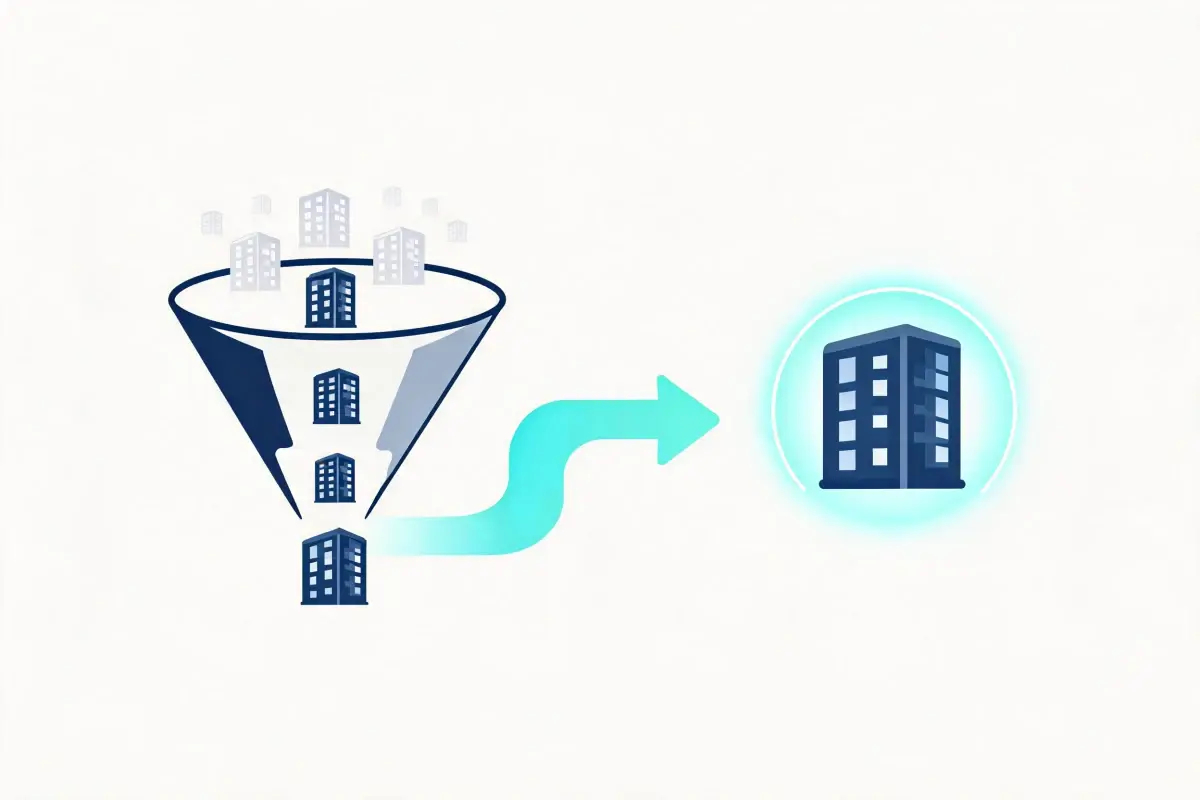
AI handles repetitive discovery and research tasks so reps can focus on outreach and conversations.
4 Core Steps to Evaluate an AI Prospecting Workflow for B2B Teams
If you are assessing how to use AI for sales prospecting, evaluate tools and workflows against four practical steps. A strong workflow should make each step faster and more consistent, not more complicated.
1. Define the target profile first
Before you let any tool search for leads, define your ideal customer profile and buyer personas. The quality of AI output depends heavily on how clearly you describe the target company, buyer role, and use case.
For B2B teams, start with basics such as industry, company size, geography, and the specific problem your product solves. The more specific the inputs, the more relevant the results.
2. Set discovery scope and boundaries
Decide where AI should look for prospects and what data it can use. For inside sales teams, this might mean a specific industry and company size across a country or region. For field sales teams, it might mean a defined territory by city, region, or postal code.
Boundary setting also includes deciding which accounts are off-limits, such as existing customers, competitor accounts, or companies already in an active nurture sequence.
3. Review and grade results before outreach
AI should never send outreach on its own without human review. Every generated lead list needs a human check to confirm fit, remove poor matches, and prioritize the accounts worth contacting first.
A reliable workflow includes clear grading or scoring criteria so reps can quickly see why an account was suggested and decide whether it deserves outreach, more research, or removal from the list.
4. Sync approved leads to the CRM and assign owners
Once leads are reviewed and approved, the workflow should move them into the CRM with the right owner, source notes, and next action. This handoff is where many prospecting tools fall short: they generate a list, but the list never makes it into active sales motion.
Look for a workflow that connects discovery, grading, assignment, and follow-up tracking in one place so leads do not get lost between tools.

A structured AI prospecting workflow moves from target definition through discovery, review, and CRM handoff.
B2B Sales Scenario: How to Apply AI Prospecting in Practice
To make this concrete, consider a common B2B use case: a SaaS company selling to mid-market manufacturing firms in North America. The sales development team needs to build a fresh list of operations leaders to contact this quarter.
With B2B sales prospecting with AI, the workflow might look like this:
The team configures the AI tool with target criteria: manufacturing industry, 200–2,000 employees, United States and Canada, and operations or supply-chain leadership roles.
The AI searches for matching accounts, pulls in available background data, and generates an initial list with suggested grades.
A sales rep reviews the list, removes companies that recently went through layoffs or major restructuring, and flags high-priority accounts for immediate outreach.
Approved accounts are added to the CRM, assigned to the right rep, and entered into a targeted email sequence with scheduled follow-ups.
After the first wave of replies, the team feeds outcomes back into the process so future searches become more accurate over time.
This example is hypothetical, but it mirrors how many teams structure AI-assisted prospecting today. The key is that AI handles volume and initial research, while humans make the final call on who gets contacted and how.
How to Choose the Right AI Tool for Your Prospecting Workflow
With so many AI sales prospecting tools for B2B on the market, it is easy to get drawn in by flashy dashboards and broad claims. Focus instead on whether a tool fits your actual workflow and team structure.
Use this quick comparison framework to evaluate options:
Evaluation area | What to look for | Why it matters |
|---|---|---|
--- | --- | --- |
Discovery depth | Ability to filter by industry, location, company size, and buyer role | Generic lists waste rep time; precise targeting improves reply rates |
Research quality | Clear background summaries and account context | Reps spend less time pre-call Googling and more time preparing |
Grading transparency | Visible reasons for scores or grades | Teams trust recommendations and can adjust criteria over time |
CRM and workflow fit | Lead assignment, scheduled outreach, and follow-up tracking | Tools that stay siloed never make it into daily rep habits |
Human control | Clear approval steps before outreach or CRM updates | Prevents poor-quality leads or off-brand messages from reaching buyers |
The best tool is rarely the one with the most features. It is the one your team will actually use consistently, with controls you trust.
Setting Human Oversight Boundaries for AI-Generated Leads
AI can accelerate prospecting, but it should never operate without guardrails. Establishing clear human oversight boundaries protects both your brand and your lead quality.
Start with three basic rules:
No automated outreach without approval: AI can draft email content and schedule sequences, but a human should review and approve every account and message before it goes out.
Grades are research inputs, not final decisions: Use AI scores as a sorting tool, not as a guarantee that an account is ready to buy. Always confirm current demand directly with the buyer.
Escalate ambiguous cases: When an account is hard to categorize or the data is incomplete, route it to a senior rep or manager instead of letting the AI decide on its own.
These boundaries keep speed and quality in balance. They also make it easier to train newer reps, because the AI handles the first pass of research while humans focus on judgment calls.

Human oversight ensures AI-generated leads are reviewed and approved before any outreach is sent.
For teams looking to put AI prospecting into daily practice, the right tool can cut research time, improve lead quality, and help reps focus on what they do best: selling. If you want to explore AI-powered prospecting designed for B2B sales development and field sales workflows, explore YTTAI Sales Master for your B2B sales workflow by visiting the product overview page.
FAQ
What is AI for sales prospecting?
AI for sales prospecting uses artificial intelligence to help B2B sales teams discover, research, and prioritize potential customers. It speeds up repetitive tasks like list building and initial account research so reps can focus on high-value conversations.
How do you use AI for sales prospecting safely?
Use AI to generate initial lead lists and research summaries, but require a human to review and approve every account before outreach. Keep grading as a research input rather than a final decision, and escalate ambiguous cases to a manager.
What are the main benefits of AI sales prospecting tools for B2B?
The main benefits are faster list building, more consistent lead research, clearer prioritization through scoring or grading, and less manual administrative work for reps. The result is usually more time spent on actual selling activities.
Can AI replace human sales development reps?
No. AI can support discovery, research, and workflow management, but it cannot confirm current buyer needs, build rapport, or close deals on its own. The strongest workflows combine AI speed with human judgment and relationship skills.
Comments