

AI in Sales: A Practical B2B Guide to Automating Prospecting and Outreach

AI in sales refers to the use of artificial intelligence tools to automate research, prospecting, outreach and follow-up tasks so B2B sales teams can focus on high-value conversations with qualified buyers. Instead of replacing sales reps, AI handles the repetitive data work that slows down pipelines, from building lead lists to drafting first-touch emails. For B2B teams, the biggest value is speed: you can cover more accounts, more territories, and more research without adding headcount.
What AI in Sales Actually Does for B2B Teams
At its core, AI in sales supports four high-impact areas: research, prospecting, outreach, and follow-up tracking. Research-focused tools gather company and contact data, flag buying signals, and grade accounts so reps know who to call first. Prospecting tools help teams discover new accounts that fit their ideal customer profile, whether they work across a national market or within a specific field territory. Outreach tools help personalize messaging at scale while keeping campaigns on schedule. Follow-up tools track replies, route conversations, and surface accounts that need human attention.
It is important to draw a line between documented capabilities and editorial interpretation. AI tools excel at pattern matching, list building, and draft generation, but they do not replace qualification calls, negotiation, or relationship building. The strongest B2B sales teams use AI as a workflow assistant, not a decision-maker.
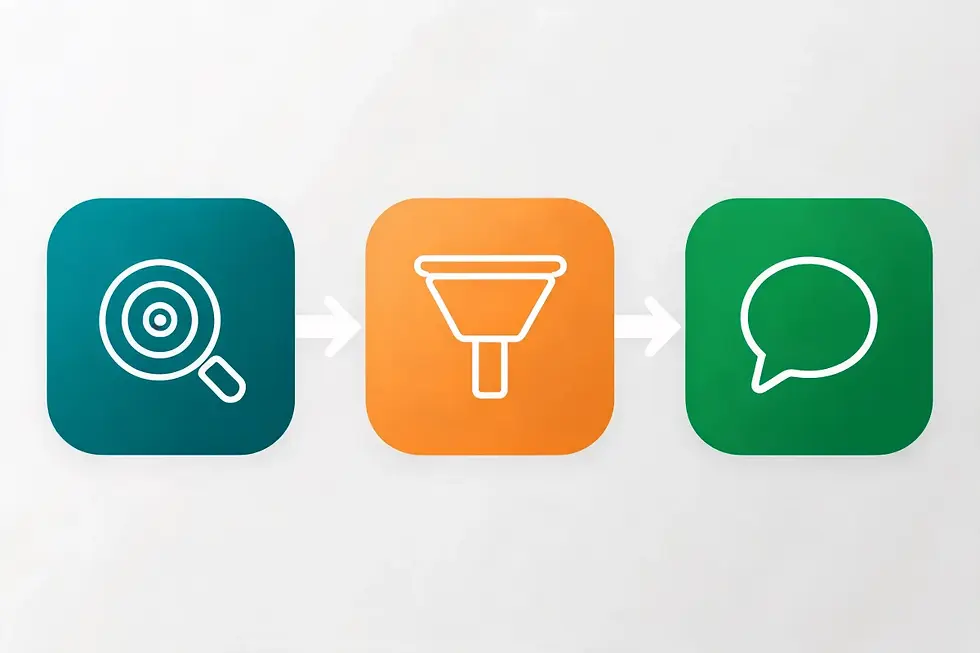
AI in sales primarily supports research, prospecting, and outreach tasks across B2B teams.
Step 1: Define the Sales Task You Want AI to Handle
Before evaluating any tool, name the specific task you want to improve. Teams often start with one pain point rather than a full pipeline overhaul. Common starting points include building a larger qualified lead list, reducing manual research time for SDRs, scaling personalized first-touch emails, or helping field reps find nearby accounts while on the road.
Use this quick checklist to narrow your focus:
Identify the role affected: SDR team, field sales rep, territory manager, or sales ops
Name the bottleneck: too few prospects, slow research, low reply rates, or territory coverage gaps
Define success in plain terms: more meetings set, faster list building, higher-quality accounts, or reduced admin time
Note any constraints: industry focus, geographic area, compliance rules, or CRM requirements
If your team works across inbound and outbound channels, pick one channel first. Starting small makes it easier to measure results and roll out changes gradually.
Step 2: Match the AI Tool to Your Sales Workflow
Not all AI sales tools for B2B solve the same problem. Some focus on intelligence and research, others on outreach automation, and others on territory-based discovery. Matching the tool to your workflow prevents overbuying and reduces adoption friction.
Workflow Need | Relevant AI Capability | Common Team |
|---|---|---|
--- | --- | --- |
Building and grading outbound lead lists | Sales intelligence and account scoring | SDR and sales development teams |
Scaling personalized email sequences | Draft assistance and campaign scheduling | Outbound SDR and AE teams |
Finding accounts inside a sales territory | Map-based discovery and territory scanning | Field sales and territory managers |
Researching accounts before calls | Background summaries and company profiles | All customer-facing sales roles |
For sales development teams, AI prospecting for sales development combines account discovery with research summaries so reps spend less time on Google and more time on calls. For teams that send large volumes of personalized messages, AI-powered sales outreach helps with subject lines, opening lines, and follow-up cadences while keeping a human in the loop for final approval. For reps who sell in person, AI field sales prospecting surfaces nearby accounts on a map, which is especially useful for route planning and last-minute visit opportunities.

AI sales tools for B2B support both inside teams focused on outreach and field teams focused on territory prospecting.
Step 3: Set Up Your First AI-Assisted Sales Workflow
Once you choose a task and tool type, set up a limited pilot instead of turning everything on at once. A focused pilot keeps the team in control and makes results easier to measure.
Define your ideal customer profile. Describe the target buyer, industry, company size, and product fit. The more specific your inputs, the more relevant the AI output will be.
Set your scope. Choose one market, one territory, or one campaign first. For field teams, pick a single city, region, or postal code area with a clear search radius. For SDR teams, pick one buyer persona and one outbound sequence.
Import or build your starting list. Bring in existing CRM accounts so the tool can distinguish new prospects from accounts you already work with.
Review initial suggestions. Check the first batch of accounts, messaging drafts, or research summaries before any action is taken. Adjust filters or prompts as needed.
Assign ownership. Decide which rep owns each account, who approves outreach, and who reviews performance reports.
When you use AI for outreach, always keep a human approval step before messages are sent. AI can suggest language, but tone, offer details, and compliance checks should be reviewed by someone on your team.
Step 4: Review Outputs and Keep Human Oversight
AI in sales works best with regular human review, not set-it-and-forget-it automation. Schedule weekly check-ins to review account quality, message performance, and any edge cases the tool may have missed.
For prospecting workflows, compare AI-suggested accounts against your ideal customer profile. Flag accounts that are too small, in the wrong industry, or already in your CRM under a different name. For outreach workflows, track reply rates, meeting rates, and unsubscribe rates. If performance drops, refine your prompts, audience filters, or approval process.
Human oversight is especially important for contact data, compliance language, and pricing references. AI outputs should be treated as research inputs and draft suggestions, not final customer commitments. Always confirm current demand, budget, and timing directly with the buyer.
Common Use Cases in B2B Sales Scenarios
AI in sales appears across many B2B roles, but three use cases stand out for immediate impact.
AI prospecting for sales development
Sales development reps spend a large share of their day researching accounts and building lists. AI prospecting tools gather company data, surface relevant triggers, and grade accounts so reps can prioritize the best opportunities. Instead of starting from a blank search, reps receive a shortlist of accounts with background summaries and recommended next steps.
AI-powered sales outreach
Outreach at scale requires personalization without sacrificing speed. AI tools help draft subject lines, opening paragraphs, and follow-up emails based on the prospect's company profile and the rep's offer. The rep edits and approves each message, which keeps communication authentic while reducing writing time.
AI field sales prospecting
Field sales reps and territory managers need to fill their calendars with in-person visits. AI field sales prospecting tools let teams define a target buyer, choose a country, narrow the area by city or postal code, and set a search radius. Results appear on a map or in a list, with new accounts clearly separated from those already in the CRM. This helps reps plan efficient routes and discover nearby prospects they may have missed.

Effective AI in sales workflows combine automated research with human approval for outreach and final decisions.
How to Choose the Right AI Sales Tool for Your Team
The right AI sales tool depends on your team structure, primary workflow, and growth goals. If your biggest need is more outbound meetings, prioritize tools with strong prospecting and research features. If you already have a steady lead flow but struggle with follow-up, prioritize outreach and cadence tools. If your team sells on the road, prioritize tools built for territory-based discovery and route planning.
Before you commit, test a narrow pilot with one team, one workflow, and clear success metrics. Pay attention to data quality, ease of use, and how well the tool fits your existing sales process. The best tools reduce manual work without forcing you to rebuild your entire CRM or change how your reps sell.
When you are ready to explore AI-driven support for sales development, field prospecting, or sales intelligence, review options that map directly to your workflow rather than chasing generic AI features. For B2B teams focused on outbound and territory growth, you can explore YTTAI Sales Master for your B2B sales workflow by visiting the product overview page.
FAQ
What is AI in sales used for in B2B teams?
AI in sales is used to automate research, prospect list building, outreach drafting, and follow-up tracking so B2B reps can spend more time on qualified conversations and relationship building.
Do AI sales tools replace sales development reps?
No, AI sales tools support sales development reps by handling repetitive research and administrative work. Human reps still own qualification, conversations, and relationship building.
What is AI field sales prospecting?
AI field sales prospecting helps field reps and territory managers discover prospective customers within a defined geographic area, view results on a map, and separate new accounts from existing CRM records.
How should teams start using AI-powered sales outreach?
Teams should start with a small pilot focused on one buyer persona and one sequence, review all AI-suggested messages before sending, and track reply and meeting rates before scaling up.
Comments