
B2B Account Profiling: Organizational Structure and Stakeholder Mapping Guide

B2B account profiling combines organizational structure analysis and stakeholder mapping to identify decision-makers, understand reporting lines, and prioritize outreach for higher conversion in complex B2B sales cycles. Instead of reaching out blindly, sales teams build a structured view of the target account so every conversation is relevant, every follow-up moves the deal forward, and fewer warm leads go cold.
The core idea is simple: a strong profile answers who you need to talk to, how they connect to each other, and what each person cares about. This guide walks through a repeatable framework you can apply to every new prospect account, from initial research to message alignment.
What Is B2B Account Profiling and Why It Matters
At its core, b2b account profiling organizational structure stakeholder mapping work is the practice of documenting the people, relationships, and priorities inside a target company. For B2B sales, a profile is much more than a company size or industry label. It is a living picture of the account that evolves as you learn more.
Why does it matter? B2B purchases rarely depend on a single buyer. Most deals involve multiple stakeholders across departments, each with their own goals, budgets, and objections. Without a clear profile, sales teams waste time on low-influence contacts, repeat information already shared elsewhere, or miss the executive who ultimately approves the budget.
A well-built profile helps you:
Shorten research time before outreach
Route messages to the right stakeholder on the first try
Spot blockers and champions early
Align value points with each buyer’s priorities
Reduce stalled deals caused by unclear decision paths
This is especially valuable for longer sales cycles, high-ticket offers, or accounts that span multiple regions and business units.

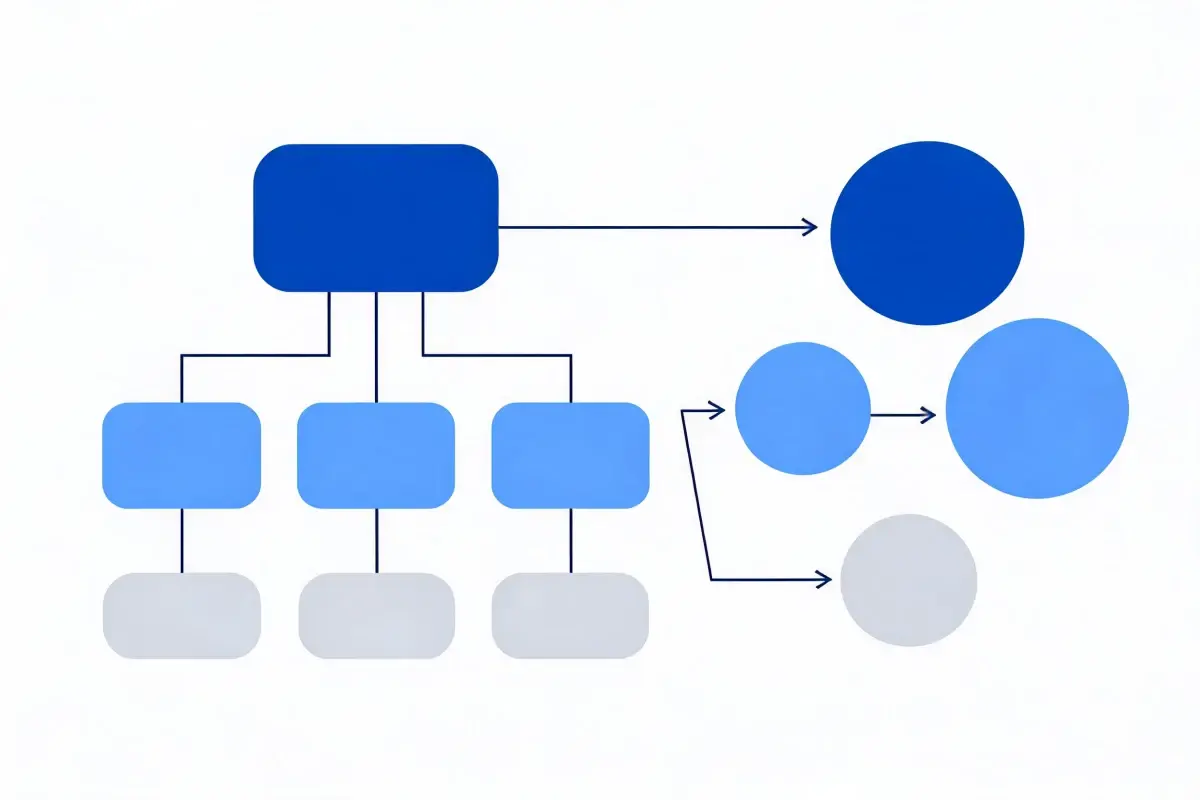
Basic organizational structure view for account research, focused on relevant departments only.
Step 1: Map the Target Account’s Organizational Structure
The first pillar of account profiling is organizational chart analysis for B2B sales. The goal is not to recreate a perfect org chart, but to understand the structure that matters to your sale.
Start with the broad layout of the company. Identify the main business units, regional teams, and functional departments relevant to your product. Then zoom in on the departments most likely to use, evaluate, or pay for your solution.
Practical structure research steps
Confirm the legal entity, headquarters location, and regional footprint.
Identify the top-level leaders in relevant functions such as sales, operations, finance, IT, or procurement.
Note reporting lines between teams, especially if purchasing decisions cross departments.
Flag shared service teams, center-of-excellence groups, or procurement hubs that can influence timing and terms.
Record any recent restructuring, acquisitions, or leadership changes that may shift priorities.
You do not need every job title in the company. Focus on the layers and teams that touch the buying journey. For example, if you sell sales intelligence software, the structure you care about includes the sales leadership team, the revenue operations group, and the finance team that approves SaaS budgets.
What to capture in your structure view
Keep the output simple and actionable. A short table or a few bullet points per department is usually enough to guide outreach. Document only what you can verify from public sources, company announcements, or direct conversations, and label anything you infer as an assumption to confirm later.
Step 2: Identify Key Stakeholders and Their Roles
Once the structure is clear, the next step is B2B stakeholder mapping for sales. Stakeholders are the people who can influence, approve, use, or block a purchase. A common mistake is focusing only on the most senior title in the room. In practice, mid-level managers, end users, and procurement teams often have more day-to-day influence over whether a deal moves forward.
Most B2B buying groups include four main role types:
Role type | Primary interest | Typical influence |
|---|---|---|
--- | --- | --- |
Economic buyer | ROI, budget, business outcome | Final approval authority |
Technical or functional evaluator | Fit, integration, implementation quality | Recommend or block |
End user | Ease of use, workflow impact | Adoption and internal advocacy |
Procurement or vendor manager | Contract terms, pricing, compliance | Process and cost control |
A B2B decision-maker identification framework helps you sort contacts into these categories rather than treating every name the same way. As you find new contacts, update the profile so the full team knows who each person is and why they matter.
How to verify stakeholder roles
Look for consistent signals across multiple sources. A job title is a starting point, not proof of authority. Check recent projects, public speaking topics, internal team size, and the types of meetings they join. When possible, confirm the role directly in a conversation by asking about their responsibilities and who else is involved in the decision.

Simplified stakeholder influence map showing role types and relative influence in a B2B buying group.
Step 3: Build a Stakeholder Influence Map
After you list the stakeholders, the next part of b2b account profiling organizational structure stakeholder mapping work is to show how they relate to each other. An influence map is not a full org chart. It is a simplified view of who talks to whom, who drives the initiative, and who can slow it down.
The value of this step is that it forces you to think beyond individual titles. Two directors at the same level may have very different levels of influence depending on the project, their tenure, or their relationship with the executive sponsor.
How to build a simple influence map
Place the economic buyer at the top.
Add the main evaluation team below, grouped by department.
Draw the strongest working relationships you can confirm.
Mark each person as champion, supporter, neutral, or skeptic.
Note any gaps where you still need an introduction or more information.
Common pitfalls to avoid
Do not assume the loudest contact is the most powerful. Do not ignore skeptics; they often surface objections you need to address early. And do not treat the map as a one-time exercise. Update it after every call, meeting, and referral so the picture stays accurate.
Step 4: Align Messaging to Each Stakeholder Group
Account profiling steps for business development are only useful if they change how you sell. Once you know the structure and the stakeholders, tailor your outreach to each group instead of sending one generic message to the whole account.
The economic buyer usually cares about business outcomes, risk, and payback period. Functional evaluators focus on integration, security, and how the solution works with existing tools. End users want to know how the product will make their daily work easier. Procurement teams need clear pricing, contract terms, and vendor credentials.
Practical alignment tips
Open with the value most relevant to that person’s role.
Reference projects or priorities they have publicly discussed.
Match the depth of detail to their involvement in the evaluation.
Use one stakeholder to warm up the next through an internal referral.
This approach also helps you avoid the classic mistake of pitching cost savings to someone whose main goal is speed, or pitching technical depth to someone who only cares about team productivity.
How Sales Intelligence Supports Account Profiling
Manual research works for a handful of accounts, but it scales poorly when you manage dozens or hundreds of prospects. Sales intelligence tools help teams build account profiles faster by pulling together company context, contact data, and market signals in one place.
For example, a sales intelligence solution can surface company profiles, suggested contacts, and account scoring so reps know where to start and who to prioritize first. The best use of automation is to handle the early research and prioritization work, while salespeople focus on verifying information, building relationships, and tailoring the conversation.
It is important to set clear boundaries. Intelligence outputs are research inputs, not guarantees of buyer interest or authority. A human seller should always validate contact details, current role responsibilities, and active buying signals before reaching out or moving an opportunity forward.

Messaging alignment: generic outreach compared to role-specific outreach across B2B stakeholder groups.
Practical B2B Sales Example of Account Profiling in Action
Consider a hypothetical mid-sized SaaS company targeting a regional retail chain. The sales team starts with structure research: they confirm the chain has separate operations, IT, and finance teams, plus a centralized procurement group at headquarters.
Next, they identify stakeholders. The operations VP is the likely sponsor, the IT director will evaluate integration requirements, the store operations director will represent end users, and the procurement manager will handle contract review. The CFO approves capital and multi-year software budgets.
Then they build the influence map. The operations VP reports to the CEO and has a strong working relationship with the IT director. Procurement reports to the CFO and tends to slow down deals that lack a clear business case. The team marks the operations VP as a potential champion and procurement as a cautious reviewer.
Finally, they align messaging. The operations VP hears about labor efficiency and store-level performance gains. The IT director receives information about integration architecture and security controls. The CFO gets a short business case focused on payback and risk. Procurement receives a clear pricing summary and standard vendor documentation.
The result is a more coordinated outreach plan. Instead of one rep emailing everyone the same deck, the team approaches each stakeholder with the right level of detail and the right value angle.
Wrapping Up
Strong b2b account profiling organizational structure stakeholder mapping practice is one of the highest-leverage activities in B2B sales. It turns scattered research into a clear picture of the account, so you know who to contact, how they fit in, and what to talk about. The framework is straightforward: map the structure, identify stakeholder roles, build an influence map, and align your message to each group.
If you want to speed up the research and prioritization side of the process, explore how sales intelligence can support your workflow. Start by applying the steps above to one target account this week, then refine the process as you learn more about how your buyers organize and make decisions.
For teams ready to strengthen their prospect research and account coverage, explore YTTAI Sales Master for your B2B sales workflow.
FAQ
What is the difference between organizational structure analysis and stakeholder mapping in B2B account profiling?
Organizational structure analysis looks at departments, reporting lines, and the overall shape of the company. Stakeholder mapping focuses on individual people, their roles in the buying process, and their relative influence. Both are part of a complete B2B account profile.
How many stakeholders should I map for a typical B2B account?
Focus on the stakeholders who actively participate in the buying journey, usually between four and eight contacts across economic buyer, evaluator, end user, and procurement roles. Prioritize quality and verified relationships over a long list of names.
Can sales intelligence tools replace manual account research?
No. Sales intelligence tools speed up research, surface suggested contacts, and help prioritize accounts, but they are research inputs. A human seller should still verify roles, confirm active interest, and tailor the conversation to each stakeholder.
When should I update an account profile?
Update the profile after every meaningful call, meeting, referral, or company change such as restructuring, new hires, or announced initiatives. A good account profile is a living document, not a one-time report.
Comments