
Company Intelligence Sales Outreach: A Practical Guide to Better B2B Replies

Company intelligence sales outreach is the practice of researching prospect accounts to tailor messaging, prioritize leads, and improve reply rates in B2B sales development. Instead of sending generic cold emails to a broad list, teams use verified company data to decide who to contact first, what to say, and which angle is most likely to resonate. Done well, it shortens research time, reduces wasted outreach, and helps SDRs have more relevant conversations.
What Is Company Intelligence in B2B Sales Outreach?
Company intelligence in sales outreach is structured account information that helps a sales team understand whether a business is a good fit and what they may care about right now. It can include industry, size, location, technology stack, recent changes, and public signals that indicate demand. It is not a list of contact names alone; it is the context that turns a contact into a qualified prospect.
For SDRs, this intelligence matters because every cold message competes with a crowded inbox. Buyers quickly delete templated emails that show no understanding of their business. When you reference a real company detail that matches your value proposition, the recipient is more likely to pause, read on, and reply.

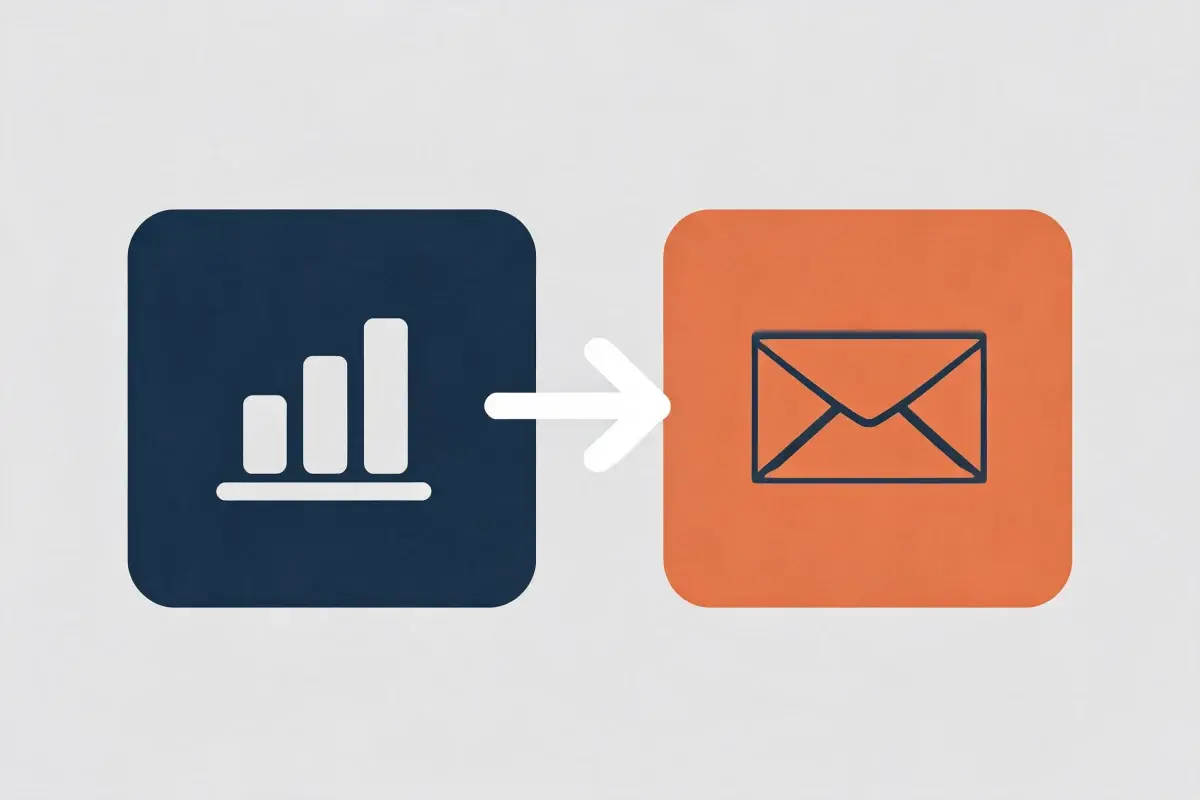
Company intelligence sales outreach follows a clear flow: research accounts, grade fit, then craft tailored messaging.
Common types of intelligence used in outreach include firmographics, business signals, account fit scores, and available buying context. Teams typically combine these inputs to decide which accounts belong in an outbound sequence and which should wait or be excluded entirely.
When to Use Company Intelligence Before You Reach Out
Company intelligence is most useful at three points in an outbound workflow: list building, prioritization, and personalization. Using it at the right stage prevents wasted effort and keeps outreach focused.
First, use it during list building to define your ideal account profile. If you sell to mid-market SaaS companies in North America, you can filter by industry, headcount range, and geography before adding any contacts. This is a core part of B2B sales intelligence for outreach because it sets the quality baseline for the entire campaign.
Second, use it before prioritization to grade accounts. Not every company that fits your ICP is equally ready to buy. Accounts showing growth signals, recent funding, hiring in relevant departments, or technology changes may deserve earlier outreach. Account research for cold outreach helps you rank accounts so the strongest opportunities get the most attention.
Third, use it right before you personalize an email or call script. Even a short, accurate observation about the company’s direction can make a message feel handwritten. The goal is not to flatter the prospect or recite their entire history; it is to open with a relevant reason for reaching out.
Step-by-Step Process to Turn Intelligence Into Outreach
Turning research into outreach works best with a simple, repeatable process. It does not require deep data work for every account, but it does need consistent inputs and clear decision rules.
Define your target account criteria Start with the firmographics that match your ideal customer: industry, company size, location, and any product or service fit signals. Write these rules down so everyone on the team uses the same definition.
Pull a list of matching companies Use sales prospect intelligence tools to identify accounts that meet your criteria. Review the resulting list for obvious mismatches and remove companies that are clearly not a fit.
Score each account by fit and signal Grade accounts using a simple framework, such as A, B, or C, based on how closely they match your ICP and whether they show relevant buying signals. A-grade accounts go into immediate outreach; C-grade accounts may be nurtured later.
Select one personalization angle per account For each account you plan to contact, pick one specific observation that ties to your offering. It could be a new market entry, a team expansion, a recent partnership, or a technology change. Avoid generic compliments that could apply to any company.
Build a short, focused sequence Write an outreach sequence of three to five touches that reference your chosen angle in the first message and expand with related value points in the follow-ups. Keep each message brief and easy to reply to.
Review results and refine criteria After a full sequence has run, review reply rates and meeting bookings by account grade. Update your scoring rules if certain signals consistently produce better outcomes.

B2B sales intelligence for outreach makes messages more relevant than generic templates, which improves reply rates.
The table below summarizes how intelligence inputs map to common outreach actions.
Intelligence Input | Outreach Action | Example Use |
|---|---|---|
--- | --- | --- |
Industry and company size | List filtering | Build a campaign for SaaS companies with 50–200 employees |
Recent growth or funding | Prioritization | Move fast-growing accounts into the first outreach wave |
Technology stack or product changes | Personalization | Open with a relevant use case tied to their current tools |
Department hiring signals | Timing | Reach out when teams expanding in your buyer’s function |
Account fit score | Sequencing | Assign shorter, higher-touch sequences to top-grade accounts |
Example: Applying Company Intelligence to a B2B Outreach Sequence
Here is a hypothetical example of how this works in practice. Imagine you sell a customer support platform and you are researching a mid-sized e-commerce company that recently expanded its support team and opened a new regional market.
Instead of opening with a generic pitch about your platform, your first email could reference the support team expansion and mention how teams in similar situations reduce response time after launching your product. The follow-up could share a short example of how another e-commerce brand handled fast growth in support. The final touch could invite them to a 15-minute call to compare notes on scaling support efficiently.
In this example, the intelligence is not decorative. It directly shapes the opening line, the value angle, and the type of social proof you use. That is the difference between a message that sounds researched and one that sounds mass produced.
Target company research for SDRs does not need to take 20 minutes per account. Often, one or two verified signals are enough to write a relevant opening and choose the right follow-up path.
What to Avoid When Using Sales Intelligence Data
Intelligence only helps if you use it carefully. There are a few common mistakes that can make outreach feel off-target or even damage trust.
First, do not overpersonalize. Mentioning one specific company detail is professional; reciting three years of news history feels invasive. Keep the focus on why you are reaching out, not how much you looked up.
Second, do not treat every signal as proof of demand. A hiring post or a new product announcement is a reason to research further, not a guarantee that the company is buying soon. Always use intelligence as a research input, then confirm current interest in conversation with the buyer.
Third, do not ignore data freshness. Outdated company size information, old leadership titles, and past announcements can make an opening line sound wrong. Check that the signal you are referencing is recent enough to be relevant.
Fourth, do not let scoring replace judgment. Scores are useful for sorting lists, but they do not capture every nuance of a business. A human review step helps catch accounts that look good on paper but are not a real fit, and accounts that look average but have strong potential.

Target company research for SDRs helps teams focus outreach on accounts most likely to have a current need.
How YTT AI Sales Intelligence Specialist Supports This Workflow
YTT AI Sales Intelligence Specialist helps sales teams identify prospective buyers by market and purchasing criteria. Users can review company profiles, scores, grades, recommendation reasons, and available contacts, then select companies for the lead pool or exclude them. The tool is designed to support research and prioritization, and teams should always confirm current demand directly with the buyer.
Whether you are building a new outbound list or refining an existing sequence, solid account intelligence makes every touch more relevant and more likely to get a response. To see how structured account research can fit into your prospecting routine, explore YTT AI Sales Intelligence Specialist for your B2B sales workflow.
FAQ
What is company intelligence in sales outreach?
Company intelligence in sales outreach is structured account information used to research prospects, prioritize leads, and personalize messaging in B2B prospecting. It helps SDRs decide which accounts to contact and what to say to improve relevance and reply rates.
When should you use account research for cold outreach?
You should use account research during list building, before prioritizing accounts, and right before personalizing each outreach sequence. This ensures you contact the right accounts first with a relevant opening angle.
What are sales prospect intelligence tools used for?
Sales prospect intelligence tools help teams identify companies that match their ideal customer profile, review fit scores and buying signals, and build prioritized lead lists for outbound outreach.
How much company research do SDRs need per account?
In most cases, one or two verified and relevant signals are enough. The goal is to open with a specific, accurate observation tied to your offering, not to recite the full company history.
Comments