
Costco Warehouse Openings as Prospect Signals in Annual Reports: A Practical Guide for Sales Teams

Costco warehouse openings reported in annual public filings indicate physical expansion activity, but they must be treated as market-signal inputs rather than verified buying intent until a sales team validates specific needs with the buyer. For sales development, field sales, and sales intelligence teams, the value of Costco annual report warehouse expansion data lies less in the raw count of new locations and more in what each opening implies about timing, territory coverage, procurement needs, and local decision-making structures.
The goal is not to treat every new warehouse as a qualified lead, but to use retail expansion signals for sales development teams as a structured way to prioritize accounts, time outreach, and focus research on regions where physical investment is already underway.
What Costco Annual Report Warehouse Openings Actually Show
Public annual reports are useful because they are official, routinely published, and accessible to any research team. In the context of Costco warehouse openings as prospect signals in annual reports, the disclosed information typically describes the number of new warehouses opened during the fiscal year, the geographic markets entered or expanded, and sometimes the expected timing of upcoming openings.
These facts matter because they establish that a market is receiving real estate investment, capital allocation, and operational planning. For B2B teams selling into retail, logistics, facilities, or adjacent categories, that combination of capital and timeline is a strong starting filter. However, an opening announcement alone does not reveal which vendors are already selected, which categories are still open to bidding, or who holds budget authority at the local or regional level.
A common mistake is to read an opening as a direct purchase signal. A more accurate framing is that openings narrow the market from every possible prospect in a region to a smaller set of accounts that are actively building or ramping operations in that region. The rest of the qualification work still needs to happen.
Evidence Table: Reported Facts vs. Usable Sales Signals
The table below separates what official filings state directly from how sales teams can reasonably interpret them, along with the conditions that must be checked before outreach.
Official fact from public annual filings | Clickable source type | Author interpretation for sales use | Unknown / applicable conditions |
|---|---|---|---|
--- | --- | --- | --- |
Number of new warehouses opened in the most recent fiscal year | Company investor relations annual report page | New locations indicate active expansion and potential procurement activity for equipment, services, and supplies | Does not specify which categories have been awarded to incumbent vendors or which are still open |
Geographic regions or markets where openings occurred | Company annual report filed with securities regulators | Teams can prioritize territories matching their coverage and align field sales visits with new facilities | Does not identify local decision-makers, budget timing, or vendor selection process |
Future opening plans discussed in management commentary | Official annual report narrative | Planned openings can be used to time outreach earlier in the site preparation cycle | Plans may change due to permitting, construction delays, or revised business conditions |
Warehouse format or size descriptions when provided | Company annual report and supplemental investor materials | Format details help narrow the relevant product or service set for more targeted messaging | Not all filings include format-level detail for every location |
This table is intentionally conservative. It separates filed facts from interpretation so that sales teams do not overstate what the document proves. The strongest use of Costco annual report warehouse expansion data is as a prioritization layer, not as a substitute for direct buyer conversation.

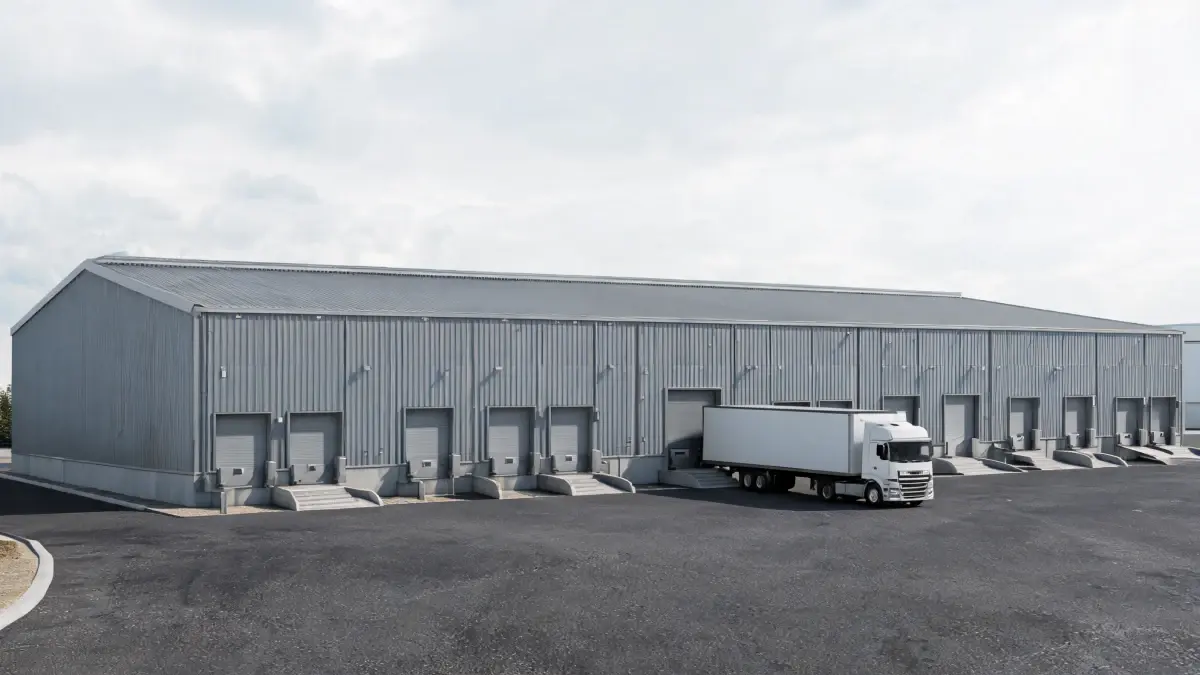
Illustrative comparison of an operational warehouse and an expansion-phase warehouse, highlighting why opening announcements require additional validation before sales outreach.
How to Map Warehouse Openings to Territory and Account Research
Turning openings into warehouse location sales intelligence signals requires a simple research sequence that can be repeated for each new fiscal year release.
Step 1: Extract the market list from the annual report
Start with the official list of newly opened or planned locations. Record the region, state or province, and any city-level detail provided. If the report groups openings by division or region rather than by individual address, keep the research at that level until more specific data is available from other public sources.
Step 2: Cross-reference with territory coverage
Map each opening market to internal sales territories, assigned field representatives, and existing account relationships. If your organization already works with other retail or warehouse operators in the same market, an expansion by a major player is a signal to revisit nearby accounts and compare footprint trends.
Step 3: Build a research profile before outreach
For each market with confirmed openings, research the local operational structure, procurement patterns, and any publicly visible vendor relationships. The goal is to move from a generic warehouse opening alert to a focused set of questions: what services are typically sourced locally, who manages site-level procurement, and when does the ramp-up period usually occur relative to the opening date.
Step 4: Validate with direct buyer contact
Retail expansion signals for sales development teams are most useful when they shape the first conversation rather than replace it. Use the opening as context for why you are reaching out, then confirm current priorities, timing, and the right point of contact. Treat any assumption about budget, need, or vendor status as unproven until the buyer confirms it.
Limits of Openings Data: What They Do Not Tell You
It is important to be clear about what Costco warehouse openings as prospect signals in annual reports cannot do. Overreliance on annual report data can lead to poorly timed outreach or inaccurate account scoring.
First, openings data does not reveal procurement timing relative to the opening date. Some categories are procured early in design and construction, while others are bought closer to launch or after operations begin. A sales team that reaches out too late may find everything already contracted, and one that reaches out too early may be asked to circle back much later.
Second, annual reports do not disclose incumbent vendor relationships, contract renewal dates, or internal category ownership. A team selling material handling equipment, for example, cannot assume from an opening announcement that the equipment category is open, because a national agreement may already cover all new sites.
Third, the level of geographic detail varies. Some filings list individual cities, while others report openings by country or region. Without exact addresses, field teams may find it difficult to plan site-specific visits, and additional public research may be required to confirm precise locations.
Fourth, future openings are plans, not completed facts. Management commentary may discuss expected openings for the next fiscal year, but those plans can shift due to real estate conditions, regulatory approvals, construction delays, or changes in business strategy.
Applicable Conditions and a Practical Migration Checklist
B2B prospect signals from retail annual reports work best under specific conditions. Teams should adopt this method when they sell products or services that align with warehouse build-out, facility operations, logistics support, or retail site ramp-up. The signal is weaker for offerings that have no clear connection to physical expansion.
Before adding annual report openings to your prospecting workflow, use the checklist below to decide whether the approach fits your team and how to roll it out without overinvesting in unvalidated leads.
Confirm that your product or service has a clear use case tied to new warehouse openings, facility expansion, or regional retail growth.
Assign one research owner to pull the annual filing data and keep it updated when new reports are released.
Map each announced market to your internal territory structure and existing account list before adding new names.
Build a short research template for each opening: market, opening status, likely buyer role, and three qualifying questions for the first outreach.
Separate confirmed openings from planned openings in your CRM and score them differently.
Require direct buyer validation before moving an account from signal status to qualified pipeline.
Review results after one quarter: compare response rates, meeting rates, and pipeline conversion against your standard prospecting sources.
Retire the signal if it does not improve targeting efficiency for your specific category.
The checklist is designed to be lightweight. The point is not to build a complex research process around a single signal, but to test whether warehouse openings make your existing prospecting more focused.
How YTT AI Sales Intelligence Fits Into the Workflow
For teams that want to scale this kind of signal-based research across multiple accounts and territories, YTT AI offers a Sales Intelligence Specialist capability as part of its overseas product portfolio. The tool helps sales teams identify prospective buyers by market and purchasing criteria, review company profiles, scores, grades, recommendation reasons, and available contacts, and then select companies for the lead pool or exclude them.
Rankings and profiles should be treated as research inputs, not guarantees of demand. Human approval remains required before outreach, and teams should always confirm current need and decision authority directly with the buyer. You can review the Sales Master product information to evaluate whether the capability matches your account research workflow.
Used correctly, Costco warehouse openings as prospect signals in annual reports can sharpen territory planning, improve outreach relevance, and help teams enter new markets with better context. The key is to keep the signal in its place: a strong reason to research and reach out, but never a replacement for verified buyer intent.
FAQ
Do annual report warehouse openings mean a company is ready to buy immediately?
No. Warehouse openings show planned or completed expansion activity and should be treated as a research signal, not verified demand. Sales teams still need to confirm timing, budget, decision-makers, and current vendor relationships directly with the buyer.
Can this approach be applied to retailers other than Costco?
Yes, the same signal framework can be adapted to other retailers that publish expansion plans in annual filings, as long as the source is a public official document and the team validates each account individually.
Comments