
Beyond Efficiency Burnout: What Siemens Teaches Global CEOs About AI Digital Workers

Updated: Mar 25
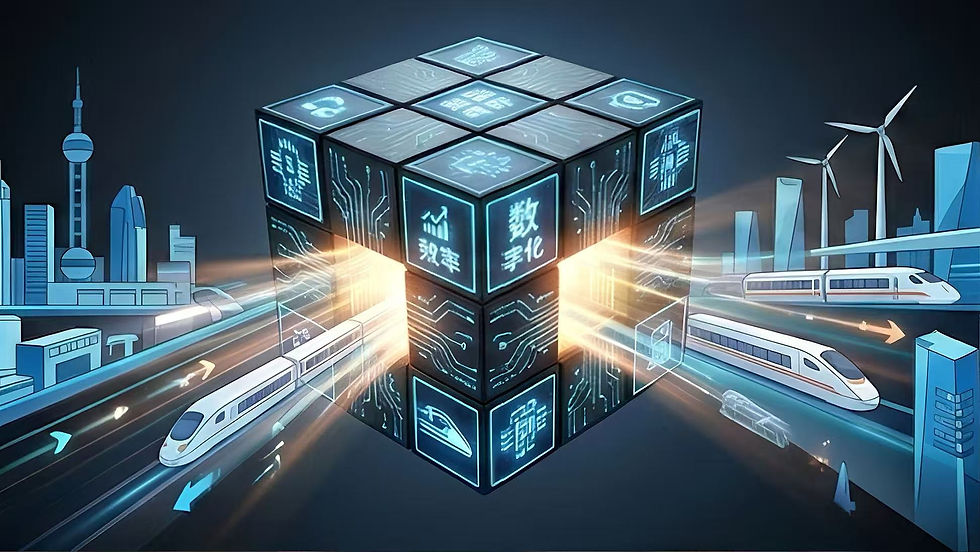
In today’s hyper-connected global market, enterprises are facing a brutal paradox: we invest millions in enterprise software, yet our teams are more exhausted than ever. This is "Efficiency Burnout"—the dangerous habit of masking strategic and systemic inefficiencies with extreme tactical diligence. It is quietly devouring profit margins and stalling global expansion.
When we look at Germany, the cradle of Industry 4.0, and observe how century-old giants like Siemens drive global digitalization, their secret to breaking growth bottlenecks isn't "making employees work longer hours." It is fundamentally restructuring the relationship between humans and systems.
For ambitious enterprises looking to expand internationally and engage with C-level executives in Europe, Siemens’ success is not just a technological victory; it is a paradigm shift in management philosophy. Here are the three ultimate lessons Siemens offers for true digital transformation.
Shatter the "Experience Black Box" with Digital Twins
In traditional management, decision-making heavily relies on the personal experience of core executives and endless cross-departmental friction. This human-to-human management model is the greatest source of operational burnout.
Siemens’ first masterstroke is absolute transparency. By building "Digital Twins" that span from R&D and production to the supply chain, Siemens converts implicit human experience into explicit, actionable data. Before any physical change is made on the factory floor, the system has already run thousands of tests in the virtual world.
The C-Level Takeaway: Stop fighting over data in meeting rooms. Digitalization must first be a comprehensive data mapping of your business processes. When system transparency is high enough, the data speaks for itself, allowing management to elevate their focus from "firefighting" to strategic global planning.
Driving Digital Transformation with AI Digital Workers
This is the critical divergence in management thinking between average companies and global leaders. Many view digitalization merely as a tool to monitor employee output. Top-tier European enterprises, however, see it as an amplifier of human capability.
The core of rejecting efficiency burnout lies in handing over low-value, repetitive tasks to machines, returning the power of creation and strategy to humans. Leading enterprises are now moving beyond basic automation to deploy comprehensive AI Digital Workers.
This is precisely where the YTT Digital CEO is redefining the landscape for expanding enterprises. Built on a foundation of rigorous enterprise management principles, the YTT Digital CEO is not just a software dashboard—it is an intelligent strategic co-pilot. While standard AI handles routine marketing or multi-lingual GDPR-compliant outreach, the YTT Digital CEO provides a holistic, eagle-eye view of the entire organization. With computational power and logic that surpasses human limits, it offers real-time strategic modeling, risk forecasting, and executive-level decision support.
The C-Level Takeaway: Don’t use technology to force your employees to become tireless machines. Instead, hire "Digital Workers" for your organization. When an AI system like the YTT Digital CEO is deeply integrated into your strategic framework, your core human team finally has the bandwidth to secure that next multi-million-euro European contract.
Ecosystems and Long-Termism over Isolation
German enterprises—exemplified by Siemens’ driving role in initiatives like Manufacturing-X—place extreme emphasis on upstream and downstream supply chain synergy and unified standards. They do not fight alone.
When undergoing digital transformation, many companies fall into the trap of building closed, isolated internal systems. However, true cost reduction and efficiency gains come from connecting the entire value chain. Platforms like Siemens’ MindSphere demonstrate that burnout is only eradicated when you can achieve data interoperability with suppliers, clients, and partners within a secure, compliant framework.
When entering the European B2B market, respecting data sovereignty, integrating into established ecosystems, and emphasizing sustainability will resonate far more with German decision-makers than a simple "low price, high speed" pitch.
The C-Level Takeaway: Digitalization is not just an internal engineering project; it is your external calling card. Designing a digital architecture that is open, compliant, and globally minded is the ultimate weapon for winning the trust of the high-end international B2B market.
"Efficiency Burnout" is fundamentally a management crisis that happens to require a technological solution. The lesson from Siemens and modern AI architectures is clear: the future of enterprise competition is "Human Wisdom + AI Digital Workers" versus the outdated "human wave strategy."
For enterprises aiming to secure a foothold on the global stage, the time has come to stop using tactical diligence to cover up strategic laziness.
Upgrade your digital brain with tools like the YTT Digital CEO, reshape your organizational structure, and embrace true digital transformation.


Comments