
How to Prospect Effectively: A Practical B2B Sales Playbook for 2025

To prospect effectively in B2B sales, define your ideal customer profile, research high-fit accounts systematically, use targeted outreach, and continuously refine your list based on engagement and qualification signals. Done right, prospecting is not about blasting as many people as possible. It is about identifying the accounts most likely to buy, reaching them at the right time, and moving them into your pipeline with clear, relevant next steps.
What Effective B2B Prospecting Actually Looks Like
Effective prospecting is a repeatable process, not a series of random messages. It combines research, prioritization, and disciplined follow-up so sales teams spend time on accounts that can actually move the needle.
The core idea is simple: you improve results by narrowing your focus before you scale outreach. Teams that skip this step usually end up with full activity dashboards but few qualified meetings. Teams that follow a structured approach generate more pipeline with fewer touches because every message is sent to a high-fit account for a specific reason.

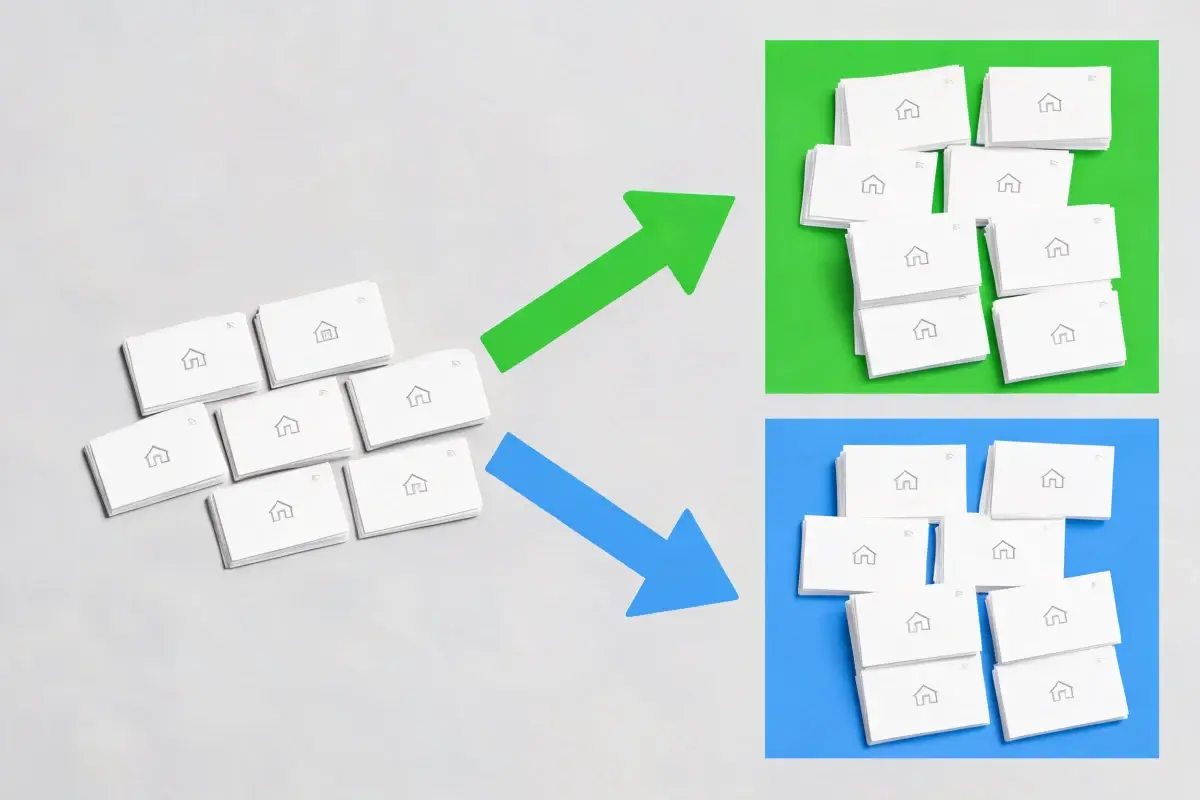
The fastest way to prospect effectively is to focus accounts where fit and timing both align.
Step 1: Define Your Ideal Customer Profile and Buying Triggers
The foundation of how to prospect effectively is knowing who you should target and why they would buy now. Start by building an ideal customer profile, or ICP, that describes the companies most likely to become happy, high-value customers.
Your ICP should include:
Company size, industry, and geography
Typical budget range for your solution
Current pain points your product solves
Internal stakeholders involved in the purchase
Technology stack or operational setup that makes you a good fit
Next, identify buying triggers that suggest timing is right. Common triggers include funding announcements, new leadership hires, company expansion, regulatory changes, product launches, and public reports of operational gaps. Triggers matter because even a perfect-fit account may not buy if there is no urgent reason to act.
When you combine a tight ICP with clear buying triggers, you move from generic prospecting to precise account selection. This is one of the most effective prospecting strategies for sales teams because it directly improves reply rates and meeting quality.
Step 2: Build a Targeted List of High-Potential Accounts
Once you know who you are looking for, the next step is learning how to build a targeted prospect list that matches your ICP and trigger criteria. A strong list is not the biggest list. It is the list with the highest concentration of accounts you can actually help.
Start by choosing reliable data sources that match your market. Use industry databases, company news platforms, professional social profiles, event attendee lists, and partner referrals where available. For each source, define clear inclusion rules so you do not drift away from your ICP.
List Building Stage | What to Check | Why It Matters |
|---|---|---|
--- | --- | --- |
Source filtering | Industry, size, location, tech stack | Keeps your list aligned with your ICP |
Trigger screening | Recent events that create urgency | Improves timing and reply rates |
Contact validation | Role, seniority, department | Ensures you reach decision influencers |
Deduplication | Remove duplicates and existing customers | Prevents wasted outreach and poor experience |
For teams selling into specific territories, use location-based discovery tools to identify accounts inside your assigned area by city, region, or postal code. This is especially useful for field sales teams that need to cluster visits and build local pipeline efficiently.

A repeatable workflow turns random outreach into a reliable B2B prospecting system.
Step 3: Research Each Prospect Before Reaching Out
Before you send a single message, research each account enough to explain why you are reaching out now. Generic emails get ignored. Personalized messages that reference a real situation get responses.
Your research does not need to be a ten-page brief. Focus on a few high-value signals:
Recent company news or strategic priorities
Public comments from the buyer or their team
Current challenges you can connect to your offering
Mutual connections, shared events, or common interests
Tools or vendors they already use that relate to your solution
The goal is to find one strong opening angle per account. If you cannot find a credible reason to reach out, the account probably does not belong in your active outreach list yet. Move it to a nurture track or recheck it in a few weeks.
Step 4: Run Targeted Outreach With Clear, Personalized Messaging
Among B2B sales prospecting techniques, outreach quality has the biggest impact on meeting rates. Even a perfect list will underperform if your message sounds like every other cold email in the inbox.
A strong prospecting message should be short, specific, and focused on the buyer, not you. Open with the reason you are reaching out, explain the problem or opportunity you see, and suggest one small next step. Avoid long company introductions, feature lists, and aggressive asks in the first message.
Use multiple channels, but keep them coordinated. Email, social outreach, and phone calls work best when they reinforce the same message rather than repeat the same script. For example, an email can reference a recent article the buyer published, and a follow-up call can reference that same email.
Consistent follow-up is also critical. Most prospects will not reply to your first message. Plan a short sequence of touches across a few weeks, and stop gracefully if there is no response so you can move your focus to accounts that show interest.
Step 5: Qualify, Grade, and Move Leads Into Your Pipeline
Prospecting does not end when someone replies. The next part of B2B lead generation and qualification is figuring out whether the account is actually a good opportunity and how quickly it should move forward.
Use a clear qualification framework to evaluate fit, need, budget, authority, and timeline. Ask direct questions about current priorities, decision processes, and expected outcomes. Take careful notes and update your CRM so the next person working the account has full context.
After qualification, grade each account so your team knows where to spend time. For example:
Grade A: Strong fit, clear need, active buying process, access to decision maker
Grade B: Good fit, likely need, but timeline or authority is still unclear
Grade C: Possible fit, but not urgent or missing key information
Not a fit: Outside your ICP or no current need
Grading makes it easy to prioritize follow-up and ensures your strongest opportunities get attention first. It also helps you refine your list building over time by showing which sources produce the most A-grade accounts.
How AI Sales Tools Support Consistent Prospecting
AI sales tools can make consistent prospecting easier, especially when your team is managing a large number of accounts or multiple territories. The right tool can help you discover accounts, enrich records, prioritize outreach, and keep follow-up on track without adding administrative work.
For example, sales intelligence tools help teams identify prospective buyers by market and purchasing criteria, then review company profiles, scores, and recommendation reasons before adding accounts to the lead pool. For SDR teams, AI-powered digital sales reps can help manage targeted email tasks, schedule sends, and track results so reps spend more time on high-value conversations. For field sales teams, territory-based discovery tools can surface accounts inside a chosen region and show which ones are new versus already in the CRM.
When using any automation, remember that human judgment still matters. AI can surface signals and speed up research, but reps should always review messaging and confirm current demand directly with the buyer.

Fixing a few common mistakes often improves results more than adding more outreach volume.
Common Prospecting Mistakes to Avoid
Even experienced teams fall into habits that slow down pipeline growth. Watch for these common mistakes:
Buying huge generic lists and blasting them with the same message
Skipping research and relying on generic personalization tokens
Chasing quantity of touches over quality of message
Failing to disqualify accounts that are clearly not a fit
Letting hot leads go cold because follow-up is inconsistent
Treating prospecting as a one-time task instead of a continuous process
The fix for most of these issues is the same: define your process, narrow your focus, and measure what actually moves deals forward. Small improvements in targeting, research, and follow-up usually produce better results than simply adding more volume.
Final Thoughts
Learning how to prospect effectively is one of the highest-leverage skills a B2B sales team can build. It turns random activity into predictable pipeline and helps reps spend their time on accounts with the best chance of closing.
Start with a clear ideal customer profile, build a targeted list around fit and timing, research each account, send short and relevant outreach, and qualify every lead before it enters your pipeline. When you combine these steps with disciplined execution and the right supporting tools, you create a prospecting system that works week after week.
If you want to make your B2B sales workflow more consistent, explore YTTAI Sales Master to see how AI-supported prospecting and account research can help your team build pipeline more efficiently.
FAQ
What is the first step to prospect effectively in B2B sales?
The first step is to define a clear ideal customer profile and identify buying triggers that show timing is right. This keeps your outreach focused on accounts most likely to be interested, rather than wasting effort on low-fit targets.
How do you build a targeted prospect list?
Build a targeted prospect list by defining your ICP criteria, selecting reliable data sources, filtering by industry and company size, checking for buying triggers, validating contact roles, and removing duplicates and existing customers before outreach.
What role does qualification play in effective prospecting?
Qualification ensures you spend time on accounts that have a real need, budget, authority, and timeline. It also helps you grade leads so your team prioritizes the strongest opportunities and improves future list-building decisions.
Can AI tools improve B2B sales prospecting results?
AI tools can improve consistency and efficiency by helping discover accounts, enrich research, prioritize outreach, and manage follow-up tasks. Human review and direct buyer conversations are still required to confirm fit and current demand.
Comments