
Outbound Lead Generation: A Practical B2B Guide for Sales Teams

Outbound lead generation is the process of proactively identifying, researching, and contacting potential B2B customers rather than waiting for them to reach out, with the goal of moving qualified prospects into the sales pipeline. For B2B sales teams, it remains one of the most direct ways to target specific accounts, enter new markets, and fill pipeline gaps when inbound volume is not enough. This guide walks through when to use outbound, how to structure a repeatable process, and how to avoid common mistakes that waste time and lower response rates.
What Is Outbound Lead Generation in B2B Sales?
In B2B sales, outbound lead generation means your team actively finds and approaches prospects that fit your ideal customer profile, instead of relying on content downloads, website forms, or referrals. It typically involves research, list building, personalized outreach, and follow-up until a prospect agrees to a conversation or opts out.
Unlike inbound, where the buyer initiates contact, outbound puts the sales team in control of timing, audience selection, and message. This makes it especially useful for companies with longer sales cycles, higher contract values, or narrow target markets where reaching the right buyer directly matters more than broad visibility.

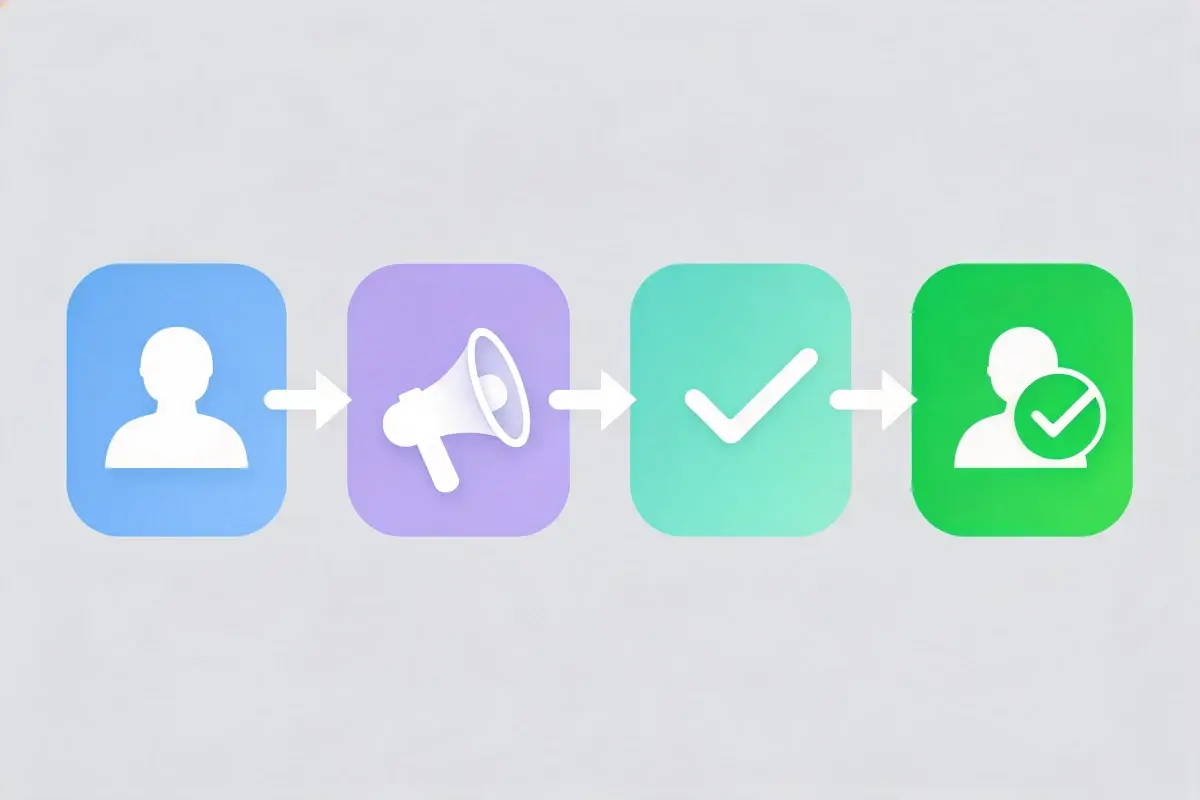
Outbound lead generation focuses on proactive outreach, while inbound relies on prospects initiating contact.
When to Use Outbound vs. Inbound Lead Generation
Outbound and inbound lead generation are not mutually exclusive. Most mature B2B teams use both, but the right balance depends on your market, price point, and sales cycle length.
Choose outbound lead generation when you need to:
Target specific accounts, industries, or buyer roles with precision
Generate pipeline quickly for a new product or market launch
Reach decision-makers who rarely download content or fill out forms
Support account-based sales motions focused on a small set of high-value accounts
Inbound tends to work better when buyers actively search for solutions, your brand has strong organic visibility, and your offer has broad market appeal. For most B2B teams, the strongest approach combines the two: inbound fuels bottom-of-funnel demand, while outbound targets high-fit accounts that have not yet shown interest.
A 6-Step B2B Outbound Lead Generation Process
A consistent B2B outbound lead generation process makes results more predictable and easier to scale. Below is a practical six-step framework sales teams can follow.
1. Define your ideal customer profile and buyer personas
Before building any list, clarify what a good-fit customer looks like. Define firmographics such as company size, industry, location, and technology stack, plus the job titles, responsibilities, and pain points of the buyers you want to reach. Without this step, outreach becomes generic and response rates drop.
2. Build a targeted prospect list
The next step is figuring out how to build an outbound lead list that matches your ideal profile. Start with account-level criteria, then identify the right contacts within each account. Verify contact data, role accuracy, and company information before adding names to any outreach sequence. Poor data quality is one of the fastest ways to derail outbound prospecting for sales teams.

A structured B2B outbound lead generation process improves consistency and makes results easier to measure.
3. Research and personalize your approach
Personalization goes beyond using a first name. Review the prospect’s recent company news, role changes, public priorities, and any signals that relate to your product. Use that research to write a short, relevant opening that explains why you are reaching out now.
4. Run multi-channel outreach sequences
Most B2B outbound campaigns use more than one channel. A typical sequence combines email, LinkedIn touchpoints, and occasional phone calls over several weeks. Space touches appropriately, vary the value you provide, and avoid repeating the same message across every channel.
5. Qualify responses and route leads
Not every reply is a sales-ready opportunity. Use a clear qualification framework to separate interested prospects from those who are not a fit, those who need more nurturing, and those who should move directly to a demo or discovery call. Route qualified leads to the right account executive or sales rep quickly, while responses that need follow-up stay in the outbound workflow.
6. Measure, iterate, and refine
Review campaign performance on a regular cadence and adjust your list, messaging, channels, or sequencing accordingly. Small improvements in response rate or meeting conversion can have a large impact on pipeline over time.
How to Segment and Prioritize Your Prospect List
Once you have a list, segmentation is what makes outbound prospecting for sales teams efficient. Not all accounts deserve the same level of time, personalization, or channel mix.
A simple way to segment is by account value, fit, and buying signal:
Segment | Description | Outreach Approach |
|---|---|---|
--- | --- | --- |
Tier 1 | High-value accounts that closely match your ideal customer profile | Highly personalized, multi-channel outreach with custom research |
Tier 2 | Good-fit accounts with clear relevance but lower contract value | Semi-personalized sequences with light customization per account |
Tier 3 | Broader market accounts that meet basic criteria | Scalable, benefit-focused email sequences with light personalization |
Within each segment, you can further prioritize by recent triggers such as funding, leadership changes, new market expansion, or public hiring plans. Triggers give you a timely reason to reach out and can significantly increase reply rates.

Segmenting and prioritizing your outbound lead list helps sales teams focus effort on the highest-value accounts.
Common Outreach Channels in B2B Outbound Campaigns
Successful B2B lead generation strategies usually combine multiple channels rather than relying on one. The right mix depends on your audience, industry, and offer complexity.
Cold email remains the most scalable channel for B2B outbound. It is low cost, easy to personalize, and works well for sequences that build value over time. The key is keeping messages short, relevant, and focused on the buyer’s situation rather than your product features.
LinkedIn outreach is effective for reaching senior decision-makers and building familiarity before a more direct ask. It works best when paired with profile optimization, thoughtful connection requests, and value-led comments rather than immediate pitches.
Phone prospecting still plays a role, especially in industries where relationships matter or where decision-makers prefer direct calls. It is often used as a follow-up touch after email or LinkedIn engagement rather than the first point of contact.
For teams selling in specific geographies, territory-based field prospecting can complement digital outreach by identifying local accounts and supporting in-person relationship building.
How to Measure Outbound Lead Generation Performance
Measuring the right metrics helps you understand what is working and where to improve. Focus on outcome metrics rather than activity alone.
Key metrics to track include:
Open and reply rates by sequence and segment
Positive reply rate, which separates interested responses from out-of-office or negative replies
Meeting booking rate per contacted account
Qualified opportunity rate and pipeline value generated
Conversion rate from initial contact to closed-won customer
Look at metrics by list segment, channel, rep, and message variant. This makes it easier to identify whether a performance issue comes from audience selection, messaging, timing, or execution.
Common Mistakes to Avoid in B2B Outbound Campaigns
Even experienced teams fall into patterns that hurt outbound performance. Watch for these common mistakes.
First, sending generic messages at scale. Personalization takes time, but relevance is what gets replies. A shorter, well-researched message usually outperforms a longer template that could apply to any company.
Second, buying low-quality lists and skipping verification. Bad contact data wastes sends, hurts deliverability, and creates extra cleanup work. Investing in list quality upfront almost always pays off.
Third, giving up after one or two touches. B2B buyers are busy, and most replies come after multiple follow-ups. A consistent, polite follow-up cadence is part of a professional outbound process.
Fourth, measuring only volume instead of quality. More sends or more calls do not always equal more pipeline. Focus on response quality, meeting conversion, and opportunity value.
Finally, failing to align outbound with the rest of the sales process. Leads that come from outbound need clear handoff criteria, CRM updates, and follow-through, or they fall through the cracks.
How AI Tools Support Scalable B2B Outbound Workflows
AI tools can help teams scale outbound work without sacrificing quality, especially when it comes to list building, research, and campaign management. For example, sales intelligence tools can surface accounts that match your ideal customer profile and provide background information that would otherwise take reps hours to collect. AI-powered SDR tools can help manage digital sales reps, organize prospect pools, and track email sequences and follow-up results.
For teams focused on geographic expansion or field sales, AI territory prospecting tools can identify accounts in a specific region, display them on a map, and flag which accounts are already in the CRM. This helps field reps prioritize travel time and focus on the most relevant local prospects.
When evaluating any AI tool, make sure you understand where automation ends and human judgment begins. AI is strongest at research, sorting, and administrative support, but final outreach personalization, qualification decisions, and customer communications should still have human oversight and escalation paths.
If you are looking to streamline your B2B outbound workflow with AI support, explore YTTAI Sales Master and related sales intelligence tools to see how structured prospect research and sequence management can help your team work more efficiently.
FAQ
What is outbound lead generation?
Outbound lead generation is the process of proactively identifying, researching, and contacting potential B2B customers to move qualified prospects into the sales pipeline, rather than waiting for them to initiate contact.
How do you build an outbound lead list?
Start by defining your ideal customer profile and buyer personas, then identify accounts that match those criteria, research relevant contacts, verify contact information, and segment the list by priority before launching outreach.
What are common B2B lead generation strategies for outbound teams?
Common strategies include targeted cold email sequences, personalized LinkedIn outreach, phone-based prospecting, account-based marketing for high-value accounts, and territory-based field prospecting, often combined in multi-touch sequences.
How do you measure outbound lead generation performance?
Track metrics such as response rate, positive reply rate, meeting booking rate, qualified opportunity rate, pipeline value generated, and conversion rate from prospect to customer, and review them by sequence, segment, and rep.
Comments