
Sales AI: How It Transforms B2B Prospecting and SDR Workflows in 2025

Sales AI refers to artificial intelligence tools that automate research, outreach, territory mapping and lead scoring so B2B sales teams can spend more time on high-value conversations. Instead of spending hours building prospect lists, verifying contact data or manually scheduling follow-ups, teams use AI to handle repetitive steps while keeping final decisions with human sales reps. This guide breaks down what sales AI actually does in B2B environments, how to evaluate it for your team, and which capabilities align with common sales roles. Teams evaluating sales intelligence AI tools can use the framework here to shortlist options without overbuying features they will not use.
What Sales AI Actually Does in B2B Sales
In B2B sales, AI tools typically support four core areas: prospect research, outbound outreach management, territory discovery, and lead prioritization. The exact mix depends on whether the tool is built for inside sales teams, field teams, or sales operations.
Research-focused AI pulls together company background, industry signals and available contacts so reps do not have to visit dozens of websites manually. Outbound-focused AI helps schedule, test and measure email sequences at scale. Territory-focused AI maps potential buyers within a geographic area. Scoring-focused AI grades accounts so teams know which opportunities to call first.
None of these tools replace sales reps. They remove the busywork that keeps reps from talking with buyers. For teams focused on AI for B2B sales development, the biggest gains usually come from faster list building and more consistent follow-up rather than from fully automated selling.

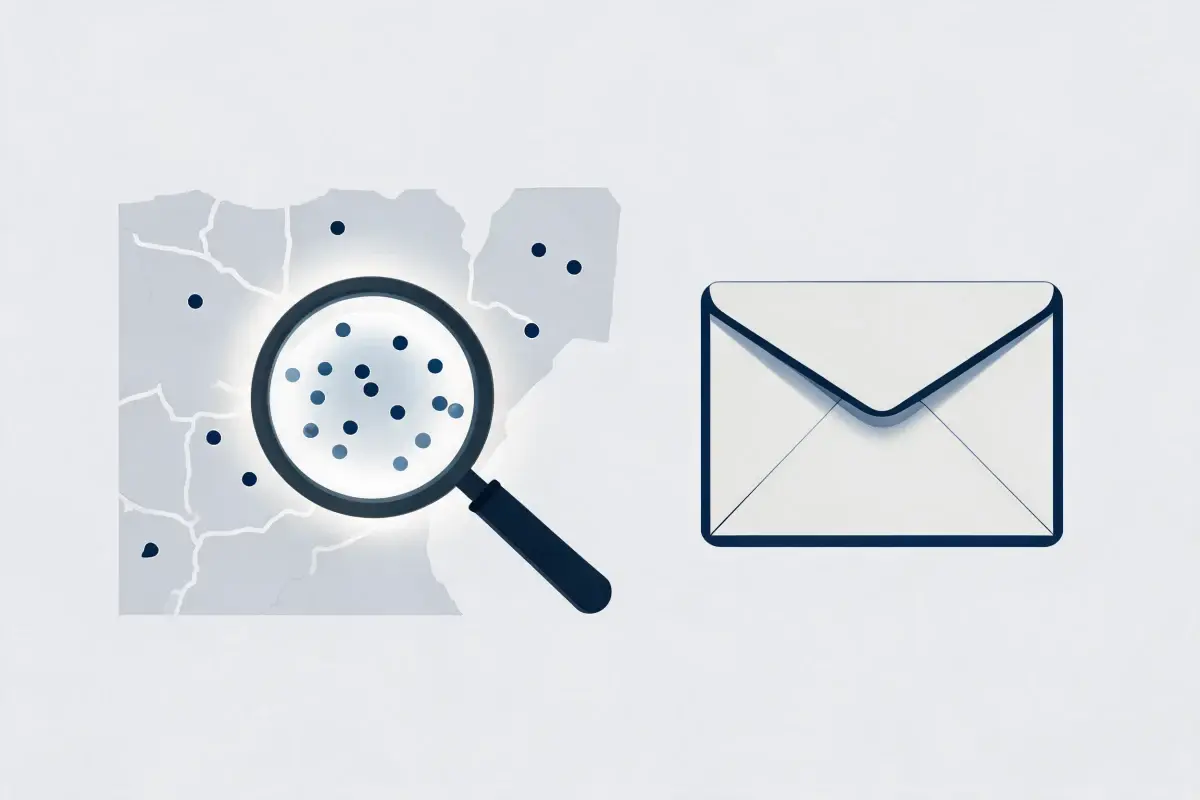
Sales AI typically supports research, outreach, territory discovery and lead prioritization.
4 Step Framework to Evaluate Sales AI for Your Team
Before comparing vendor lists, use this four-step framework to decide what you actually need from a sales AI solution. It keeps the evaluation focused on workflow fit instead of feature checkboxes.
Define the bottleneck first. Identify whether the main problem is finding prospects, researching them, reaching them, or prioritizing them. Each bottleneck maps to a different type of AI capability.
Match the tool to the team that will use it. SDR teams need outreach and list-building features. Field reps need map-based territory discovery. Sales leaders need scoring and reporting. Tools built for one role rarely work well for another.
Test the data quality, not just the interface. Even the best dashboard is useless if the prospect data is outdated, incomplete, or irrelevant to your market. Always review a sample of accounts that match your ideal customer profile.
Check human control points. Make sure you can review AI suggestions before outreach goes live, edit generated content, and escalate unusual accounts to a manager. Sales automation for SDR teams works best when reps remain in the approval loop.
The table below shows how common sales roles map to primary AI use cases.
Role | Primary AI Need | Common Workflow Goal |
|---|---|---|
--- | --- | --- |
SDR / BDR | List building + outreach cadence management | Fill pipeline with qualified outbound meetings |
Field sales rep | Territory prospect discovery + route prioritization | Find new accounts in a defined region |
Sales manager | Lead scoring + activity reporting | Forecast accurately and coach reps |
Sales operations | Data enrichment + CRM hygiene | Keep account records complete and current |
Example: Sales AI in a B2B SDR Workflow
Imagine a B2B software SDR team selling to mid-market operations leaders. Without AI, each rep might spend three to four hours per day researching accounts, finding contacts, writing personalized emails, and logging activity in the CRM. With sales AI, the workflow changes significantly.
First, the team defines its target buyer and imports a list of accounts into a prospect pool. The AI enriches each account with background details and assigns a fit grade based on the team's ideal customer profile. The SDR reviews the graded list and keeps or removes accounts before any outreach begins.
Next, the team sets up targeted email tasks with approved messaging, working time zones, and send schedules. The AI handles scheduling and basic follow-up sequencing, but the SDR reviews every draft before the first send and approves any changes to the cadence. Results flow back into the account record so the rep can see opens, replies, and next steps at a glance.
For teams evaluating sales automation for SDR teams, the key is to make sure the AI supports the rep's process rather than forcing the rep to adapt to a rigid platform. Configurable digital sales rep roles, timezone controls, and CRM links all make adoption smoother.

Sales automation for SDR teams reduces manual steps while keeping human reps in the approval loop.
Example: Sales AI in Field Sales Territory Development
AI field sales prospecting works differently because the starting point is geography, not a company list. A territory manager or field rep begins by selecting a country, narrowing the area by city, region or postal code, and setting a search radius and scan depth. They then describe the target buyer and product so the AI can identify relevant businesses.
Before running a search, the rep reviews suggested search terms to make sure they match the local market. Once results appear, the rep can explore them on a map or in a list, and quickly distinguish newly discovered accounts from those already in the CRM. This makes it much faster to fill a visit schedule without accidentally calling on existing customers.
This approach is especially useful for teams that sell through local distributors, on-site consultations, or territory-based account management. Instead of driving around looking for prospects, the rep arrives with a prioritized map of businesses that fit the target profile.
How to Pick the Right Sales AI Capability for Your Role
With so many tools on the market, it is easy to buy a broad platform and only use a fraction of it. Use these role-based guidelines to narrow your search.
If you lead an SDR team, prioritize tools that let you configure digital sales rep roles, manage targeted email tasks, and link directly to your CRM. Look for prospect grading, daily reporting, and account assignment features. Avoid tools that require heavy IT setup just to launch a simple test campaign.
If you manage a field sales team, focus on tools built for territory discovery, map-based results, and clear differentiation between new and existing accounts. The ability to filter by geography, industry, and business type matters more than advanced email features.
If you run sales operations, look for sales intelligence AI tools that deliver consistent company profiles, fit scores, and recommendation reasons. Make sure you can export selected companies into your lead pool or exclude them from future outreach. Treat all rankings as research inputs, and confirm current demand directly with the buyer.

Effective sales AI keeps humans in control of messaging, scoring overrides and complex objections.
Where Human Approval Still Belongs in AI Sales Workflows
Sales AI is most effective when humans remain in control of key decisions. There are several points in any AI-assisted workflow where human review is not optional.
First, every outbound message should be reviewed by a rep before the first send, especially for high-value accounts. AI can draft and personalize, but only a human can judge whether the tone, offer, and timing are right for a specific buyer.
Second, account scoring and grading should be treated as suggestions, not final verdicts. A rep or manager should always be able to override a low score for a strategic account or flag a high-score account that is not actually a fit.
Third, unusual replies, objections, or complaints should be escalated to a human immediately. Automated follow-up works well for routine sequences, but it cannot handle complex negotiations, legal questions, or sensitive account issues.
Finally, data quality checks should be done regularly. AI helps scale research, but market conditions change, contacts leave companies, and business models shift. Human reps should verify critical details before important conversations.
When implemented carefully, sales AI becomes a productivity multiplier for B2B teams rather than a black box. Start with one clear workflow, keep humans in the approval loop, and expand only after you see consistent results. If you are looking for a solution tailored to outbound SDR teams, territory-based field prospecting, or sales intelligence research, explore YTTAI Sales Master for your B2B sales workflow.
FAQ
What is sales AI used for in B2B sales?
Sales AI is used to automate repetitive sales tasks such as prospect research, list building, email scheduling, territory mapping and lead scoring so B2B teams can spend more time on high-value buyer conversations.
How does AI help SDR teams with outbound sales?
AI helps SDR teams by enriching prospect data, grading account fit, managing targeted email tasks, scheduling sends across time zones, and surfacing follow-up results, while reps retain final approval over messaging.
Can AI support field sales prospecting in a specific territory?
Yes, AI field sales prospecting tools can discover potential customers within a chosen area defined by country, city, region or postal code, and show results on a map or list while flagging accounts already in the CRM.
Do sales intelligence AI tools replace human sales reps?
No, sales intelligence AI tools support human reps by speeding up research and prioritization. Human reps still review AI suggestions, approve outreach, handle objections and confirm current buyer demand.
Comments