

Using Warehouse Openings as B2B Prospect Signals: A Practical Qualification Guide

To qualify an announced warehouse opening as a B2B prospect signal, verify the company’s fit, the project’s timeline and scope, and the relevant decision-makers before reaching out. This quick upfront check separates high-intent expansion accounts from low-relevance announcements and prevents wasted outreach cycles. Below is a practical framework SDRs and sales intelligence teams can use to turn facility news into pipeline.
Why Warehouse Openings Are Strong B2B Prospect Signals
A new or expanded warehouse is not just real estate news. It is a multi-month capital project that typically triggers purchasing across material handling equipment, warehouse management software, packaging, safety gear, staffing, maintenance, security, and logistics services. For many B2B suppliers, this is one of the clearest intent signals available.
Unlike general company funding rounds or leadership changes, a warehouse opening usually has a visible timeline, a defined budget, and a local team responsible for making the facility operational. That makes it easier to time your outreach, tailor your message, and connect your offer to an active project rather than a hypothetical need.

The ramp-up phase between a warehouse opening announcement and full operation is the highest-opportunity window for suppliers, integrators, and service providers.
The biggest mistake teams make is treating every warehouse press release the same way. A 5,000-square-foot satellite storage location is very different from a 500,000-square-foot regional distribution center, and a company opening its first warehouse has different needs than a retailer opening its twentieth. Qualification matters because expansion news only becomes useful when it matches your ideal customer profile.
3 Steps to Qualify an Announced Warehouse Opening
If you want a repeatable way to qualify new warehouse accounts before outreach, use these three steps. They are designed to be fast enough for SDR teams to apply at volume while still producing high-quality leads.
Step 1: Confirm company fit and account priority
First, decide whether the company behind the warehouse belongs in your target market at all. Check industry, company size, geography, and the types of products or services it sells. Also note whether the warehouse is owned by the operating company, a third-party logistics provider, or a real estate developer, because that changes who buys what.
Use this basic fit screen as a starting point:
Fit factor | What to check | Why it matters |
|---|---|---|
--- | --- | --- |
Industry | Retail, e-commerce, manufacturing, 3PL, food and beverage, wholesale | Buying roles, procurement cycles, and compliance needs vary widely by industry |
Company size | Revenue range, employee count, number of existing facilities | Smaller operators may need simpler solutions; enterprises may have centralized procurement |
Warehouse type | Fulfillment center, cold storage, dry storage, cross-dock, returns center | Determines whether your product or service is relevant to the facility |
Ownership model | Company-owned, 3PL-operated, leased from a developer | Changes which organization and which team you should contact |
If the company does not pass this screen, set the announcement aside. No amount of project detail will make a bad-fit account a good prospect.
Step 2: Validate the project’s scope, timeline, and status
A press release may say "warehouse opening" but leave out the details that determine urgency and deal size. Before you reach out, confirm the project scale, current phase, and go-live date if available.
Look for clues such as square footage, number of loading docks, expected staffing levels, automation plans, and whether the facility is brand new, an expansion of an existing site, or a relocation. Also check whether the announcement is a groundbreaking, a lease signing, a hiring notice, or an actual opening event. Each phase points to a different set of active buying decisions.
For example, groundbreaking news is early and may be most relevant to construction, security system design, and large equipment vendors. A hiring spree for warehouse managers usually means the facility is ramping up and will soon need software, safety equipment, and ongoing services. A grand opening announcement can still be valuable, but you may need to focus on optimization, replacement, or under-addressed categories rather than big-ticket initial purchases.
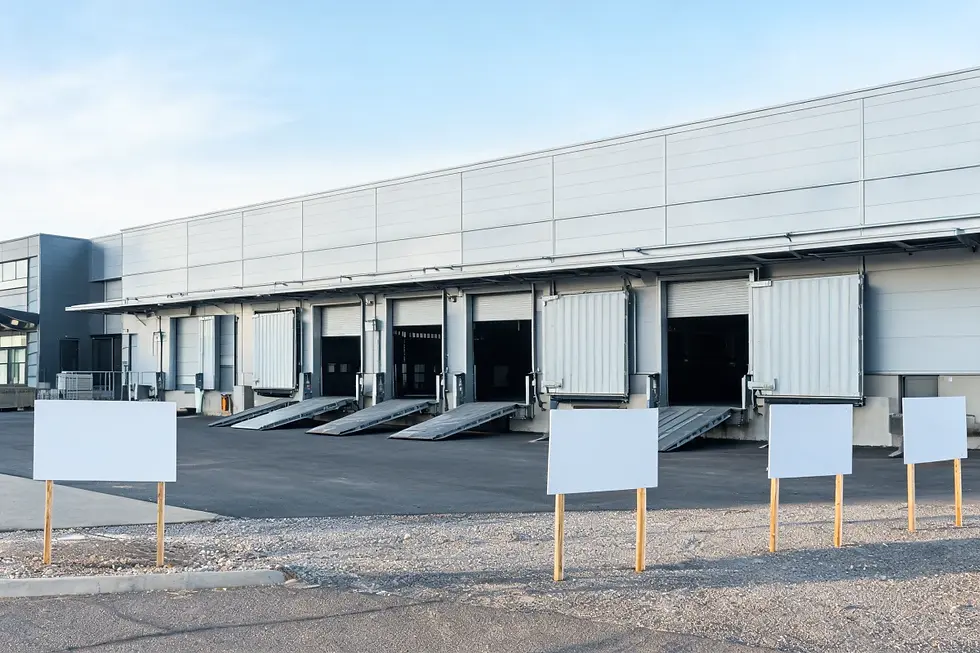
Basic facility details such as dock count, square footage, and building type help you quickly judge whether an announced warehouse opening fits your ideal customer profile.
Step 3: Identify the right decision-makers and their context
Even a perfect-fit warehouse is a wasted lead if you contact the wrong person. Once the company and project pass the first two checks, identify the roles most likely to buy or influence your offer.
Common buyer roles tied to warehouse projects include operations directors, warehouse managers, facilities managers, supply chain leaders, safety managers, IT leaders for warehouse systems, and procurement managers. In larger organizations, these roles may be split between corporate and site-level teams, so you may need both a strategic contact and a local contact.
Before you write your first message, make sure you understand the person’s scope. Are they responsible for this specific facility, a region, or the entire network? Have they recently joined the company or changed roles? Do their public backgrounds suggest they have experience with projects like this one? This context is what turns a generic cold email into a relevant outreach.
What Information to Confirm Before Contacting
When you are doing B2B sales intelligence around warehouse openings, some details are worth confirming before you pick up the phone or hit send. Treat the initial announcement as a starting point, not the whole truth.
First, verify that the project is actually happening and at the stage you think it is. Sometimes a planned warehouse is delayed, scaled back, or canceled after the first press release. Local permit records, hiring postings, job fair announcements, and contractor news can all help confirm current status.
Second, confirm the local address and territory alignment. For field sales teams, a warehouse expansion on the edge of a territory may be a high-priority account, while one just outside the assigned region may need to be routed differently. This is especially relevant for service providers, equipment dealers, and regional distributors.
Third, confirm whether the account is already in your CRM. A new warehouse from an existing customer is a cross-sell or expansion opportunity, not a cold prospect. It should follow a different process and message than a brand-new logo account.
Quick Qualification Checklist for SDR Teams
Use this short checklist to score each warehouse announcement in a few minutes. It is designed for warehouse expansion prospecting for SDR teams that need to move quickly without sacrificing quality.
Company matches our target industry and size profile
Warehouse type and size align with our typical customer use case
Ownership or operating model means the right buyer type exists
Project phase matches the typical buying window for our offer
We can identify at least one relevant decision-maker or influencer
The location fits our sales territory or coverage model
The account is not already in active pipeline or disqualified in the CRM
The project appears current and not delayed or canceled
If you can answer yes to most of these items, the account is usually worth adding to a targeted outreach sequence. If most answers are no or unknown, set it aside and move to the next signal.

Warehouse openings often cluster in logistics corridors and business parks, making them a useful trigger for territory-based prospecting and account prioritization.
How to Turn Qualified Openings Into Outreach
Once an account passes qualification, resist the urge to send a generic congratulations email. The strongest outreach ties your offer to a specific aspect of the warehouse project you verified during research.
For example, instead of saying "I saw you opened a new warehouse," you might reference the size of the facility, the type of operation it supports, or a known project detail such as cold storage capacity or rapid hiring, and then explain how your solution helps teams in that exact situation.
Keep your initial message short, specific, and focused on the project phase. If the facility is still ramping up, emphasize speed of implementation and minimal operational disruption. If it has been open for a few months, focus on efficiency improvements, cost reduction, or scaling volume.
How YTT AI Sales Intelligence Specialist Supports This Work
For teams doing this at scale, manually checking every warehouse announcement and enriching each account can become a bottleneck. YTT AI Sales Intelligence Specialist helps sales teams identify prospective buyers by market and purchasing criteria, review company profiles and scores, and select companies for the lead pool. You can use it to surface and prioritize accounts that match your ideal customer profile, then apply the qualification steps above to confirm project details, decision-makers, and current demand before outreach. Always verify project status and contact relevance with human research before reaching out.
Using warehouse openings as B2B prospect signals works best when you combine timely signals with disciplined qualification. A fast-moving expansion project can create a narrow window of opportunity, but it is always better to verify fit and timing first than to flood your pipeline with unqualified facility news. If you want to build a more systematic approach to identifying and researching warehouse expansion accounts, explore how sales intelligence support for territory and account research can help your team prioritize the right openings faster.
FAQ
Why are warehouse openings considered strong B2B prospect signals?
Warehouse openings signal confirmed capital expenditure, active hiring, and near-term purchasing decisions across material handling, logistics software, packaging, safety equipment, and facility services. Unlike generic company news, a new warehouse implies a specific project timeline and budget that sellers can align their outreach with.
How do you qualify B2B leads from warehouse announcements quickly?
Start with company fit (industry, size, location), then validate the project itself (square footage, number of facilities, ownership structure, and timeline), and finally identify the right decision-makers and their reporting lines. A short checklist can help SDRs score each announcement in a few minutes before adding it to an outreach sequence.
When is the best time to reach out after a warehouse opening announcement?
The ideal window depends on your offer. For design, permitting, and major equipment, early planning or groundbreaking is best. For software, staffing, safety, and ongoing services, the ramp-up period shortly before or after opening is usually stronger. Always confirm the current project phase instead of assuming from the announcement date alone.
Can sales intelligence tools help with warehouse expansion prospecting for SDR teams?
Yes. Sales intelligence tools can surface warehouse-related announcements, enrich company profiles, and help prioritize accounts that match your ideal customer profile. They are most effective when combined with human verification of project status, decision-maker roles, and current priorities before outreach.
Comments