
AI Sales Agent Pricing: What Manufacturers Should Budget in 2026

AI sales agent pricing depends on scope, integrations, languages, data complexity, workflow ownership and human supervision. Manufacturers should budget for more than software access. The real investment includes setup, knowledge base preparation, workflow design, system integration, monitoring and continuous optimization.
The cheapest AI sales tool is not always the lowest-cost option. If the agent creates poor leads, wrong promises or extra review work, it becomes expensive quickly.
This guide explains what manufacturers should evaluate before buying.
The Main Pricing Models
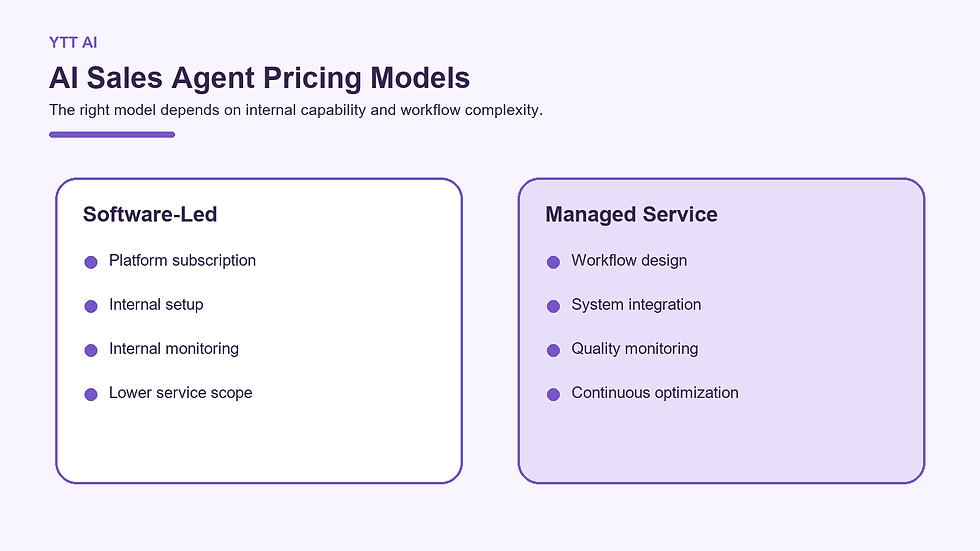
Model | What you pay for | Best fit | Risk |
Self-serve AI sales software | Platform subscription | Teams with internal RevOps and AI capacity | Requires setup, QA and ownership |
AI SDR platform | Prospecting and outreach features | Outbound-focused teams | May be too generic for technical products |
Managed AI sales agent | Workflow design, setup, monitoring and optimization | Manufacturers that need execution, not just tools | Higher monthly cost but lower internal burden |
Custom enterprise build | Tailored agent, integrations and governance | Complex global organizations | Longer implementation and higher setup cost |
For manufacturers, the best option often depends on whether the company has internal resources to design, supervise and improve the workflow.
What Drives Cost
1. Workflow Complexity
A simple website lead qualification agent is different from a multilingual AI sales agent handling RFQs, distributor outreach and CRM updates.
More workflows mean more design, testing and monitoring.
2. Product Knowledge Depth
Technical products require structured knowledge:
Specifications
Applications
Certifications
Industry terminology
Common objections
Compatibility limits
Handoff rules
If this knowledge is scattered across PDFs, catalogs and salespeople's memories, setup takes longer.
3. Integrations
Common systems include:
CRM
Email inboxes
Website forms
Product catalogs
Meeting booking
Quote request workflows
Analytics dashboards
Each integration increases value, but also increases setup and governance requirements.
4. Languages and Markets
Selling into multiple countries adds complexity. Translation alone is not enough. The agent may need different buyer norms, compliance language, tone, channel preferences and handoff rules.
5. Supervision Level
Some workflows can run with light review. Others require human approval before every external message. Pricing should reflect the review model.
Hidden Costs to Watch
Before choosing a vendor, ask about:
Setup fees
Integration fees
CRM customization
Training or onboarding
Knowledge base preparation
Usage limits
Message volume limits
Additional language costs
Reporting costs
Human review requirements
Ongoing optimization
If these are unclear, the headline price is not enough.
How to Estimate ROI
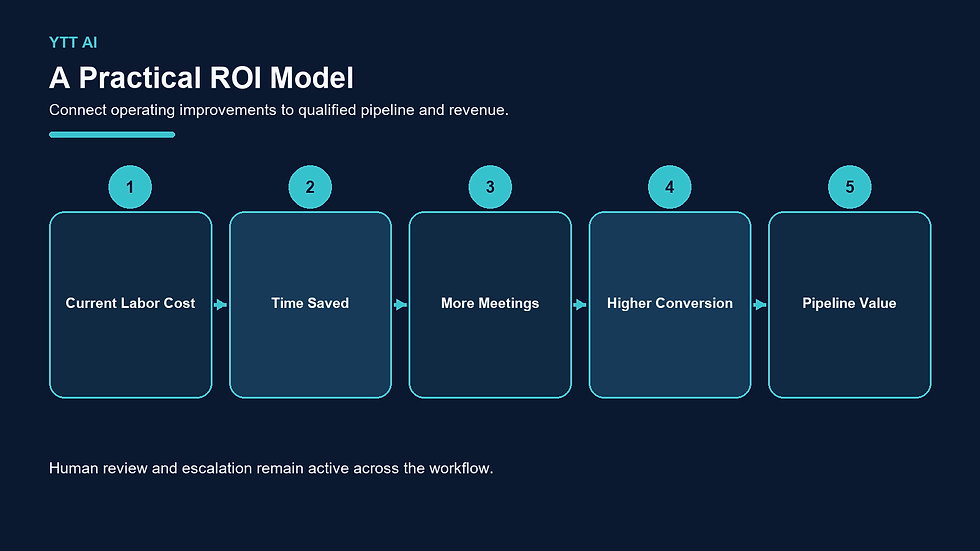
Start with a simple model:
How many inquiries, leads or target accounts enter the workflow each month?
How many require manual follow-up?
How many hours does the team spend on qualification, research and reminders?
What percentage of leads are lost because follow-up is late or inconsistent?
How many additional qualified meetings would justify the investment?
Then estimate:
Human hours saved
Response time improvement
Meeting increase
Opportunity conversion improvement
Pipeline influenced
Revenue from recovered opportunities
Pricing Questions to Ask Vendors
Use these questions before buying:
Is pricing based on seats, workflows, usage, outcomes or managed service scope?
What setup work is included?
Who builds the knowledge base?
Who monitors quality?
How are mistakes handled?
What integrations are included?
Are multilingual workflows included?
Can the agent handle technical product data?
How is human handoff configured?
What reporting is included?
What happens if message volume grows?
What is the expected time to first measurable result?
When a Higher Price Is Worth It
Higher pricing may be justified when the provider takes responsibility for workflow design, integration, quality assurance and ongoing improvement.
For many manufacturers, the internal cost of doing those tasks is higher than expected. A managed AI workforce model can reduce the burden on sales, marketing and IT teams.
When to Start Smaller
Do not automate the entire sales function first. Start with one measurable workflow:
Trade show follow-up
Inbound RFQ qualification
Dormant lead reactivation
Distributor outreach
Quote follow-up
If the first workflow does not create measurable value, scaling will not fix the problem.
FAQ
What is the biggest pricing mistake?
Comparing platform subscription prices without comparing setup, integrations, supervision and workflow ownership.
Is AI SDR pricing the same as AI sales agent pricing?
Not always. AI SDR tools often focus on prospecting and outreach. AI sales agents may cover qualification, follow-up, CRM updates, multilingual handling and workflow execution.
Should manufacturers choose software or managed service?
Choose software if you have internal RevOps and AI workflow capacity. Choose managed service if you need execution, quality control and continuous improvement.
Next Step
YTT helps manufacturers estimate the real cost and ROI of AI sales agents before implementation.
Book a 30-minute AI sales workflow assessment to identify the highest-return workflow for your budget.


Comments