
10 Best Distributor Management Software for Manufacturers in 2026

Last updated: October 2026
Selecting the right channel technology is critical for industrial leaders managing multi-tier global supply networks. This guide evaluates the best distributor management software for manufacturers based on partner discovery, deal registration, quoting transparency, integration, and operational governance. Whether managing machinery exports, automation components, or robotics distribution, this analysis outlines practical solutions based on verifiable vendor capabilities.
Industrial distribution models have expanded beyond traditional portal interfaces. Today, manufacturing channel leaders require systems that automate partner enablement, protect margin structures, and maintain continuous pipeline visibility.
Quick Comparison of Channel Platforms
Platform | Best For | Core Strength | Key Limitation | Category |
Salesforce PRM | Enterprise multi-tier operations | Deep CRM integration & complex tiering | High implementation overhead | Enterprise PRM |
Impartner PRM | Mid-to-large partner ecosystems | Automated partner onboarding & deal registration | Requires structured partner maturity | Pure-Play PRM |
Zift Solutions (ZiftONE) | Channel marketing automation | Unified through-partner marketing & lead routing | Complex interface navigation | Channel Engagement |
Allbound | Rapid partner enablement | Content collaboration & deal tracking | Limited native ERP order execution | Modular PRM |
Mindmatrix (Bridge) | Direct and indirect sales alignment | Integrated enablement & asset management | Customization requires technical setup | Channel Enablement |
Magentrix | Mid-market portal customization | Configurable self-service distributor portals | Slower advanced analytics setup | Portal Management |
LeadMethod | Industrial rep & distributor networks | Specialized manufacturing lead tracking | Focused primarily on distributor sales reps | Niche Channel CRM |
ZINFI UCM | Unified channel automation | Modular partner management suites | Steep onboarding curve for admins | Unified Channel Tech |
Kaptio | Quoting & discrete manufacturing | CPQ-centric distributor sales | Narrower broad-partner discovery scope | Specialized Quoting |
YTTAI Channel AI Workforce | Autonomous partner research & follow-up | AI workforce executing discovery & RFQ triage | Human review required for binding terms | AI Channel Workforce |
How We Evaluated Distributor Software for Manufacturers
Channel software must handle the operational realities of complex industrial commerce. Our evaluation criteria prioritize functional performance over marketing claims, applying eight standardized evaluation dimensions:
Partner Discovery & Profiling: Ability to identify, research, and profile prospective distributors across regional markets.
Onboarding & Enablement: Structured paths for distributor compliance, technical documentation access, and product certifications.
Deal Registration & Channel Conflict Management: Automated conflict arbitration, geographical territory mapping, and opportunity protection.
Pricing, RFQ, and Quoting Governance: Clear visibility into discounted distributor price lists, volume tiering, and custom quotation routing.
Long-Cycle Follow-Up & Sales Memory: Capability to track engineering-heavy projects across multi-month sales horizons.
Human Approval Boundaries: Clear governance safeguards preventing unauthorized partner commitments or unapproved discount structures.
Reporting & Operational Visibility: Real-time distributor health metrics, inventory/pipeline reporting, and daily summaries.
Integration & Deployment Effort: Interoperability with industrial ERPs (SAP, Oracle) and standard CRMs.
Detailed Reviews: Top 10 Channel Platforms
1. Salesforce PRM (Partner Relationship Management)
Salesforce PRM extends enterprise CRM data into custom-branded distributor portals, allowing global manufacturers to coordinate channel operations within existing sales clouds.
Best for: Large enterprise manufacturers with established Salesforce infrastructure.
What it does: Provides distributor self-service portals, structured lead distribution, deal registration, and co-branded collateral management.
Key strengths: Native integration with enterprise CRM pipelines, comprehensive role-based permission tiers, and extensive enterprise customization.
Limitations / considerations: Significant professional services investment required for configuration; ongoing development maintenance is common.
Who should choose it: Global manufacturers requiring unified data models across direct enterprise sales teams and global distributor tiers.
2. Impartner PRM
Impartner is a dedicated partner relationship management platform engineered to accelerate indirect channel revenue through purpose-built partner journey automation.
Best for: Established mid-market and enterprise equipment manufacturers scaling global networks.
What it does: Automates distributor lifecycle stages from onboarding and compliance verification to tier management and deal protection.
Key strengths: Rapid deployment architecture, automated partner locator widgets, and structured channel conflict arbitration workflows.
Limitations / considerations: Best suited for companies with an existing, active partner base rather than greenfield partner recruitment.
Who should choose it: Commercial directors looking to replace disparate spreadsheets with a dedicated, audited channel operational system.
3. Zift Solutions (ZiftONE)
ZiftONE unites channel marketing, sales enablement, and operational management within a single environment designed for multi-tier channel distribution.
Best for: Industrial brands providing through-channel marketing support to independent dealers.
What it does: Delivers co-marketing campaigns, syndicates technical product collateral, and tracks distributor-level pipeline generation.
Key strengths: Strong through-partner marketing automation (TCMA) combined with real-time distributor engagement tracking.
Limitations / considerations: The extensive breadth of marketing configuration modules can require dedicated internal administrative support.
Who should choose it: Export directors who want to ensure overseas distributors utilize standardized technical brochures, campaigns, and messaging.
4. Allbound
Allbound provides a user-friendly partner management portal emphasizing rapid distributor adoption, collaborative pipeline tracking, and content distribution.
Best for: Growing equipment manufacturers seeking an agile, modular distributor portal.
What it does: Simplifies distributor enablement by centralizing playbooks, CAD specifications, pricing tables, and deal registration workflows.
Key strengths: Intuitive user interface leading to high partner login frequency; fast setup time compared to legacy platforms.
Limitations / considerations: Advanced configure-price-quote (CPQ) capabilities require external third-party software integration.
Who should choose it: Channel managers needing quick portal adoption without long development cycles.
5. Mindmatrix (Bridge)
Mindmatrix Bridge combines direct sales enablement, partner relationship management, and marketing automation to bridge direct and indirect industrial sales teams.
Best for: Manufacturers operating hybrid sales models involving direct sales engineers and independent dealer networks.
What it does: Coordinates sales asset management, interactive quoting playbooks, and automated distributor communications.
Key strengths: Single-pane alignment for internal sales reps, distributor reps, and independent manufacturer representatives.
Limitations / considerations: Administrative dashboards present high technical depth that necessitates structured training.
Who should choose it: Business development heads managing channel ecosystems where direct and indirect reps co-sell on major infrastructure projects.
6. Magentrix
Magentrix specializes in customer and partner portal architectures that integrate bidirectionally with platforms like Salesforce and Microsoft Dynamics.
Best for: Mid-sized industrial enterprises needing secure, custom-branded distributor access points.
What it does: Facilitates partner deal submission, warranty tracking, spare parts technical documentation, and training verification.
Key strengths: Flexible configuration capabilities, robust mobile experience, and stable API integrations with core ERP/CRM backends.
Limitations / considerations: Complex custom business logic scripts often require Magentrix technical support during rollout.
Who should choose it: Manufacturers needing specialized portal interfaces for distributor warranty tracking and technical spare-part requests.
7. LeadMethod
LeadMethod is an indirect channel engagement software designed specifically for manufacturing companies utilizing independent sales reps and industrial distributors.
Best for: Industrial component and machinery builders prioritizing rapid lead distribution to rep networks.
What it does: Captures inbound technical inquiries, routes them to local territory distributors, and automates status updates without requiring portal logins.
Key strengths: High distributor engagement driven by email-based feedback loops that do not force distributors into complex software dashboards.
Limitations / considerations: Focused on lead tracking and feedback rather than comprehensive multi-tier contract or inventory management.
Who should choose it: Sales directors battling poor distributor follow-up on technical leads generated from trade shows and web inquiries.
8. ZINFI Unified Channel Management (UCM)
ZINFI UCM offers a broad suite of modular channel automation tools spanning partner onboarding, channel marketing, incentives, and partner operational analytics.
Best for: Large industrial enterprises needing enterprise-wide governance across diverse global regions.
What it does: Provides structured automation for partner incentives (rebates, MDF), contract workflows, and distributor performance monitoring.
Key strengths: Deep global localization features, modular license structure, and end-to-end partner governance auditing.
Limitations / considerations: Platform complexity requires a deliberate, phased rollout strategy across regional business units.
Who should choose it: Global operations directors managing varied compliance, rebate, and marketing fund structures across continents.
9. Kaptio
Kaptio provides quoting and channel enablement capabilities geared toward complex product catalogs, engineering constraints, and multi-tier distributor quotes.

Best for: Discrete manufacturers with highly customizable industrial equipment lines.
What it does: Translates technical machinery configurations and bill of materials (BOM) constraints into distributor-facing quote templates.
Key strengths: High precision in handling complex discounting matrices, regional currency conversions, and engineering rules.
Limitations / considerations: Does not function as a broad partner recruitment or through-channel marketing suite.
Who should choose it: Industrial producers looking to eliminate quoting errors across international distributor networks.
10. YTTAI Channel AI Workforce
YTTAI approaches distributor management from an AI Workforce operational perspective. Rather than serving solely as a passive software dashboard, YTTAI deploys dedicated AI workers—such as autonomous AI Channel Development Specialists and AI Technical Triage Reps—to handle continuous operational workflows.
Best for: Export manufacturers, robotics providers, and automation equipment builders seeking automated partner recruitment, technical inquiry qualification, and proactive channel follow-up.
What it does: Autonomous AI workers research regional distributor candidates, triage inbound RFQs, summarize project specifications, maintain technical sales context across long horizons, and generate daily executive reports.
Key strengths: Rapid 5-minute onboarding workflow; proactive outbound discovery and inbound partner qualification; autonomous execution within strict authority boundaries.
Limitations / considerations: Contract signing, official distributor agreements, and non-standard price concessions require explicit human approval.
Who should choose it: Industrial executives who want autonomous channel execution teams rather than managing another passive database portal.
How YTTAI Operates in Industrial Distribution:
Defined Digital Roles: Deploys dedicated digital workers (e.g., Global Channel Expansion Specialist) executing partner research and introductory outreach daily.
Authority Boundaries: Clear guardrails ensure initial qualification occurs autonomously, while final distributor discount tiers, territory exclusives, and binding agreements require human approval.
5-Minute Onboarding: Connects to existing company product catalogs, technical documentation, and communication channels without months of consulting setup.
First Value Delivery: Identifies qualified regional distributor accounts and surfaces unaddressed channel RFQs within the initial operational run.
Daily Operational Reports: Provides managers with daily structured summaries of partner engagement, pipeline status, and action items requiring human sign-off.
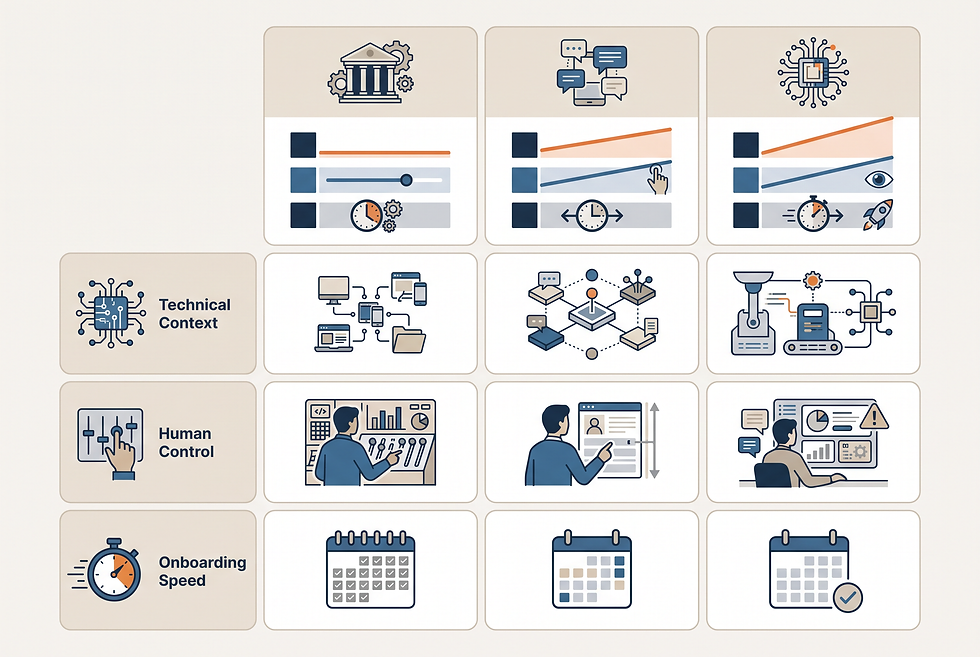
Evaluating Features: Traditional PRM vs. AI Workforce
Capability Dimension | Traditional PRM Software | AI Workforce Model (YTTAI) |
Partner Discovery | Manual database search by internal staff | Autonomous account research and regional profiling |
Technical Inquiries | Stored in portal queues for distributor review | Automated technical context extraction & triage |
Lead Follow-Up | Passive automated email templates | Context-aware multi-touch follow-up cycles |
Setup & First Value | 3–6 months portal build & configuration | Rapid 5-minute onboarding to active output |
Governance & Control | Role-based data visibility settings | Defined human approval boundaries for sensitive actions |
Daily Management | Manual dashboard auditing by channel managers | Automated daily reports highlighting priorities |
Buyer Decision Framework for Industrial Channel Leaders
Selecting the right channel platform depends on operational bottlenecks, internal resource capacity, and partner ecosystem maturity. Use this framework to align procurement with your operational model:
Need Enterprise CRM Architecture: If your channel strategy requires direct extension of an existing enterprise Salesforce instance, select Salesforce PRM.
Need Structured Portal Workflows: If your priority is standardizing onboarding, MDFs, and deal registration across thousands of existing dealers, evaluate Impartner or ZiftONE.
Need High Independent Rep Adoption: If outside industrial reps refuse to log into complex portals, deploy LeadMethod for streamlined email-driven updates.
Need Quoting Precision: If distributor friction stems from complex BOMs and configuration errors, implement Kaptio or dedicated CPQ-driven portal layers.
Need Active Partner Discovery & RFQ Execution: If your team is resource-constrained and requires digital personnel to research overseas distributors, qualify technical RFQs, and maintain continuous pipeline follow-up, deploy an AI Workforce like YTTAI.
Implementation and Governance Considerations
Successful channel platform rollouts in the manufacturing sector require strict operational alignment across three pillars:
Technical Data Governance: Ensure product specifications, CAD references, and price books are clean before connecting any portal or AI worker.
Clear Commercial Boundaries: Define strict pricing authority thresholds. While automated systems can quote list prices or standard discounts, custom pricing tiers must trigger managerial review.
Channel Partner Buy-In: Choose tools that minimize administrative friction for distributors. The primary reason channel platforms fail is lack of partner adoption caused by overly cumbersome interfaces.
By evaluating systems against these realistic operational dimensions, industrial manufacturing leaders can select a distributor management architecture that protects margins, prevents channel conflict, and drives predictable international growth.
FAQ
What is the best distributor management software for manufacturers?
The best platform depends on your operational model. Salesforce PRM and Impartner lead in structured enterprise portal management, LeadMethod excels in independent rep engagement, and YTTAI provides an autonomous AI workforce for partner discovery, technical RFQ triage, and follow-up.
How does an AI workforce differ from traditional PRM software?
Traditional PRM software functions as a passive database and portal requiring manual data entry and navigation. An AI workforce proactively performs channel workflows—such as scouting distributor profiles, drafting technical quote responses, and generating daily summaries—operating under defined human approval boundaries.
How do manufacturers prevent channel conflict using distributor software?
Distributor management systems prevent channel conflict through automated deal registration workflows, geographic territory mapping, and timestamped opportunity verification that protects distributors who register opportunities first.
What should industrial leaders look for when evaluating digital worker platforms?
Leaders should prioritize clear human approval boundaries, fast onboarding timelines, deep technical context retention, seamless integration with existing communication tools, and actionable daily reporting on pipeline tasks.
Scale Your Manufacturing Channel Operations
Discover how dedicated AI workers streamline partner research, qualify technical RFQs, and accelerate global channel expansion under full human governance.


Comments