
Grundfos MyGrundfos Digital Customer Service: B2B Self-Service Case

Executive Summary
Grundfos transformed routine post-inquiry friction into an on-demand self-service ecosystem through its MyGrundfos platform. By exposing real-time net pricing, live inventory availability, replacement pump selection, and order track-and-trace capabilities, the company resolved the structural latency typical of industrial distribution. For industrial manufacturers and export directors, this operating model demonstrates how automating high-frequency transactional touchpoints protects commercial engineering bandwidth while satisfying modern B2B buyer demands for 24/7 visibility.
Company Snapshot: Grundfos and the Global Water Ecosystem
Grundfos is a global manufacturer in pump and water solutions, developing advanced pump systems and water treatment technologies used across commercial building services, municipal utilities, industrial processing, and residential applications.
Headquartered in Denmark, the enterprise operates a worldwide commercial footprint spanning direct contractor accounts, system integrators, municipal engineering departments, and authorized wholesale distributor networks. In global fluid handling, operational equipment uptime is critical; delays in obtaining technical parameters, spare parts, or lead times can halt production lines, delay construction handovers, or interrupt municipal operations.
Studying this architecture provides industrial leaders with an operational benchmark. The engineering challenge in pump distribution is not merely manufacturing precision; it is managing technical complexity, vast variant catalogs, and cross-border fulfillment inquiries without creating administrative bottlenecks.
What the Company Sells and the Industrial Buying Reality
Industrial fluid handling equipment involves complex configurations rather than simple catalog transactions. Grundfos sells heavy-duty centrifugal pumps, submersible wastewater systems, inline circulators, dosing pumps, and intelligent pump controllers.
In standard B2B procurement pipelines, purchasing these units involves several operational dependencies:
Hydraulic duty-point alignment: Buyers verify flow rate, total dynamic head, temperature ratings, and chemical compatibility before generating a purchase order.
Legacy retrofit constraints: In maintenance, repair, and overhaul (MRO) contexts, technicians rarely purchase identical vintage models. They must identify a modern replacement with matching flange dimensions, motor electrical specifications, and hydraulic profiles.
Multi-tier supply chain dynamics: End-users frequently source equipment via regional distributors who require immediate verification of net contract pricing, regional stock levels, and dispatch dates to finalize downstream commercial bids.
Traditionally, answering these requirements created heavy administrative communication cycles between distributors, sales support desks, and internal application engineers.
The Business Problem: Structural Friction in Technical Inquiry Queues
Prior to modern digital customer access frameworks, industrial machinery manufacturers encountered significant transaction latency across global dealer networks. Grundfos operated within an industry where commercial support teams spent a substantial portion of daily working hours fielding repetitive informational requests.
Key operational friction points included:
Price and Lead-Time Inquiries: Commercial partners constantly submitted phone calls and email requests simply to confirm wholesale pricing tiers and factory dispatch estimates.
Legacy Replacement Bottlenecks: Identifying direct superceding models for discontinued pumps required manual catalog lookups and legacy cross-referencing by experienced application engineers.
Post-Order Status Overhead: Distribution dispatchers frequently emailed customer service desks for bill of lading tracking numbers, shipping carrier updates, and partial shipment statuses.
Time-Zone Latency in Export Markets: International buyers in divergent time zones suffered 24- to 48-hour turnarounds on routine transactional confirmations, directly slowing their downstream quote generation.
This structural friction created operational overhead for the manufacturer and compromised responsiveness for distributors competing on project delivery timelines.
What Changed: The MyGrundfos Self-Service Architecture
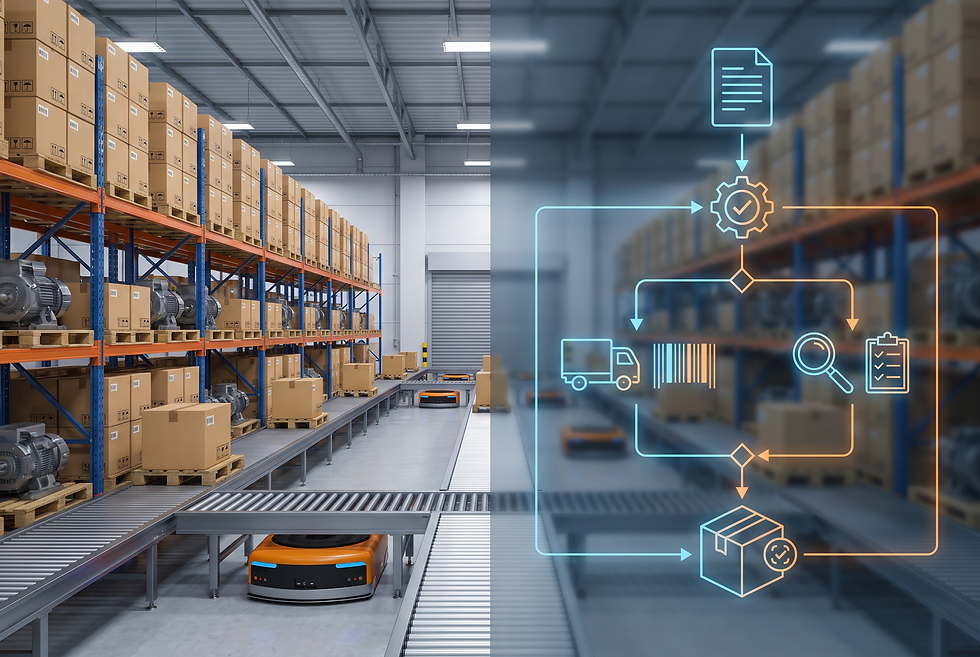
To decouple administrative inquiry processing from commercial scale, Grundfos deployed MyGrundfos. Rather than treating customer service as a reactive call center, the company built an authenticated self-service architecture connected directly to its core enterprise resource planning (ERP) and master data systems.
The strategic focus of the platform targets high-frequency, low-complexity customer inquiries:
Instant List and Net Pricing: Authenticated partners view contract-specific pricing instantly without waiting for an internal sales clerk.
Real-Time Stock Availability: Visibility into warehouse inventory and estimated dispatch timelines based on live production schedules.
Direct Replacement Pump Lookup: Algorithmic replacement cross-referencing that matches discontinued or competitor serial/model numbers to current production equivalents in seconds.
Order Track & Trace: Complete self-service visibility into order confirmation, warehouse staging, freight carrier tracking numbers, and delivery milestones.
Request Status Dashboard: Centralized tracking of open engineering tickets, quotations, and commercial queries.
By converting manual customer support workflows into deterministic self-service paths, the operational standard for Grundfos MyGrundfos digital customer service transitioned from reactive human response queues to immediate, continuous data access.
How the Workflow Actually Works: Step-by-Step Mechanism
The architectural strength of the MyGrundfos ecosystem lies in its data integration and structured handoff logic. The end-to-end self-service journey functions across five sequential stages.
Step 1: Secure Data Ingestion and Context Identification
The distributor or contractor accesses the portal using single-sign-on (SSO) credentials. The platform identifies the commercial entity, active purchasing agreements, discount tiers, credit standing, and geographic delivery constraints.
Step 2: Automated Query Parsing and Database Retrieval
When a user enters a legacy model code, serial number, or target product number, the system queries three backend repositories:
Product Information Management (PIM): Pulls technical curves, dimension sheets, and mechanical replacement compatibility maps.
Enterprise Resource Planning (ERP): Computes customer-specific net prices, currency parameters, and account credit terms.
Warehouse Management System (WMS) & Logistics: Evaluates live stock across regional fulfillment hubs and calculates lead times based on production slot availability.
Step 3: Algorithmic Resolution and Option Matching
If the request is a replacement lookup, the engine assesses whether a direct 1:1 mechanical match exists. It presents the optimal primary replacement along with notes regarding structural dimensions, port-to-port lengths, and electrical differences, providing downloadable technical specification sheets.
Step 4: Exception Boundary Handling and Escalation
If the input data represents a non-standard engineered-to-order (ETO) configuration or an ambiguous duty requirement, the platform triggers an exception. Instead of dead-ending, it pre-populates an engineering review ticket containing the user's operational parameters and automatically routes it to the regional technical support team.
Step 5: Direct Action and Post-Transaction Status Visibility
The user can convert the validated replacement or stock confirmation directly into a formal RFQ or purchase order. Post-purchase, the platform receives automated status pushes from freight carriers, updating the Track & Trace interface with dispatch timestamps and transport tracking links.
Before vs. After: Operational Process Comparison
The table below details the functional transformation between traditional industrial customer support workflows and the automated digital self-service paradigm.
Workflow Dimension | Traditional Industrial Support Model | MyGrundfos Digital Customer Service Model |
Net Price Retrieval | Buyer emails internal sales rep; 4–24 hr response depending on time zone | Authenticated real-time ERP lookup; immediate UI display |
Replacement Identification | Application engineer manually reviews legacy catalogs and curve archives | Algorithmic cross-referencing engine; instant 1:1 replacement matching |
Lead-Time Verification | Customer support contacts warehouse inventory clerk via internal ticket | Real-time query across WMS and factory master production schedules |
Order Status Tracking | Email exchange requesting bill of lading / carrier tracking number | Self-service Track & Trace connected to live carrier API telemetry |
Technical Escalation | Repetitive manual intake of duty points and commercial customer data | Pre-filled technical ticket routing directly to application engineers |
Service Availability | Limited to regional office business hours (8x5) | Continuous global portal access (24/7/365) |
Evidence and Operational Results
According to official documentation and platform metrics published on the Grundfos corporate portal (grundfos.com/mygrundfos):

Rapid Information Retrieval: The platform provides registered partners with net pricing, lead times, and spare part documentation in under 30 seconds, eliminating multi-stage email exchanges.
Continuous Self-Service Coverage: Thousands of global distributors and engineering partners routinely utilize the system outside standard business hours, significantly reducing order placement delays in cross-border trade.
Application Desk Offloading: By automating standard replacement matching and catalog inquiries, routine informational requests are diverted away from senior engineering desks, freeing technical personnel to focus on custom engineered-to-order projects and commercial sales strategy.
These operational shifts validate that B2B industrial buyers prioritize friction-free, verifiable transactional data over relationship-based administrative interactions when dealing with routine operational maintenance.
What Other Industrial Companies Can Learn
Industrial equipment manufacturers in robotics, CNC systems, packaging machinery, and industrial fluid processing can extract clear methodologies from this implementation:
1. Separate Transactional Execution from Consultative Engineering
High-value application engineers should not function as manual price checkers or shipping coordinators. Automating repetitive data queries protects high-cost engineering capacity for complex commercial pipeline growth.
2. Standardize Replacement and Retrofit Logic
Every machinery manufacturer maintains an installed base of aging equipment. Converting legacy engineering compatibility into structured digital lookup rules converts maintenance inquiries into immediate replacement revenue.
3. Expose Order Telemetry Transparently
Industrial buyers operate under strict project milestones. Providing proactive track-and-trace self-service reduces customer anxiety, lowers inbound support volume, and builds operational trust without manual intervention.
What This Could Look Like for Industrial Equipment & Water Systems
For mid-sized pump manufacturers, valve fabricators, water filtration producers, or packaging equipment builders, deploying a proprietary digital portal requires significant software engineering investment. However, the operational logic—instant technical lookup, pricing retrieval, and order status verification—can be implemented using specialized AI execution workers.
In industrial export environments, international buyers frequently communicate via email, WhatsApp, or dealer portals requesting pump curves, replacement cross-references, lead times, and container shipping milestones.
Instead of leaving these inquiries in an export sales manager's inbox overnight, a dedicated industrial AI worker handles the structured operational workflow.
YTT AI Worker Mapping: AI Export Sales Rep
To adopt this operating model without multi-year platform development, industrial manufacturers can deploy the AI Export Sales Rep.
Worker Job Title: AI Export Sales Rep
Main Daily Tasks: Ingests international technical inquiries, matches legacy model numbers against current catalog specifications, generates net FOB/CIF pricing based on customer tier rules, and provides real-time shipment status updates.
Primary Work Channel: Global Inbound Email, WhatsApp Business, Customer Service Ticketing Portals, and Web RFQ forms.
Authority Boundary: Automatically answers standard catalog specifications, stock status, replacement matches, and standard price tiers. Flags non-standard hydraulic duty points, custom motor integrations, and deep discount requests for Sales Director approval.
First Value Event: Successfully ingesting an after-hours legacy pump replacement inquiry from an overseas distributor, identifying the exact modern equivalent along with technical dimensional drawings, verifying warehouse inventory, and delivering a formal quote draft in under five minutes.
Daily Report Result: Summarizes all incoming distributor requests, lists auto-generated quotes, highlights stock shortages, and displays escalated complex engineering opportunities for the human sales team.
FAQ
What is Grundfos MyGrundfos digital customer service?
Grundfos MyGrundfos digital customer service is an authenticated B2B self-service platform that provides industrial distributors, contractors, and partners with 24/7 access to net pricing, live inventory availability, legacy replacement pump lookups, and real-time order tracking.
How does automated replacement pump matching work in industrial manufacturing?
The platform utilizes structured product information management rules to cross-reference legacy model codes or competitor serial numbers against active production lines. It evaluates hydraulic parameters, port dimensions, and electrical requirements to present compatible modern units instantly.
Why do B2B industrial buyers prefer self-service order tracking over manual support?
Industrial projects operate on tight installation schedules. Self-service order tracking provides instant, 24/7 access to carrier telemetry, dispatch dates, and bill of lading data without the latency of waiting for office hours or customer support email replies.
Can mid-sized industrial manufacturers deploy a similar digital customer service workflow?
Yes. While global enterprises build custom web platforms, mid-sized machinery and equipment manufacturers can deploy autonomous agents like the AI Export Sales Rep to parse technical inquiries, cross-reference catalogs, retrieve ERP pricing, and manage quote workflows across email and messaging channels.
Automate Your Global Technical Sales and Support Operations
Equip your industrial machinery enterprise with an AI Export Sales Rep to deliver instant pricing, replacement cross-referencing, and order tracking to global buyers 24/7. Explore autonomous customer-facing workers today.


Comments