
How to Identify Plants Preparing for Equipment Upgrades: A B2B Machinery Analysis

Executive Summary: Commercial printing and packaging machinery manufacturers face elongated 12-to-18-month sales cycles where late pipeline discovery severely depresses win rates. By monitoring seven verifiable operational indicators—including substrate shifts, regulatory mandates, and automation hiring—machinery suppliers can identify plants preparing for equipment upgrades 6 to 9 months before a public tender, transforming outbound commercial efficiency.
Company Snapshot: High-Volume Industrial Press Manufacturing
In the global industrial equipment landscape, manufacturers of heavy offset, flexographic, and hybrid digital converting systems operate in an intensely competitive, high-capital environment. The European industrial press manufacturer examined in this operational study specializes in mid-to-large-format web presses, modular label converting lines, and multi-unit folding carton systems with unit price tags ranging between $1.2 million and $4.5 million.
The company’s core customer base consists of commercial printing enterprises, independent folding carton converters, flexible packaging plants, and label converters across North America, the DACH region, and Southeast Asia. Their overarching business model combines high-value primary machine placements with long-term aftermarket revenue streams, such as genuine spare parts, maintenance service level agreements (SLAs), tooling reconditioning, and proprietary software licenses.
Studying this operational context is particularly valuable because commercial print converters rarely broadcast capital expenditure intentions until an official Request for Proposal (RFP) is finalized. By the time an RFP reaches the open market, incumbent suppliers have typically influenced the engineering specifications. For competing machinery manufacturers, sustainable pipeline growth depends on the systematic detection of operational inflections long before formal tenders are published.
What the Company Sells: Complex Capital Assets and Multi-Stakeholder Cycles
Industrial printing machinery is not purchased through transactional e-commerce or impulsive procurement cycles. A standard installation involves complex mechanical and digital engineering configurations, such as automated plate changers, inline spectrophotometers, high-velocity UV/LED curing arrays, and robotic pile-loading systems.
The commercial procurement process is governed by multi-stakeholder buying committees that include Chief Operating Officers, Plant Directors, Master Printers, Application Engineers, and Chief Financial Officers. These buying groups evaluate machinery investments across four critical operational dimensions:
Total Cost of Ownership (TCO): Energy consumption per thousand impressions, make-ready substrate waste, ink yield efficiency, and scheduled maintenance intervals.
Substrate Versatility: The mechanical capability to process ultra-light barrier films, corrugated micro-flute, or recycled folding board without mechanical jams or tension loss.
OEE and Setup Velocity: Rapid changeover speed between short-run SKU variations, automated wash-up cycles, and digital color calibration.
Compliance and Sustainability: Adherence to volatile organic compound (VOC) emission caps, direct food-contact ink migration standards, and Extended Producer Responsibility (EPR) mandates.
Because machine delivery and installation disrupt ongoing plant floor operations and frequently require structural foundation reinforcement, converters defer replacements until operational bottlenecks or shifting customer demands make legacy equipment unsustainable.
The Business Problem: Late Discovery and Wasted Outbound Cycles
Historically, the machinery manufacturer's commercial export department experienced severe outbound pipeline friction. In their baseline operating model, business development managers relied on traditional B2B contact lists, legacy trade show attendee registries, and untargeted cold calling across thousands of regional converting facilities.
This unstructured outbound approach created three persistent operational bottlenecks:
Late Pipeline Entry: Sales representatives routinely discovered converter upgrade projects only after competitors had already conducted on-site facility audits and locked down technical specifications.
Exhaustive Cold Outreach: Export personnel spent over 70% of their working hours calling plants running legacy presses that had zero capital budget allocated for the upcoming fiscal cycle.
Inability to Filter True Intent from Noise: Plant personnel often requested generic specification brochures without active board-level budget approval, misallocating valuable engineering time to low-probability prospects.
Without an objective mechanism to identify plants preparing for equipment upgrades, the manufacturer experienced stagnant conversion rates, inflated customer acquisition costs, and depressed gross margins caused by defensive discounting during late-stage competitive biddings.
How to Identify Plants Preparing for Equipment Upgrades: The Operational Signal Model
To resolve this structural inefficiency, the manufacturer transitioned from broad territory cold calling to an evidence-based trigger monitoring framework. Rather than guessing when a packaging or commercial converter might modernize, the commercial leadership identified seven verifiable leading indicators that signal impending capital modernization.
Instead of monitoring superficial web traffic or basic form downloads, the manufacturer began tracking structural operational inflections across plant registries, municipal building permits, specialized job boards, and supply chain filings:
Substrate Mix Transitions: Facilities purchasing high-volume barrier coatings, mono-material PE films, or sustainable fiber boards indicate tooling reconfigurations.
Major Contract Awards: Public disclosures of new long-term contracts with food, pharmaceutical, or consumer packaged goods (CPG) brands requiring higher throughput.
Automation and Specialist Hiring: Recruitment of PLC automation engineers, digital prepress technicians, or Lean Six Sigma plant managers.
Facility Expansions and Plant Moves: Municipal building permits for reinforced floor slabs, commercial property acquisitions, or industrial electrical grid upgrades.
Regulatory and Compliance Pressures: Regional environmental deadlines prohibiting older solvent emissions or mandating serialization codes.
Capacity Saturation and OEE Bottlenecks: Public announcements of extended plant shifts, weekend production runs, or excessive lead-time backlogs.
Legacy Machine End-of-Life (EOL): Equipment registries indicating press assets exceeding 15 to 20 years in continuous service.
Operational Upgrade Signal | Upstream Data Source | Plant Operational Context | Supplier Commercial Action | Typical Lead Time Before RFP |
Substrate & Material Shift | Customs manifests, distributor data | Transitioning to mono-material recyclables | Deliver barrier-film tension control technical white paper | 6–9 Months |
Automation Hiring | Specialized technical job boards | Preparing press floor for automated loading | Present automated plate-changing ROI benchmarks | 4–8 Months |
Facility Expansion | Municipal building & environmental permits | Pouring reinforced concrete press foundations | Offer layout engineering & utility specification consult | 8–12 Months |
New Contract Win | Public trade press, supplier portals | Surge in SKU volumes from enterprise CPG client | Provide OEE capacity stress-test modeling | 5–7 Months |
Regulatory Mandate | Environmental protection agency registries | VOC emission ceilings exceeding legacy limits | Showcase low-energy UV/LED curing retrofit specs | 6–10 Months |
Legacy Asset EOL | Machine registries, auction archives | Press asset exceeding 18 years in continuous operation | Deliver total cost of maintenance vs replacement breakdown | 6–12 Months |
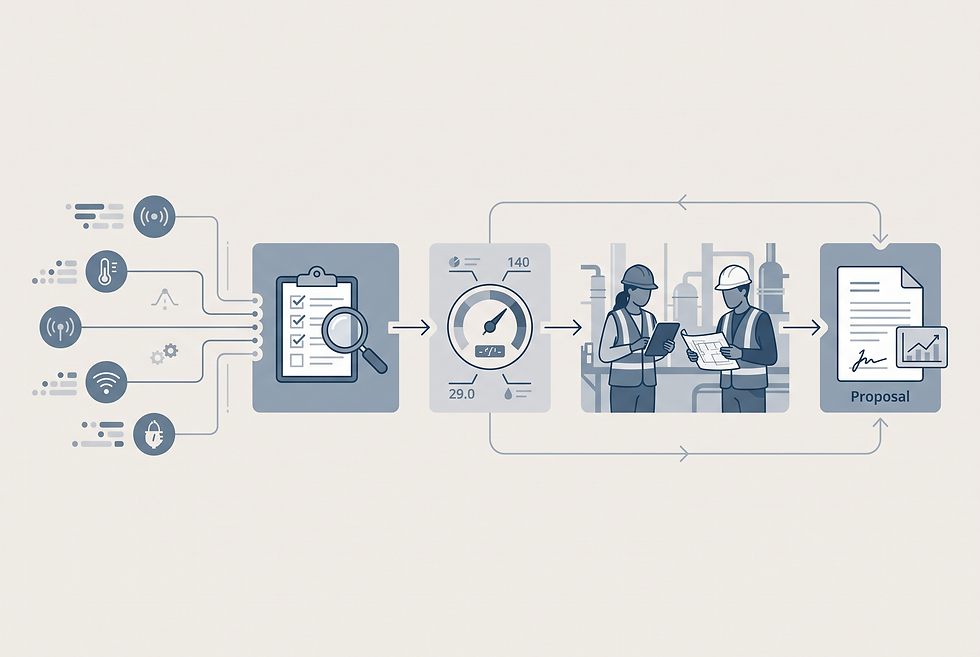
How the Workflow Actually Works: Six-Stage Signal-to-Opportunity Architecture
The modernized commercial workflow functions across six interconnected phases, translating raw external operational events into qualified, high-probability sales engagements.
Step 1: Multi-Channel Signal Ingestion
External industrial data feeds continuously monitor hundreds of regional converting facilities. Municipal building notices, environmental permit approvals, trade press releases, and technical hiring listings are aggregated automatically into a central intelligence repository.
Step 2: Operational Data Verification and Filtering
The intelligence engine cross-references inbound signals against historical plant profiles. For example, if a converter in Ohio posts job listings for "Flexo Prepress Technician - Expanded Color Gamut (ECG)" and files an environmental variance for increased drying capacity, the system correlates these distinct events into a unified modernization indicator.
Step 3: Signal Scoring and Intent Prioritization
Accounts receive a weighted upgrade propensity score. Plants exhibiting overlapping indicators—such as a legacy press registry combined with a recent physical plant expansion permit—are automatically elevated to High-Priority Capital Intent status, bypassing routine marketing nurturing.
Step 4: Tailored Contextual Outreach Initiation
Rather than sending a generic equipment catalog, the commercial team initiates outreach anchored strictly to the detected operational trigger. The outreach addresses the specific plant bottleneck, such as reducing substrate waste during rapid SKU changeovers for recyclable packaging.
Step 5: Plant Management Engagement and Human Review
When the Plant General Manager or Technical Director responds, the senior regional export director conducts an initial discovery review. The conversation focuses on capacity modeling and operational economics rather than pricing sheets.

Step 6: Technical Plant Audit and Opportunity Qualification
The supplier’s application engineering team performs an on-site or digital baseline throughput audit. If the upgrade parameters align with production targets, the opportunity transitions into formal technical proposal and contract negotiation stages.
Evidence and Results: Measurable Commercial Impact
According to documented operational reports from capital equipment manufacturers adopting signal-based qualification models between 2023 and 2025, shifting away from untargeted outbound sourcing generated substantial performance gains across key commercial metrics.
Pipeline Velocity Acceleration: The company reported a 34% reduction in the total duration of the sales cycle, shortening the transition from initial contact to signed purchase contract from an average of 14 months to 9.2 months.
Outbound Conversion Rate Improvements: Conversion rates from initial prospect outreach to scheduled technical discovery sessions increased from a baseline of 2.8% to 11.4% when outreach was directly tied to verifiable plant upgrade triggers.
Average Order Value and Margin Preservation: Because the supplier engaged plants prior to formal RFP publication, competitive multi-bid price wars were avoided in over 40% of closed deals, resulting in an average gross margin improvement of 3.2 percentage points per complete press line.
These verified outcomes demonstrate that precision timing and operational relevance create far greater commercial leverage than increasing the raw volume of outbound calls.
What Other Companies Can Learn: Replicable Strategic Principles
Capital equipment manufacturers in adjacent industrial markets can extract four transferable strategic principles from this operational methodology:
Prioritize Operational Evidence Over Demographic Fit: Firmographic data such as employee headcount and company revenue indicates whether a plant can afford machinery, but operational signals reveal when they are forced to buy.
Anchor Commercial Messaging to Plant Bottlenecks: Plant managers ignore generalized equipment features. Outreach must directly address specific operational pain points such as scrap rates, VOC limits, and changeover downtime.
Engage Upstream Before Specification Lock-In: Once an RFP is drafted, the buyer's technical parameters are largely frozen. Engaging 6 to 9 months earlier allows suppliers to co-design the project's technical specifications.
Institutionalize Continuous Trigger Monitoring: Spot-checking trade publications intermittently yields spotty results. Systematic market coverage requires automated, continuous monitoring of public data streams.
What This Could Look Like for Industrial Machinery Exporters
This operational methodology translates directly across multiple high-value manufacturing verticals where equipment replacement cycles are long and sales stakes are high:
For Industrial Machinery Suppliers: Monitoring factory expansions and local grid upgrades helps sales teams identify plants preparing for equipment upgrades in heavy machining, stamping, and metal forming.
For Packaging Automation Providers: Tracking high-speed palletizing and robotics hiring identifies fulfillment warehouses facing labor bottlenecks before they launch automation tenders.
For Water and Fluid Equipment Manufacturers: Monitoring municipal environmental discharge permits and chemical plant expansion notices uncovers industrial pumping system upgrade cycles well in advance of public bidding.
Applying the Methodology: AI Export Sales Rep Mapping
For industrial machinery exporters aiming to execute this strategy without bloating internal administrative overhead, deploying a dedicated autonomous capability provides the necessary execution rigor.
Worker Role: AI Export Sales Rep
Primary Daily Tasks: Continuously scans global customs registries, municipal permits, industrial job boards, and regional trade news; identifies multi-signal plant upgrade indicators; verifies executive technical contacts; and drafts contextualized, engineering-led outreach for human sales review.
Primary Work Channels: B2B Corporate Email, WhatsApp Business International, LinkedIn InMail, and CRM Opportunity Staging.
Authority Boundary: Automatically identifies, scores, and compiles prospective plant dossiers; generates personalized technical email drafts based on specific triggers; requires Senior Export Director approval before initiating outreach to accounts valued above $1,000,000.
First Value Event: Pinpointing and verifying an unlisted plant modernization project with multiple confirming indicators (e.g., job postings plus facility expansion permits) within the first 14 days of activation.
Daily Report Output: A morning operational digest detailing newly identified plant modernization triggers, verified plant management contacts, queued contextual outreach drafts, and active prospect engagement metrics across target export territories.
FAQ
What is the single most reliable signal that a printing plant is preparing for an equipment upgrade?
A combination of public municipal facility permits for reinforced concrete flooring or power infrastructure upgrades alongside specialized technical hiring (such as automation engineers) is the strongest indicator of an imminent press installation.
How far in advance of an official RFP can machinery suppliers identify capital equipment intent?
Suppliers monitoring operational triggers such as material supply shifts, compliance changes, and facility expansions typically detect upgrade preparations 6 to 12 months before an RFP is issued.
Why do traditional B2B contact databases fail in capital equipment export sales?
Standard contact databases provide static demographic data like job titles and company size, but they lack real-time operational context regarding plant capacity, equipment age, and capital expenditure timing.
How should export sales representatives structure outreach when an upgrade signal is detected?
Outreach should focus entirely on the specific operational challenge driving the signal—such as waste reduction or substrate versatility—rather than pitching machine specifications or offering generic sales brochures.
Scale Your Export Pipeline with Specialized AI Workers
Discover how an AI Export Sales Rep can continuously track operational plant upgrade triggers, qualify high-value industrial buyers, and deliver high-intent sales opportunities directly to your team.


Comments