
Lead Generation for CNC Machining Companies: A Practical B2B Growth Guide

Executive Summary
Precision contract manufacturers face persistent margin pressure and prolonged quoting delays when relying on outdated industrial directories and generic inquiry forms. Leading machine shops have modernized their commercial operations by establishing structured technical qualification workflows that automate drawing intake, filter unviable quote requests, and focus engineering estimators on high-margin production contracts. This operational framework transforms commercial throughput while reducing technical response bottlenecks across global markets.
Company Snapshot: Navigating the Precision Machining Market
To understand effective lead generation for CNC machining companies, commercial leaders must first examine how contract precision engineering suppliers position their capabilities within the broader manufacturing value chain. Precision machine shops primarily operate as build-to-print or custom component contract manufacturers, serving tier-one industrial equipment builders, aerospace subcontractors, medical device developers, energy infrastructure providers, and automotive automation integrators.
Their commercial business model relies on converting customer 3D CAD models and 2D engineering drawings into billable machining hours across multi-axis milling, turning, wire EDM, and Swiss machining centers. Rather than selling standardized, mass-produced off-the-shelf components, these manufacturers sell technical capability, capacity availability, material expertise, and rigorous quality compliance (such as ISO 9001, AS9100, and ISO 13485 standards). Commercial success requires identifying and winning original equipment manufacturers (OEMs) who require recurring, mid-to-high volume batch production rather than one-off transactional prototypes.
What CNC Machine Shops Actually Sell to Industrial Buyers
Industrial procurement professionals, mechanical engineering leads, and hardware sourcing directors do not procure precision CNC machining the way they purchase commercial off-the-shelf hardware. The procurement journey begins with engineering intent—either developing a new product introduction (NPI) or establishing dual-sourcing options to alleviate supply chain vulnerabilities.
The commercial engagement cycle exhibits distinct operational characteristics:
High Technical Friction: An inquiry cannot advance without comprehensive dimensional tolerances, surface finish specifications, raw material certifications, heat treatment requirements, and batch delivery schedules.
Multi-Stakeholder Sign-Off: Purchasing decisions involve mechanical design engineers evaluating design-for-manufacturability (DFM) and procurement officers negotiating tiered volume pricing, tooling amortization, and payment terms.
Stringent Audit Protocols: Enterprise accounts frequently require supplier capability audits, machine park validation, and quality management verification before issuing a master service agreement (MSA).
Consequently, generic marketing initiatives that generate unstructured contact forms without CAD data create administrative overhead rather than actionable, high-probability revenue pipeline.
The Core Business Problem: The High Cost of Manual RFQ Friction
For decades, contract precision manufacturers relied on regional word-of-mouth referrals, industrial trade expositions, and local sales agents. As global sourcing shifted toward digital channels, inbound inquiry volume surged across digital touchpoints, exposing systemic commercial bottlenecks:
Slow Inquiry Turnaround: Technical estimators frequently spend hours reviewing incomplete drawing packages for buyers merely benchmarking market prices, delaying responses to viable enterprise RFQs.
Unqualified Sourcing Noise: Open RFQ portals generate an influx of low-margin, single-piece hobbyist inquiries that consume engineering bandwidth without yielding recurring production contracts.
Follow-Up Gaps in Overseas Markets: Manufacturers expanding exports across North America, Europe, and Asia struggle with timezone delays and multi-language technical correspondence, causing international buyers to select competitors who respond within hours.
Lack of Proactive Business Development: Highly skilled estimators and shop floor directors remain consumed by quoting administrative tasks, leaving proactive commercial pipeline development neglected.
What Changed: Moving from Reactive Quoting to Structured Inbound Architecture
High-performing precision engineering suppliers have restructured how they capture, evaluate, and nurture commercial opportunities. Instead of treating every incoming email as an undifferentiated task for the lead estimator, modern shops implement automated technical intake gates, structured drawing validation, and intent-driven routing.
By leveraging structured product-led qualification, digital DFM self-assessment tools, and programmatic intent tracking, precision engineering firms isolate high-value accounts early. Rather than expanding administrative headcount, these organizations implement workflow intelligence that extracts part parameters, confirms material feasibility, and sequences communication according to buyer buying signals.
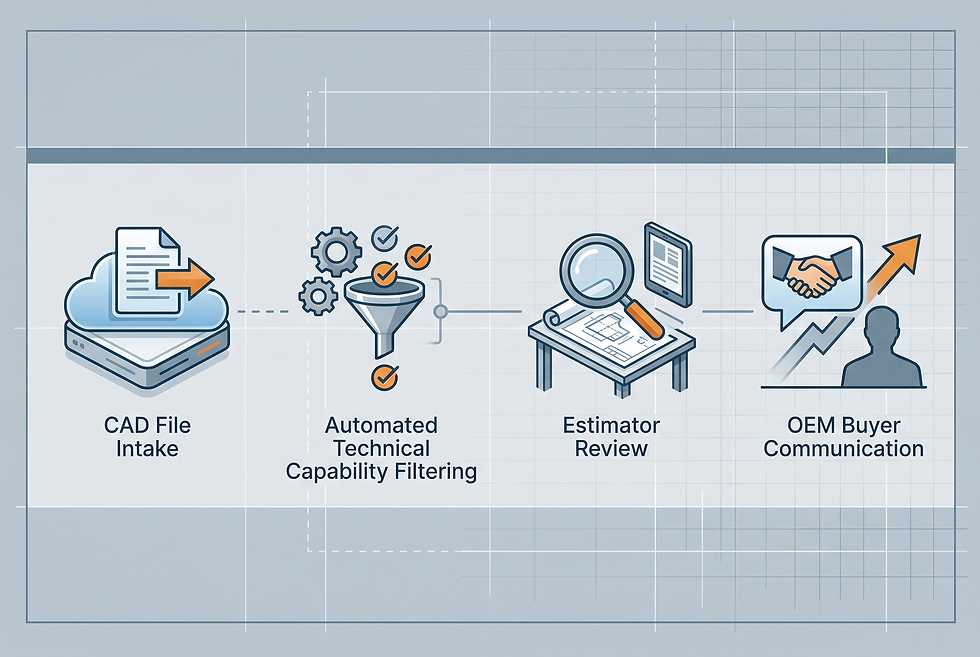
How Modern Lead Generation for CNC Machining Companies Operates
Modern lead generation for CNC machining companies depends on an orchestrated, five-stage operating workflow that bridges digital engagement with manufacturing reality:
1. Structured Technical Intake
The workflow begins when an OEM design engineer or sourcing manager lands on a specialized capability landing page. Rather than encountering an open-ended generic contact box, the visitor accesses a structured RFQ intake portal requiring STEP/IGES files, PDF drawings with geometric dimensioning and tolerancing (GD&T), expected annual usage (EAU), material grades, and project milestone dates.
2. Automated Geometry and Capability Screening
Before drawing sets reach the estimating queue, the intake system checks baseline parameters: required axes (3-axis vs. 5-axis), maximum workpiece dimensions against machine envelopes, and specified raw materials (e.g., Titanium Gr. 5 vs. Aluminum 6061-T6). Non-conforming projects outside machine capabilities are flagged immediately.
3. Tiered RFQ Routing and Commercial Triage
Inquiries are categorized automatically:
High-Value Contract RFQs (Production Batches): Routed directly to the Senior Estimator with pre-calculated cycle estimates and material market rates.
Low-Intent/Standard Prototype Requests: Directed to self-service quoting matrices or standardized baseline pricing templates.
4. Technical Proposal Delivery and Automated Re-Engagement
Once the formal quote package—complete with lead times, machining assumptions, and quality certifications—is delivered, automated follow-up cadences initiate. If the prospective buyer views the proposal without confirming an order, sequential follow-ups trigger specific technical collateral, such as relevant material case studies, machine park walk-throughs, and quality inspection reports.
5. Closed-Loop Machine Capacity Utilization Feedback
When machine availability fluctuates (for example, upcoming open spindle hours on horizontal machining centers), outbound sequences selectively activate past dormant accounts that previously sourced parts compatible with those exact work envelopes.
Comparative Analysis: Traditional Machine Shop Sales vs. Structured Pipeline Architecture
The table below contrasts traditional, reactive machine shop sales approaches with modern, systematic technical lead qualification models.
Workflow Dimension | Traditional Machine Shop Approach | Structured Technical Pipeline Model |
Inquiry Ingestion | Open text email inbox () with missing drawings and unclear volumes | Guided CAD/drawing intake portal capturing GD&T, material specs, and EAU |
Estimating Triage | Senior engineers manually review all RFQs in chronological arrival sequence | Rule-based technical scoring separating high-margin repeat production from price shoppers |
Turnaround Time | 4 to 8 business days for formal price return | Under 24 hours for standard parts; immediate DFM feedback for enterprise RFQs |
International Handling | Delayed responses due to time zones; language barriers in export documentation | 24/7 technical intake response with regional specification mapping (DIN/ISO/ASTM) |
Follow-Up Discipline | Sporadic manual check-ins; opportunities abandoned after one non-response | Structured multi-touch cadence addressing technical objections and delivery milestones |
Pipeline Metric Focus | Total quote volume issued (regardless of conversion rate) | Spindle gross margin per quoted hour and RFQ-to-PO conversion rate |
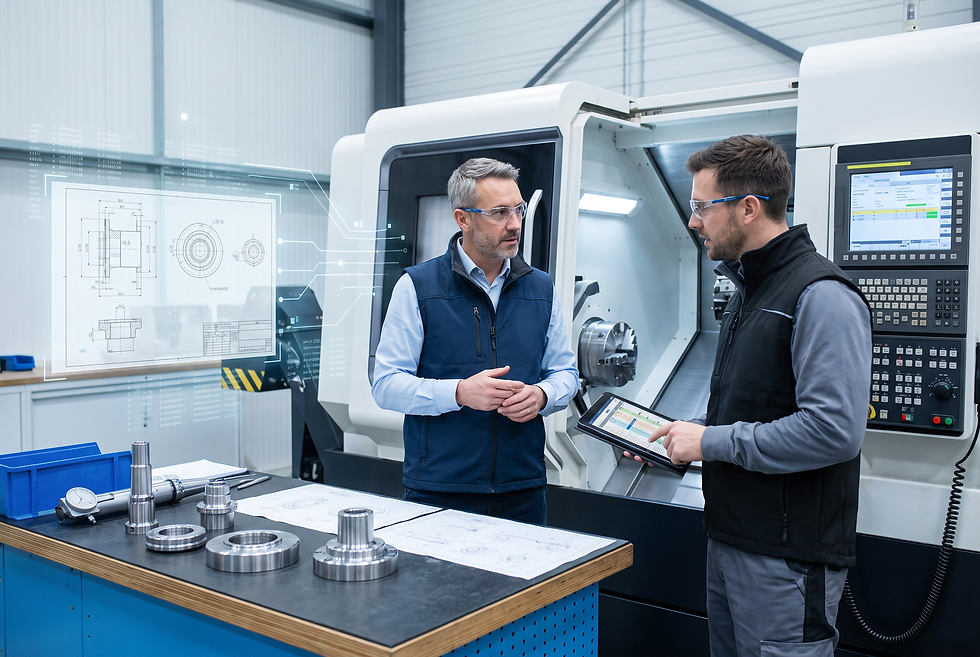
Evidence and Results from Manufacturing Deployments
Industry benchmarks across contract manufacturing illustrate the direct impact of structured digital intake on commercial throughput:
Quoting Turnaround Velocity: According to the National Tooling and Machining Association (NTMA) operational surveys, suppliers responding to industrial RFQs within 24 hours achieve significantly higher conversion rates than those taking over 72 hours, as OEM engineers frequently award initial tooling contracts to the first qualified respondent.
Engineering Bandwidth Preservation: In published supplier development reports from European industrial networks, precision sub-contractors utilizing structured technical intake filters reduced non-viable engineering review hours by over 30%, redirecting senior estimator time toward high-yield aerospace and medical manufacturing tenders.
Export Market Capture: Contract manufacturers adopting standardized cross-border quotation frameworks reported faster account onboarding cycles with North American and European procurement teams by eliminating multiple email cycles regarding missing quality control parameters.
What Other Precision Engineering Companies Can Learn
Machine shop leadership can apply several operational principles when upgrading commercial processes:
Principle 1: Stop Quoting Incomplete Data Packages
Never allow sales teams to pass incomplete drawing sets to estimating. Establish mandatory data standards upfront (tolerances, surface treatment, delivery batches). This immediately eliminates price-checking tire kickers while signaling technical professionalism to serious procurement managers.
Principle 2: Align Sales Triggers with Sourcing Buying Signals
OEM procurement teams do not purchase on sudden impulse. Track concrete procurement indicators: new product announcements, supply chain diversification notices, and prototype drawing downloads. Align outreach when target accounts actively release design updates.
Principle 3: Transform Technical Estimators into High-Value Closers
Estimators should not spend their working hours performing administrative data entry across PDF drawings. Automate basic data extraction so technical specialists can focus on DFM consultations and direct dialogue with client engineering teams.
What This Could Look Like for Precision Manufacturing and CNC Suppliers
For a mid-sized precision CNC manufacturing facility operating 15 to 40 multi-axis CNC machines, modernizing lead generation does not mean launching consumer-style marketing campaigns. Instead, it means establishing an autonomous commercial capture infrastructure.
Consider a precision milling and Swiss-turning supplier targeting medical device and defense automation sectors in international markets. Instead of relying solely on annual trade fairs, the company deploys an intelligent outbound and inbound capture layer that identifies engineering procurement heads, qualifies incoming CAD packages against spindle capacities, and coordinates initial discovery conversations seamlessly across international time zones.
Deploying the YTT AI Business Development Rep for Precision Manufacturing
To execute this operating discipline without burdening technical shop personnel, industrial suppliers deploy the AI Business Development Rep within the YTT AI ecosystem.
Worker Job Title: AI Business Development Rep
Main Daily Tasks: Identifies engineering and procurement decision-makers at target OEM accounts; ingests incoming RFQ correspondence; validates the presence of essential technical data (CAD, STEP, PDF drawings, material callouts, batch quantities); performs initial industry qualification against the shop's ideal machine capabilities; executes multi-touch follow-ups on outstanding proposals.
Primary Work Channels: Corporate Email, Website Technical RFQ Intake Gate, LinkedIn Commercial Messaging, CRM / ERP Integration.
Authority Boundary: Fully automated for lead research, technical requirement intake, and scheduled follow-up outreach; strictly hands off formal price sign-offs, final DFM engineering concessions, and contract terms to internal manufacturing estimators and commercial directors.
First Value Event: The first fully qualified production RFQ—complete with 3D CAD files, validated material specs, annual batch projections, and confirmed buyer timeline—delivered directly to the lead estimator's desk ready for final calculation.
Daily Report Result: A clear morning operational briefing delivered to the Sales Director summarizing newly identified OEM target accounts, qualified RFQs received overnight, pending customer technical clarifications, and active quotes requiring human executive follow-up.
FAQ
Why does generic digital marketing often fail to generate leads for CNC machining companies?
Generic digital marketing usually fails because CNC machining is a complex, build-to-print B2B service requiring specific engineering inputs (tolerances, CAD models, material callouts). Broad consumer-oriented campaigns generate low-volume consumer or prototype inquiries rather than qualified, recurring production RFQs from industrial OEM procurement managers.
What technical information is required to qualify an inbound CNC machining lead?
A qualified CNC machining inquiry must include 3D CAD models (STEP/IGES), 2D drawings specifying critical GD&T tolerances, surface finish requirements, exact raw material certifications, expected annual usage (EAU), delivery schedule requirements, and required quality assurance standards (such as ISO 9001 or AS9100).
How can machine shops reduce RFQ quoting bottlenecks without hiring more estimators?
Machine shops can alleviate quoting bottlenecks by deploying structured technical intake portals and automated qualification workflows. Filtering out low-intent quote requests and verifying drawing completeness before passing files to estimating ensures senior engineers only spend time on high-margin, viable production contracts.
How does an AI Business Development Rep handle international export inquiries for precision manufacturers?
An AI Business Development Rep operates 24/7 across global time zones, instantly responding to incoming drawing packages from overseas procurement officers, clarifying missing technical specifications in the buyer's language, and preparing structured project summaries for the domestic commercial team's morning review.
Scale High-Margin Contract Precision RFQs
Deploy an AI Business Development Rep to qualify technical drawings, eliminate quoting friction, and secure recurring OEM production contracts globally.


Comments