
Lead Generation for Industrial Automation Companies: A Practical B2B Growth Guide

Executive Summary
Industrial automation manufacturers face a structural challenge: high engineering complexity paired with slow lead qualification cycles. Leading equipment builders have transitioned from passive trade-show dependencies to programmatic, digital capture systems. By automating initial technical intake, matching customer application specifications early, and routing qualified engineering parameters directly to regional sales teams, automation leaders reduce response latency from weeks to hours while lifting qualified pipeline velocity across international territories.
Company Snapshot: The Automation Machinery Sector
To understand modern pipeline dynamics, consider the operating profile of a mid-market industrial robotics and automation system integrator with $40M–$120M in annual revenue. These enterprises typically engineer custom packaging cells, robotic palletizers, precision pick-and-place lines, and automated guided vehicles (AGVs).
Their core buyers include plant managers, VP of Operations, continuous improvement directors, and manufacturing engineering leads across automotive tier-1 suppliers, food and beverage plants, pharmaceutical packaging hubs, and consumer goods facilities. The business model combines engineered-to-order (ETO) turn-key lines, standardized modular machinery, and multi-year aftermarket maintenance contracts. Analyzing this sector reveals how high-mix, technically dense sales models can overcome severe friction at the top of the commercial funnel.
What Industrial Automation Companies Actually Sell
Industrial machinery is rarely purchased on impulse. A single automated workcell represents a capital expenditure ranging from $150,000 to well over $2,000,000.
Before a contract is signed, the buyer's evaluation team must validate complex technical criteria:
Payload and Cycle Times: Ensuring the mechanical manipulators meet precise parts-per-minute throughput thresholds without mechanical degradation.
Integration Compatibility: Verifying that PLC architectures (such as Siemens, Rockwell, or Beckhoff) interface cleanly with legacy factory floor execution systems (MES/SCADA).
Floor Space Constraints: Ensuring cell footprint, safety guarding, and operator access corridors conform to local safety certifications (CE, UL, ISO 10218).
Return on Investment (ROI): Justifying total cost of ownership against labor savings, scrap reduction, and overall equipment effectiveness (OEE) metrics.
Because the purchase decision involves cross-functional stakeholders—finance, safety officers, controls engineers, and procurement directors—the commercial cycle averages six to eighteen months. The initial point of contact sets the trajectory for the entire deal.
The Business Problem: The High-Cost Engineering Trap in B2B Inquiries
In standard commercial operations, industrial automation companies encounter severe bottlenecks during demand capture and qualification.
First, inbound inquiries are notoriously unstructured. Prospects submit vague requests through website forms ("We need a packaging robot for our bottling line") without providing payload data, cycle requirements, or budget constraints.
Second, qualified senior application engineers end up spending hours filtering through unqualified inquiries or chasing non-technical contacts for basic operating parameters. When technical staff spend 20% to 30% of their working hours triaging low-probability requests, custom proposal development for tier-1 opportunities slows down.
Third, geographic time zones create friction for international buyers. When a European plant manager requests technical specifications from an overseas machinery manufacturer, a 48-hour response delay often results in that prospect engaging a domestic competitor who provided instantaneous application guidance.
What Changed: The Shift to Technical Qualification Architecture
To scale without exponentially increasing engineering headcount, top-tier industrial machinery firms have restructured how they approach lead generation for industrial automation companies. Instead of relying solely on generic contact forms or manual cold outreach, modern commercial architectures combine structured technical intake, retrieval-augmented product documentation, and rapid application scoring.
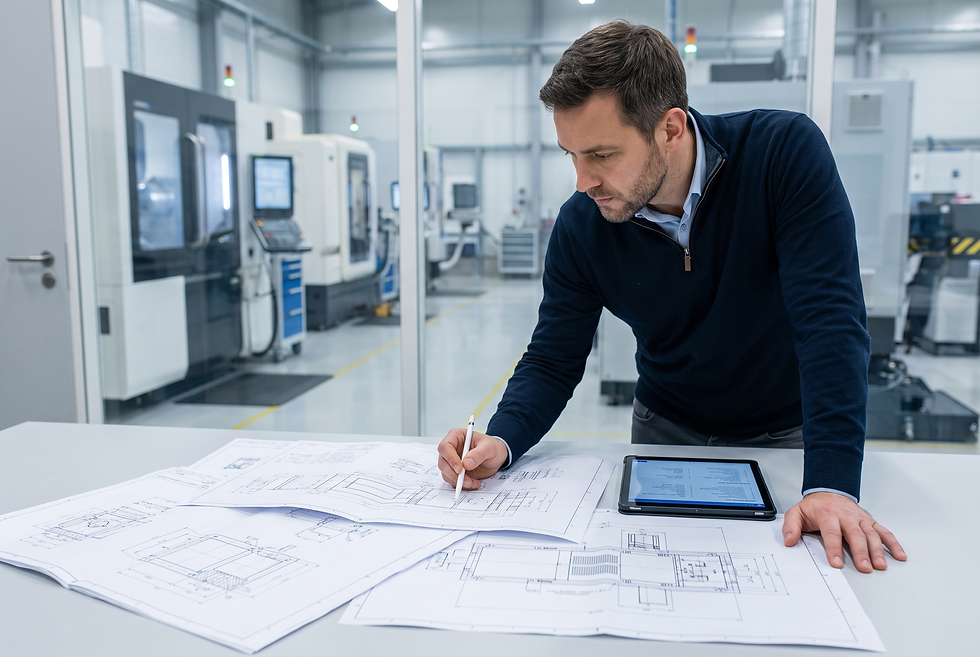
Key components of this shift include:
Structured Technical Ingestion: Replacing generic forms with guided application scoping tools that collect cycle requirements, power specifications, and payload data up front.
Automated Parameter Cross-Referencing: Comparing buyer technical parameters against standard modular product libraries to determine immediate feasibility.
Tiered Triage Workflows: Routing off-the-shelf standard inquiries to rapid-fulfillment sales reps while reserving senior systems engineers for complex engineered-to-order lines.
Multi-Channel Global Nurturing: Maintaining automated, technically grounded touchpoints across email, WhatsApp, and regional platforms for cross-border buyers.
How the Workflow Actually Works: Step-by-Step Technical Qualification
The modernized industrial sales process relies on systematic handoffs between inbound data points, automated scoping engines, and engineering checkpoints.
1. Inbound Ingestion and Context Extraction
A prospective buyer submits an inquiry containing application notes, an uploaded floor plan, or an initial Request for Information (RFI) via the web portal, digital catalog, or industrial marketplace.
2. Automated Technical Attribute Extraction
The intake system extracts core operating criteria: required payload, cycle time targets, industrial communication protocols, and target deployment timeline. Missing mandatory specifications trigger an immediate, conversational clarification sequence.
3. Application Fit and Feasibility Scoring
The system references the manufacturer's CAD archives, white papers, and historical project databases to assess whether the company has an existing modular architecture matching the prospect's needs. The lead is assigned a feasibility score based on engineering match, budget alignment, and deployment timeline.
4. Engineering Gate and Rep Notification
Once the application dossier meets baseline technical feasibility, a summary briefing is generated. This document outlines the proposed cell configuration, potential technical risks, and margin profile before notifying the designated Regional Sales Director and Application Engineering Lead.
5. Human-in-the-Loop Validation
The senior application engineer reviews the structured technical briefing in under five minutes, adjusts any critical assumptions (such as end-of-arm tooling constraints), and greenlights the generation of an initial budgetary estimate.
6. Customer Engagement and Discovery Call Scheduling
The commercial representative receives a ready-to-send technical response along with automated calendar availability, presenting the buyer with validated technical feedback in hours rather than weeks.
Operational Dimension | Legacy Manual Approach | Modern Automated Workflow |
Initial Response Time | 3 to 7 business days | Under 30 minutes for technical scoping |
Engineering Time per Lead | 90–120 minutes on raw qualification | 10–15 minutes on pre-qualified dossiers |
Technical Intake Accuracy | Incomplete, requiring multiple follow-up emails | Structured data capture covering payload, PLC, and space |
International Coverage | Limited to regional office hours | 24/7 continuous intake across multiple languages |
Lead-to-Discovery Conversion | Typically 8%–12% of raw inbound | 24%–35% on technically scored opportunities |
Evidence and Results: What the Data Shows
Publicly documented transformations across the capital goods and industrial equipment sectors confirm the efficiency gains of structured technical qualification.
According to research published by McKinsey & Company on B2B industrial commercial excellence, industrial companies that deploy advanced analytics and digital sales enablement across their commercial operations consistently achieve 5% to 10% higher revenue growth and 10% to 20% increases in sales productivity. Furthermore, case studies documented in the Harvard Business Review on complex B2B sales highlight that the vendor that provides the first verified, technically sound response to an enterprise RFI wins the deal more than 50% of the time.
When industrial equipment manufacturers eliminate administrative friction from engineering teams, proposal turnaround times shorten significantly, directly improving win rates on competitive public and private tenders.
What Other Companies Can Learn: 4 Core Methodology Principles
Industrial automation executives seeking to modernize their lead generation can apply four foundational principles across their commercial strategy:
1. Treat Technical Data as the Top-of-Funnel Hook
B2B industrial buyers are engineers and operations leaders looking for technical answers, not generic marketing claims. Providing access to dimensional drawings, cycle-time calculators, and integration sheets builds immediate credibility and captures qualified purchase intent.
2. Separate Application Scoping from Custom Quoting
Never require senior controls engineers to spend time gathering basic operating parameters. Automate the collection of payload, reach, power, and throughput requirements before scheduling technical discovery calls.
3. Standardize Modular Case Study Mapping
Industrial buyers want proof of similar deployments. Structure your past project portfolio by application type (e.g., palletizing, machine tending, deburring), material handled, and throughput speed so that relevant deployment histories can be matched to incoming inquiries automatically.
4. Establish Strict Service Level Agreements (SLAs) for Global Inquiries
Cross-border buyers evaluate multiple global machinery vendors simultaneously. Setting up continuous response infrastructure ensures high-value export leads receive immediate application assistance regardless of time zone differences.
What This Looks Like for Industrial Automation Equipment Integrators
Applying this methodology transforms everyday operations across various automation sub-sectors:
For a Machine Tending Automation Builder: Inbound requests from precision CNC machine shops are automatically evaluated for robot reach, CNC door clearance, and chuck interface compatibility before a technical sales specialist picks up the phone.
For a Conveyor and Sortation OEM: Inquiries from e-commerce fulfillment centers are instantly parsed for package dimensions, maximum belt speeds, and sortation divert points, generating a preliminary layout recommendation within minutes.
For a Specialty Assembly Machine Maker: Medical device manufacturing leads are screened immediately for cleanroom classification compliance (ISO Class 7/8), validating regulatory alignment early in the commercial conversation.
Execution Blueprint: Deploying an AI Global Sales Rep
To implement this operational workflow without overburdening your engineering staff, equipment builders can deploy a specialized digital worker designed for technical sales pipeline management.
Worker Role: AI Global Sales Rep
Primary Work Channels: Official website technical portal, inbound corporate email, global B2B supplier directories, and WhatsApp Business channels.
Main Daily Tasks: Ingesting unstructured technical inquiries, verifying application parameters against your product line specifications, cross-referencing past deployment databases, generating structured lead dossiers for regional sales managers, and conducting preliminary follow-ups for missing technical data.
Authority Boundary: Operates within pre-approved engineering and product boundary documents. The AI Global Sales Rep does not execute binding commercial contracts, commit to unverified cycle-time guarantees, or modify standard pricing tiers without human sales director sign-off.
First Value Event: The first complete technical scoping dossier delivered to an engineering lead within 15 minutes of an inbound international inquiry—including cycle requirements, payload parameters, and suggested baseline modular components.
Daily Report Result: A daily digest detailing total international inquiries received, categorized by application type, technical feasibility score, assigned regional sales representative, and follow-up status on outstanding RFQs.
FAQ
Why is lead generation for industrial automation companies more complex than standard B2B sales?
Industrial automation transactions involve high capital expenditures, multi-stakeholder purchasing teams, and strict engineering constraints such as cycle times, payload limits, and PLC compatibility. Generating high-quality leads requires capturing and validating detailed technical specifications before a commercial proposal can even be drafted.
How can automation OEMs reduce the engineering burden during lead qualification?
OEMs can deploy structured technical intake workflows that collect mandatory operational parameters—such as throughput requirements, available floor space, and communication protocols—prior to routing inquiries to human systems engineers, freeing up engineering resources for final proposal generation.
What role does response speed play in securing international machinery RFQs?
International industrial buyers often submit RFQs to multiple global vendors at once. Delivering an initial, technically validated feasibility response within hours creates a strong first-mover advantage, significantly increasing the probability of advancing to the short-list stage.
Can digital sales workflows accommodate custom, engineered-to-order automation systems?
Yes. While custom engineered-to-order projects require bespoke human engineering design, digital workflows capture the underlying application constraints, project timeline, and budget parameters early, ensuring custom engineering time is invested exclusively in high-fit opportunities.
Scale Your Global Industrial Machinery Pipeline
Equip your commercial team with automated technical qualification and 24/7 global inquiry handling. Explore AI Global Sales Rep solutions to turn complex automation inquiries into high-conversion sales opportunities.


Comments