
Inside an AI Global Sales Rep Daily Report: What a CEO Must See

An ai global sales rep daily report delivers a structured operational synthesis of autonomous territory prospecting, technical inquiry qualification, exception logging, and verified pipeline milestones. Rather than tracking cosmetic activity metrics like email volumes or connection requests, this executive document provides commercial leaders with clear visibility into buyer engagement, market friction points, and revenue-critical human approval checkpoints.
Industrial leaders across manufacturing, machinery, robotics, and cross-border commercial sectors require actionable pipeline transparency rather than speculative vanity metrics. When deploying digital workforces across multiple global territories and time zones, executive oversight shifts from monitoring manual hours to auditing autonomous operational workflows, governance guardrails, and pipeline progression.
The Strategic Purpose of Autonomous Sales Visibility
Traditional sales reporting often obscures commercial bottlenecks behind subjective sales representative commentary or aggregate customer relationship management (CRM) dashboard charts. According to research published by Gartner in 2023, B2B sales organizations that combine algorithmic workflows with disciplined operational checkpoints accelerate pipeline velocity by reducing lead leakage across complex buying committees.
For a Chief Executive Officer, Managing Director, or Commercial Director, reviewing autonomous sales operations is not an exercise in micro-management. It is a critical risk mitigation and strategic governance function designed to address four specific enterprise objectives:
Verifying Account Quality: Ensuring autonomous agents prospect strictly within approved Ideal Customer Profile (ICP) parameters and target tier accounts.
Tracking Intent Milestones: Identifying active Requests for Quotation (RFQs), technical inquiries, and scheduled engineering discovery sessions.
Surfacing Territory Bottlenecks: Highlighting recurring regional compliance hurdles, localized messaging friction, or product catalog ambiguities.
Enforcing Managerial Control: Mandating explicit human authorization before non-standard pricing, contractual warranties, or bespoke engineering terms are issued.
Evaluating Autonomous Pipeline Operations vs Legacy Methods
Executive visibility differs fundamentally when supervising autonomous global sales workflows compared to tracking manual sales teams or point-solution automation tools. The structured comparison below details how operational reporting depth evolves when adopting disciplined autonomous systems.
Operational Dimension | Legacy Manual Sales Log | Basic Outbound Tool Report | Enterprise Autonomous Agent Daily Briefing |
Activity Depth | Self-reported subjective notes; incomplete CRM records | Sent volumes, generic open rates, bounce tracking | Full conversational context, company firmographics, verified intent signals |
Account Research | Variable depth constrained by individual representative bandwidth | Static database field inserts and basic token replacement | Deep technical capability alignment and multi-stakeholder committee mapping |
Exception Flagging | Delayed until weekly 1-on-1 pipeline reviews or deal autopsies | None; automated sequences trigger generic automated fallbacks | Real-time categorization of technical questions, edge cases, and compliance inquiries |
Human Approval Boundary | Informal verbal confirmations or fragmented internal messaging threads | Unmonitored automated replies without human checkpoints | Strict operational holds on commercial terms, custom pricing, and legal contracts |
Data Synchronization | Inconsistent and delayed CRM record updates across global teams | Siloed tool activity unlinked to central enterprise commercial records | Continuous synchronization with commercial databases, ERP systems, and CRM records |
Anatomy of an AI Global Sales Rep Daily Report Template
To understand how autonomous reporting functions in real industrial and manufacturing environments, examine the following structured briefing model. This format translates complex operational telemetry into clear commercial outcomes without technical jargon.
1. Strategic Daily Objective & Coverage Focus
Territory & Segment Assignment: European Industrial Automation Distributors (DACH & Benelux regions).
Account Focus Tier: Tier-2 packaging machinery manufacturers requiring custom servomotor and drive integrations.
Assigned Objective: Identify and initiate technical discussions with Heads of Engineering and Procurement Directors.
2. Autonomous Work Executed & Data Enrichment
Target Accounts Analyzed: 142 discrete industrial manufacturing enterprises screened against defined firmographic filters.
Buyer Committee Contacts Identified: 386 verified engineering, operations, and procurement executives mapped.
Personalized Technical Inquiries Dispatched: 88 customized dossiers delivered across multi-channel commercial workflows.
Inbound Technical Qualifications Completed: 14 inbound buyer responses parsed for technical specifications and timeline compatibility.
3. Verified Commercial Pipeline Output
Discovery Sessions Scheduled: 3 technical discovery calls scheduled directly with Tier-1 mechanical engineering leads.
Active RFQ Signals Identified: 2 formal specification documents captured for precision planetary gearbox assemblies.
Nurture Pipelines Updated: 9 enterprise accounts tagged for secondary technical follow-up following upcoming industrial trade expos.
4. Exception Logs & Ambiguity Identification
Specific Exception Detected: A prospective buyer requested CE and ISO 13849-1 functional safety certification files outside standard automated repository access.
Autonomous Workflow Action: Outbound sequence automatically paused for this account; incident categorized as a compliance exception.
Operational Resolution: Notification dispatched to internal technical compliance team for document retrieval and verification.
5. Human Managerial Decisions Required (Governance Boundary)
Commercial Pricing Exception: A regional procurement consortium requested a non-standard 12% volume rebate tier for an annualized supply contract.
Mandatory Action Required: Sales Director or Commercial Director sign-off required to confirm margin viability before commercial quotation delivery.
System Boundary Policy: Autonomous agents are strictly prohibited from generating custom pricing models or signing binding contractual commitments.
6. Iterative Territory Calibration for Next Cycle
Refined Outreach Focus: Expand prospect identification across specialized food processing machinery builders in Northern Italy.
Messaging Adjustment: Suppress legacy product variant references in favor of newly certified industrial automation components.
The Executive Governance Framework: Five Operational Pillars
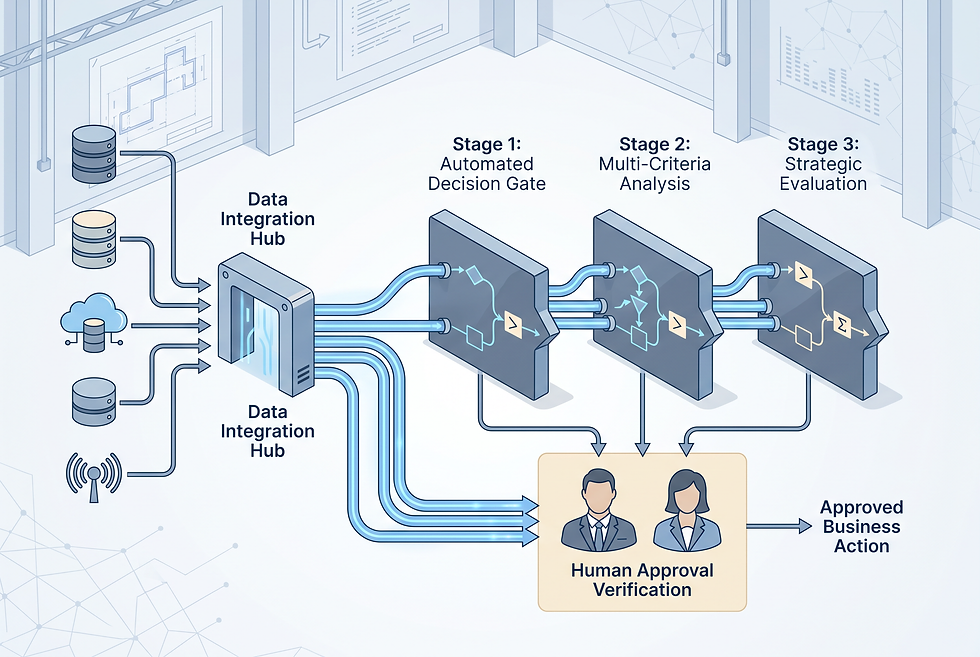
Implementing autonomous agents in global sales environments requires structured governance frameworks to ensure enterprise reliability and alignment with commercial objectives.
Pillar 1: Strict Account Qualification Guardrails
Autonomous agents must operate within explicit demographic, firmographic, and technographic boundaries. The daily report must confirm that prospect generation complies with designated industry sectors, revenue thresholds, geographic parameters, and regulatory jurisdictions.

Pillar 2: Verifiable Buyer Intent Classification
Rather than treating an email open or generic click as a qualified lead, executive reporting must isolate genuine commercial intent. This includes direct technical specification requests, RFQ documents, drawing submittals, or scheduled discovery meetings with authorized buying committee members.
Pillar 3: Absolute Human-in-the-Loop Safeguards
According to McKinsey & Company's 2024 enterprise AI research, high-performing organizations maintain clear human-in-the-loop validation checkpoints for all material business commitments. Commercial boundaries must enforce human managerial approval for all pricing tiers, custom contract clauses, exclusivity terms, and warranty specifications.
Pillar 4: Systematic Exception Handling and Escalation
When autonomous agents encounter edge cases—such as unexpected compliance demands, unfamiliar regulatory requirements, or complex engineering questions—the system must pause automated interactions and route the issue directly to the appropriate human subject matter expert.
Pillar 5: Continuous Operational Synchronization
Every interaction, prospect detail, intent classification, and exception must synchronize automatically with central enterprise platforms. This eliminates information silos and provides commercial leadership with an immutable audit trail of all territory development activities.
Operationalizing Autonomous Sales with Enterprise Infrastructure
Managing global sales expansion across disparate regions requires specialized digital workforce architectures designed specifically for complex B2B commercial environments. Generic automated tools lack the contextual understanding and strict governance controls needed to represent enterprise manufacturing brands responsibly.
Enterprise organizations deploy the YTTAI autonomous platform to scale outbound commercial workflows while maintaining total governance transparency. By implementing the YTTAI Sales Master solution, industrial manufacturers deploy digital sales agents capable of multi-channel prospect discovery, technical qualification, and structured daily reporting—ensuring human sales teams engage exclusively with high-intent, pre-qualified opportunities.
Conclusion: Transforming Operational Telemetry into Strategic Execution
An executive sales report serves as the vital bridge between autonomous execution and executive strategy. By demanding daily reports that focus on verified business results, transparent exception logs, and non-negotiable human approval boundaries, executive leaders can scale their international commercial footprint with predictable control, operational governance, and sustainable revenue growth.
FAQ
What core metrics should a CEO expect in an AI global sales rep daily report?
A CEO should look for verified commercial outcomes rather than vanity metrics: qualified discovery sessions scheduled, active RFQs captured, structured exception logs, and specific decisions requiring human managerial sign-off.
How do autonomous sales reports handle pricing and contract exceptions?
Autonomous systems flag commercial exceptions immediately in the daily report and pause further automated commitments. Final pricing, contract modifications, and technical warranties require explicit human-in-the-loop approval before proceeding.
Why is exception logging more valuable than automated activity volume?
Exception logging highlights non-standard buyer requirements, compliance questions, and edge cases. This protects the enterprise from misaligned commitments while providing strategic market feedback directly to commercial leadership.
How does human-in-the-loop governance function during global outreach?
Human-in-the-loop governance enforces strict operational firewalls where autonomous agents manage research and initial engagement, while human managers must review and authorize custom quotations, contract terms, and engineering feasibility.
Gain Clear Visibility Into Autonomous Sales Performance
Discover how enterprise teams deploy autonomous global sales reps with transparent daily reporting, verifiable pipeline signals, and complete executive oversight. See How AI Workers Report Results | https://www.ytt-ai.com/



Comments