%20%E6%8B%B7%E8%B4%9D.png)
AI Sales Agent Software for B2B: How to Evaluate Real Workflow Capability

Selecting enterprise ai sales agent software requires evaluating practical orchestration capabilities rather than superficial prompt wrappers. A functional B2B autonomous sales agent must ingest unstructured technical documentation, manage contextual memory across long deal cycles, enrich accounts against live market signals, and execute structured follow-ups within strict governance boundaries, leaving critical commercial commitments to human sales leaders.
Traditional sales engagement platforms rely on static cadence templates that demand manual intervention at every stage. In contrast, autonomous systems operate on goal-oriented execution loops where research, intent detection, and multi-channel outreach run continuously based on real-time pipeline changes. For executive buyers in manufacturing, industrial equipment, and complex B2B technology, understanding the technical boundary between basic scripting and true agentic workflows is essential before deploying capital.
Core Capabilities of Enterprise AI Sales Agent Software
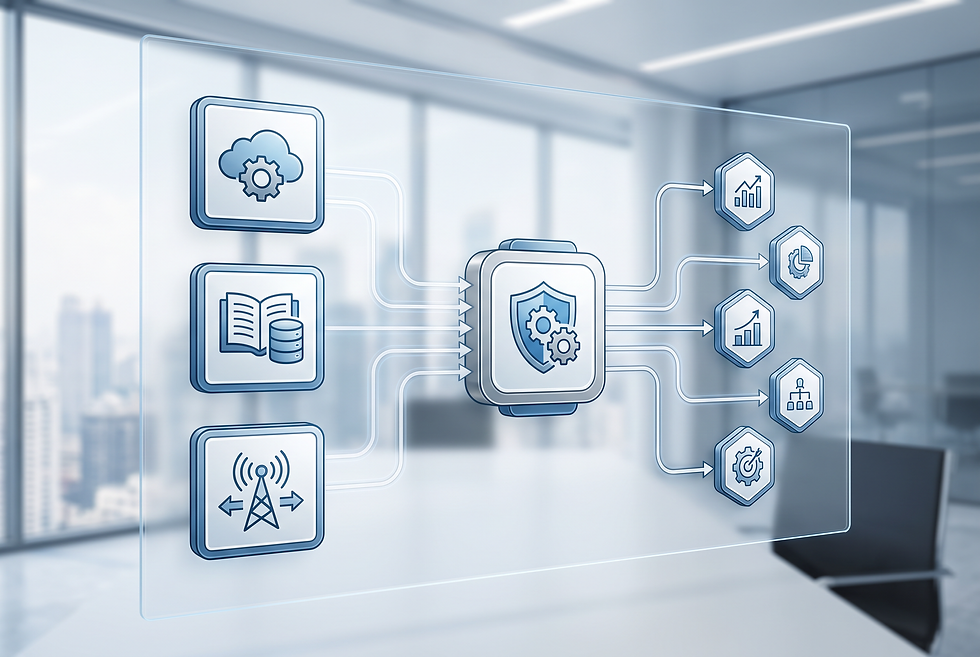
To separate surface-level generative wrappers from enterprise-grade platforms, revenue leaders should assess six functional pillars that govern end-to-end commercial operations:
1. Deep Account Research and Signal Ingestion
Generic automation tools scrape basic firmographics like company headcount, headquarters city, and primary industry codes. An enterprise agent analyzes technical buyer signals, regulatory filings, technology stacks, open engineering requisitions, procurement tender notices, and supply chain shifts.
According to Gartner (2024), by 2026, 30% of outbound messages from large enterprises will be synthetically generated but contextually grounded in buyer intent data, up from under 5% in 2023. Real capability means synthesizing these data streams into personalized commercial narratives that directly address an operational pain point.
2. Dynamic Context Memory and Knowledge Bases
Complex B2B sales cycles span months and involve buying committees with divergent technical and financial priorities. The software must maintain dual-layer contextual memory:
Enterprise Knowledge Base: Ingests internal product catalog sheets, compliance certifications, pricing structures, CAD specifications, and engineering constraints directly from raw PDF, DOCX, and internal Wiki repositories.
Thread Memory: Retains multi-stakeholder objections, historical interactions, past vendor relationships, and shifting buyer requirements across email, LinkedIn, and CRM notes without hallucinating capabilities.
3. Autonomous Lead Qualification and Tiering
Rather than passing unqualified inbound forms directly to account executives, the platform executes structured discovery. It asks clarifying technical questions, assesses project timelines, verifies budget parameters, and maps stakeholder authority against a defined Ideal Customer Profile (ICP) before allocating human capital.
4. Autonomous Multi-Touch Follow-Up Orchestration
Unlike linear cadences that blindly send "just following up" notes every 3 days, agentic platforms evaluate prospect non-responsiveness contextually. If an engineering manager goes dark after receiving a technical specification sheet, the system analyzes open rates, checks for executive changes at the target account, and recalibrates outreach with an alternative technical angle.
Evaluating Architecture: AI Agents vs. Legacy Sales Automation
Understanding structural differences helps engineering, IT, and revenue operations teams avoid brittle integrations and poor data hygiene across enterprise pipelines.
Evaluation Dimension | Legacy Sales Engagement Platforms | Enterprise AI Sales Agent Platforms |
Trigger Mechanism | Fixed time-based triggers (Day 1, Day 3, Day 7) | Event-driven triggers based on real-time buyer behavior and intent signals |
Context Depth | Variable merge tags (, ) | Real-time synthesis of technical whitepapers, financial news, and CRM history |
Qualification Logic | Static form scoring and rule-based routing | Multi-turn conversational qualification against complex technical criteria |
System Integration | Unidirectional CRM sync via scheduled batch API | Bi-directional read/write sync across CRM, ERP, and communication channels |
Memory Architecture | Contact-level static fields | Relational graph memory across accounts, buying committees, and threads |
Governance & Safety | Binary opt-out management and blacklist domains | Multi-layered guardrails with policy-based mandatory human approvals |
Establishing Human-in-the-Loop Governance and Safety Boundaries
Autonomous execution in enterprise B2B requires rigorous guardrails to prevent brand damage, regulatory non-compliance, or erroneous commercial commitments. According to McKinsey’s Global Survey on AI (2023), risk mitigation in commercial AI adoption remains the primary bottleneck for executive sponsorship across enterprise organizations.
To balance operational agility with corporate safety, enterprise sales operations must establish explicit operational tiers:
Tier 1: Fully Autonomous Execution
Routine operational tasks can run continuously without manual human oversight. These include cold account enrichment, inbound intent routing, baseline calendar scheduling, and follow-ups on non-commercial informational inquiries such as downloading standard product brochures or whitepapers.
Tier 2: Supervised Suggestions
The agent drafts nuanced replies to complex technical objections, maps organizational charts from fragmented prospect interactions, and suggests account tier upgrades. The system queues these items inside the sales representative's daily dashboard for quick review and one-click dispatch.

Tier 3: Mandatory Human Approval
Commercial quotation generation, custom technical scope promises, contractual terms, master service agreements, and discounts exceeding standard corporate thresholds must always require explicit human verification. The software must automatically pause the execution thread and notify the designated sales director or contract manager when these critical commercial boundaries are reached.
Workflow Integration and CRM Orchestration
An AI agent should never operate as an isolated messaging silo. It must function as an active participant inside the existing enterprise software stack, maintaining real-time bi-directional synchronization with platforms like Salesforce, HubSpot, Microsoft Dynamics, and enterprise data warehouses.
When evaluating integration capabilities, sales operations leaders should assess how the system handles write conflicts, automated task creation, custom field mapping, and audit logging. For revenue organizations managing specialized industrial, manufacturing, or cross-border B2B pipelines, deploying purpose-built infrastructure like YTTAI Sales Master provides out-of-the-box data pipelines tailored to complex product catalogs and multi-market commercial engagement.
When combined with centralized enterprise pipeline automation, sales teams eliminate repetitive data hygiene tasks while ensuring CRM records accurately reflect every autonomous interaction, stage progression, and prospect engagement signal without manual rep entry.
Buyer Decision Framework: 5-Step Evaluation Checklist
Before committing to an annual deployment or rolling out agents across an entire commercial division, enterprise procurement committees should run a structured 30-day technical pilot addressing these operational checkpoints:
Complex Catalog Ingestion Test: Upload proprietary technical manuals, compliance documentation, and multi-tier price sheets to test whether the agent synthesizes product compatibility accurately without hallucinating unsupported features.
Context Retention and Disruption Audit: Conduct simulated multi-turn conversations featuring sudden stakeholder changes and technical pushback to verify that conversational memory remains coherent across weeks.
Governance and Safety Boundary Verification: Verify that messages containing custom pricing requests, discount demands, or contract terms automatically pause execution and route to commercial management for approval.
Data Privacy, Isolation, and Compliance: Confirm that data processing strictly aligns with SOC 2 Type II, GDPR, and enterprise encryption standards, ensuring proprietary company information is never used to train shared foundation models.
Integration Health and Latency Benchmark: Confirm automated custom field mapping, real-time webhook responsiveness, and error-handling mechanisms across your active CRM and sales stack.
Conclusion
Evaluating enterprise AI sales agents requires focusing on deterministic workflow orchestration, factual accuracy, and reliable CRM synchronization rather than surface-level response generation. By establishing structured qualification criteria and strict human-in-the-loop controls, enterprise revenue leaders can scale pipeline throughput while protecting brand integrity and commercial margins.
FAQ
What is the primary difference between an AI sales agent and sales engagement software?
Sales engagement software runs rigid, time-based email sequences using static merge tags. An AI sales agent autonomously researches prospect signals, adapts messaging contextually using product knowledge bases, and qualifies buyer intent dynamically across multi-turn interactions.
How do enterprise AI sales agents prevent hallucinations during technical discussions?
Enterprise agents use Retrieval-Augmented Generation (RAG) tied strictly to verified product documentation, engineering specifications, and internal knowledge bases, combined with deterministic governance filters that escalate unknown queries to human teams.
Where should human approval boundaries be placed in autonomous sales workflows?
Human approval must be mandated for commercial pricing proposals, contract terms, formal technical guarantees, and high-value deal stage transitions, while routine data enrichment and informational follow-ups can run autonomously.
Can AI sales agent software integrate with existing enterprise CRM platforms?
Yes. Enterprise-grade AI sales agents provide bi-directional API and webhook integrations with platforms such as Salesforce, HubSpot, and Microsoft Dynamics to log interactions, update custom fields, and sync lead scoring in real time.
Scale Your Enterprise Pipeline with Governed AI Sales Execution
Discover how YTTAI Sales Master automates technical prospect research, deep qualification, and enterprise CRM orchestration within proven human-governed workflows.


Comments