
Kaeser Sigma Air Utility Business Model Case Study: Outcome-Based Equipment

Executive Summary: Kaeser Kompressoren transformed its traditional commercial engine by introducing SIGMA AIR UTILITY, a model where manufacturers purchase compressed air as a metered utility rather than buying heavy machinery upfront. By replacing balance-sheet capital expenditure with an operational expense tied strictly to volume and uptime, Kaeser eliminated capital approval friction, lowered plant energy waste, and created durable, multi-year recurring service revenue across global manufacturing sectors.
In this Kaeser Sigma Air Utility business model case study, we examine how industrial machinery manufacturers can transition from one-off asset transactions to predictable, multi-year recurring service agreements. For leadership teams navigating changing customer demands, this operating framework illustrates how telemetry-driven contracts create mutual economic alignment between industrial equipment builders and factory operators.
Company Snapshot: An Industrial Engineering Pioneer
Headquartered in Coburg, Germany, Kaeser Kompressoren SE is a global manufacturer of compressed air systems, rotary screw compressors, blowers, and air treatment equipment. Established in 1919 by Carl Kaeser Sr. as a precision machine workshop, the family-owned enterprise has grown to employ more than 8,000 personnel worldwide. The company operates across more than 140 countries through dedicated branch subsidiaries, authorized engineering distributors, and regional service hubs.
Kaeser serves high-demand industrial sectors, including automotive assembly, food and beverage processing, precision metal fabrication, chemical refining, semiconductor manufacturing, and pharmaceuticals. In modern factory operations, compressed air is widely recognized as the fourth industrial utility alongside electricity, water, and natural gas. It powers pneumatic cylinders, automated sorting systems, precision assembly robotics, blast cleaning units, and high-speed packaging lines.
Despite its ubiquity across manufacturing plants, compressed air is among the most energy-intensive utilities in modern industry. According to industrial energy audits published by international efficiency agencies, electrical power accounts for roughly 70% to 80% of the total lifecycle cost of an industrial compressor station over a ten-year operating horizon. Initial machinery procurement represents only 10% to 20% of total expenditure, with maintenance absorbing the remainder. Kaeser became an early benchmark for industrial servitization by aligning its commercial model with this lifecycle cost reality.
What the Company Sells: From Rotary Screws to Delivered Flow
Under conventional machinery sales models, compressed air manufacturers sell discrete physical units: rotary screw compressors, refrigeration dryers, desiccant air purifiers, particulate filters, and pressurized air storage vessels. Industrial clients procure these assets through competitive capital expenditure (CapEx) bidding processes, install them in mechanical utility rooms, manage routine maintenance schedules, and absorb total operational and energy risks.
This traditional transactional relationship creates distinct operational frictions throughout the equipment lifecycle:
Procurement Disconnect: Factory purchasing departments often choose the lowest equipment purchase bid, overlooking energy consumption metrics, pressure drop curves, and long-term lifecycle operating costs.
Excessive Equipment Sizing: Engineering teams frequently oversize compressor stations by 30% to 50% to hedge against uncertain peak demand spikes, causing machines to run at inefficient partial loads for years.
Maintenance Gaps and Air Leaks: Plant operating teams under tight maintenance budget constraints often defer preventive servicing or overlook piping network leaks, resulting in unaddressed pressure drops and inflated electrical utility bills.
Inflexible Asset Utilization: When plant production volumes fluctuate due to macroeconomic conditions, the factory remains burdened with fixed asset depreciation and idle physical machinery on its balance sheet.
Under the SIGMA AIR UTILITY model, Kaeser restructured the transaction entirely. Instead of purchasing hardware, the customer contracts for delivered compressed air at defined pressure tolerances, air purity grades, and flow capacities, billed at a fixed unit rate per cubic meter ($/m³). Kaeser finances, installs, owns, maintains, and continuously optimizes the entire compressed air installation throughout the contract duration.
The Business Problem: Capital Hurdles and Misaligned Incentives
Prior to scaling outcome-based contracts, industrial compressor manufacturers confronted three recurring structural challenges across global B2B markets:
1. Lengthy Capital Approval Cycles and Revenue Volatility
Replacing obsolete, inefficient compressor installations often requires six-figure capital outlays. During economic contractions or corporate budget freezes, plant managers routinely delay equipment modernization projects, keeping aging machinery in service past its economic lifecycle. For equipment builders, this dynamic created prolonged sales cycles, unpredictable quarterly order intake, and intense price competition during hardware bidding rounds.
2. The Efficiency Disconnect Between Builder and Buyer
In standard hardware sales, equipment vendors earn transactional revenue on initial machine sales and subsequent replacement parts. If a compressor operates inefficiently and draws excessive electrical power, the financial penalty falls entirely on the client's utility bill. Conversely, engineering hyper-efficient, wear-resistant equipment could cannibalize aftermarket spare parts revenue unless the vendor captures market share elsewhere. This fundamental misalignment discouraged long-term equipment efficiency optimization.
3. Uptime and Production Risk Borne Exclusively by the Buyer
Plant operators depend heavily on continuous pneumatic power. A sudden pressure drop can halt an automated bottling plant, stall a pharmaceutical packaging line, or shut down a robotic welding cell. When equipment malfunctions under a traditional sales model, the customer absorbs catastrophic production downtime losses while coordinating emergency service visits. Industrial buyers increasingly sought commercial partnerships that shared operational reliability and performance risks.
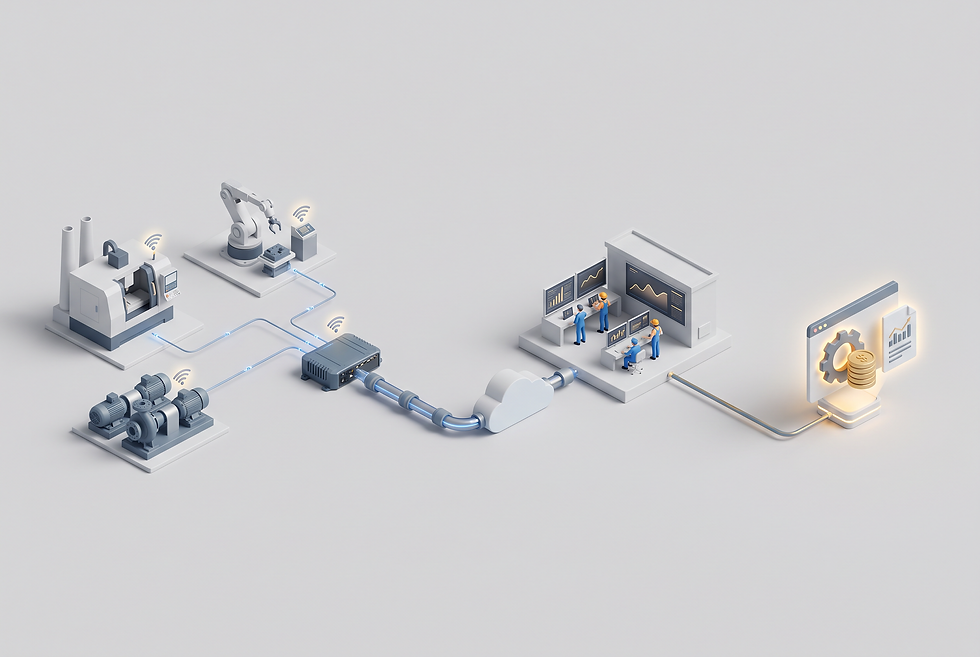
Kaeser Sigma Air Utility Business Model Case Study: Operational Architecture
To overcome these market barriers, Kaeser established the SIGMA AIR UTILITY operational model, integrating flexible asset financing, modular machinery design, and industrial IoT telemetry.
The operational architecture consists of four distinct pillars:
Turnkey Infrastructure Ownership: Kaeser retains full asset ownership on its balance sheet, handling station engineering, delivery, civil installation, and commissioning without customer capital expenditure.
Edge Control and Telemetry (SIGMA AIR MANAGER 4.0): An industrial master controller monitors compressed air delivery, operational pressure, air quality, motor temperatures, and power draw, transmitting operational telemetry to Kaeser's central service infrastructure via secure industrial interfaces.
Metered Consumption Billing: The customer pays for actual volume consumed ($/m³) against an agreed baseline tariff, turning fixed plant overhead into variable operational expenditure (OpEx).
Integrated Service-Level Guarantees: Kaeser assumes full responsibility for preventive servicing, emergency repairs, consumable parts, and automated system upgrades within the volumetric unit price.
How the Workflow Actually Works: Step-by-Step Execution
The delivery workflow of SIGMA AIR UTILITY operates across six sequential phases:
Step 1: Baseline Demand and Energy Audit
Before preparing a commercial agreement, Kaeser engineers conduct an Air Demand Analysis (ADA) using calibrated diagnostic data loggers attached to the client's existing air network. They capture flow rates, operational pressure drops, and electrical load variations across operating shifts over a one- to two-week monitoring window. Kaeser's proprietary simulation software (KESS) evaluates multiple technical configurations to calculate the exact compressed air cost baseline and identify the most energy-efficient setup for the facility's demand profile.
Step 2: Utility Contract Structuring
Kaeser and the plant operator establish a multi-year service level agreement (typically 5 to 10 years). The contract specifies the required volumetric range ($Nm^3/min$), precise operational pressure band (such as $6.5 \pm 0.2$ bar), ISO 8573-1 air purity standards (classifying oil content, particulate size, and moisture dew point), and the fixed volumetric rate per cubic meter.
Step 3: Modular Deployment and Integration
Kaeser delivers modular rotary screw compressors, desiccant dryers, filtration units, and the SIGMA AIR MANAGER 4.0 master controller. If the customer lacks indoor mechanical floor space, Kaeser deploys weather-resistant outdoor containerized stations (Sigma Air Containers), bypassing plant construction requirements and eliminating facility modification expenses.
Step 4: Continuous Automated Optimization
During daily operation, the SAM 4.0 controller sequences base-load and variable-speed compressors in real time to match instantaneous plant demand. This dynamic control ensures the compressor station operates within its optimal aerodynamic efficiency envelope, minimizing unloaded idling runtime while streaming continuous performance telemetry to Kaeser's global service center.
Step 5: Telemetry-Driven Predictive Maintenance
When remote sensors detect elevated differential pressure across air filters, unusual thermal variance, or excessive motor vibration, automated triggers alert Kaeser field service teams. Technicians service components before an unplanned shutdown occurs, without requiring customer purchase orders or repair approvals.
Step 6: Metered Invoicing and Dynamic Scaling
Calibrated flow meters record total volume delivered during the billing cycle, generating an invoice based purely on consumption. If factory production requirements expand or decline, Kaeser adjusts the compressor setup by swapping modular units to maintain optimal station efficiency.
Comparison: Traditional Equipment Sales vs. SIGMA AIR UTILITY
Operating Parameter | Traditional Machinery Sales | Kaeser SIGMA AIR UTILITY |
Asset Capitalization | Customer purchases asset on balance sheet | Kaeser owns, finances, and insures hardware |
Procurement Budget | CapEx approval with extended sign-off cycles | OpEx funded directly from operational budgets |
Pricing Metric | Fixed asset cost plus ad-hoc repair bills | Predictable fee per cubic meter of air ($/m³) |
Energy & Efficiency Risk | Borne entirely by the factory operator | Shared and actively managed by Kaeser |
System Sizing Method | Often oversized to accommodate peak loads | Dynamically matched to audited demand curves |
Service & Maintenance | Reactive or scheduled; separate purchase orders | Proactive, telemetry-driven, bundled in rate |
Station Modernization | Deferred due to reinvestment costs | Managed continuously by Kaeser to maintain margins |
Evidence and Results: Documented Operational Impact
Outcome-based utility contracting produces measurable operational and financial advantages when supported by robust telemetry and aligned incentives.
According to Kaeser official publications and engineering case studies, migrating industrial plants from legacy, unmanaged compressor installations to SIGMA AIR UTILITY contracts typically reduces overall station power consumption by 30% to 50%. Because electrical power constitutes 70% to 80% of an industrial compressor's total lifecycle operating cost (as documented in U.S. Department of Energy industrial utility benchmarks), baseline power reductions yield substantial cost savings for the manufacturing customer.
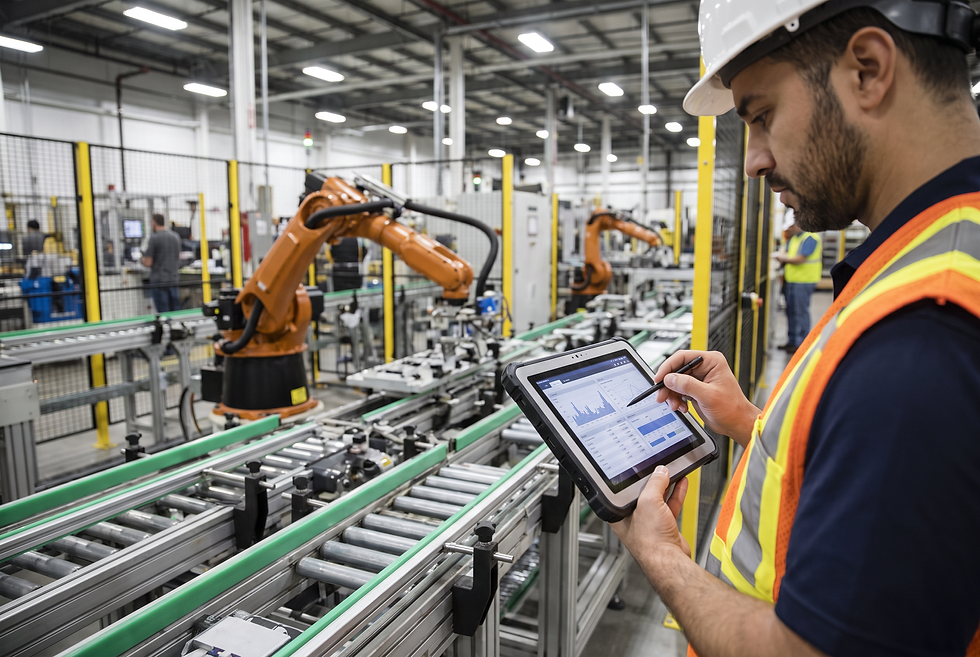
In documented enterprise deployments across European packaging, metalworking, and automotive supplier facilities, transferring operational maintenance to Kaeser reduced unscheduled pneumatic downtime events to near-zero levels. Furthermore, because Kaeser's profitability depends directly on minimizing electrical consumption per cubic meter of delivered air, the manufacturer is economically incentivized to maintain tight mechanical tolerances and deploy advanced control logic.
From a corporate balance sheet perspective, industrial clients convert rigid capital investments into flexible operational operating costs, preserving borrowing capacity for core manufacturing assets such as production tooling and robotics.
What Other Companies Can Learn: Replicable Methodology Principles
For industrial equipment builders, automation providers, and machinery exporters evaluating servitization, this case study yields four core methodology principles:
1. Package the Output, Not the Hardware
Industrial buyers rarely seek equipment ownership for its own sake; they require the reliable output generated by the machine—whether that is clean compressed air, filtered process water, or palletized goods. Packaging hardware into an outcome-based agreement removes capital approval friction and defends profit margins against low-cost hardware manufacturers.
2. Integrate Telemetry as an Operating Requirement
Equipment-as-a-Service cannot function reliably on estimates. Outcome contracts require edge monitoring, remote diagnostics, and continuous performance telemetry. Real-time data streams protect operating margins by flagging mechanical degradation early and establishing auditable consumption metrics.
3. Align Vendor and Customer Economic Incentives
In conventional machinery sales, manufacturers profit from replacement parts when equipment wears out. In an outcome-based model, the vendor maximizes profitability when equipment operates efficiently with minimal unscheduled maintenance. Aligning incentives drives high customer retention rates.
4. Design for Modularity
Outcome-based commercial models require modular machinery architectures. Standardized, swappable components allow vendors to scale capacity up or down to match client production cycles while facilitating rapid field maintenance and fleet redeployment.
Applying Outcome-Based Logic to Industrial Machinery Sectors
This operational framework applies directly across various B2B machinery and manufacturing verticals:
Industrial Packaging Equipment: Packaging machinery manufacturers can bill clients per fully wrapped pallet or finished carton rather than selling machinery upfront, using embedded sensors to monitor cycle speeds, film tension, and material consumption.
Industrial Water & Filtration Systems: Water treatment engineering firms can charge per cubic meter of purified process water meeting strict chemical standards, managing membrane replacement, chemical dosing, and pump health remotely.
Precision CNC & Metal Fabrication: Machine tool builders can offer guaranteed spindle hours or per-part machining capacity, monitoring tooling wear and vibration to optimize maintenance intervals and reduce scrap rates.
In each sector, the commercial focus shifts from high-friction capital transactions to long-term operational partnerships backed by verified service levels.
YTT AI Worker Mapping: AI Equipment Sales Rep
Transitioning to outcome-based and consultative commercial models requires detailed engineering discovery, precise technical qualification, and continuous prospect communication. For industrial machinery and automation companies, YTT AI supports this commercial execution through dedicated digital workers.
Worker Profile: AI Equipment Sales Rep
Industry: Industrial Machinery, Automation, and Heavy Equipment
Job-to-be-Done: Qualify incoming technical inquiries, analyze customer facility parameters, calculate OpEx vs. CapEx trade-offs, and coordinate technical discovery meetings for engineering teams.
Primary Work Channels: Corporate Email, Website Inquiry Portals, WhatsApp Business, and CRM Workspaces.
Authority Boundaries: The AI Equipment Sales Rep autonomously gathers baseline operational specifications (operating pressure, flow rates, duty cycles, power requirements), explains utility contract structures, and follows up on pending technical RFQs. Custom pricing formulas, credit verifications, and finalized service-level agreements require explicit review by the human Commercial Director.
First Value Event: Generating a structured technical requirements brief and comparative lifecycle financial model for the human sales team within 15 minutes of a prospect's initial inquiry.
Daily Report Output: A daily executive summary outlining active technical leads, broken down by required machine capacity, prospect procurement preference (CapEx vs. Service Contract), critical operational constraints, and scheduled discovery calls for human sales engineers.
FAQ
What is the primary difference between purchasing a compressor and using Kaeser Sigma Air Utility?
When purchasing a compressor, the customer incurs upfront capital expenditure (CapEx), owns the machinery, and takes full responsibility for electricity bills, routine maintenance, and downtime risks. Under Kaeser Sigma Air Utility, Kaeser retains equipment ownership and manages the station, while the customer pays an operational expense (OpEx) tariff per cubic meter of pressurized air consumed, with all maintenance, monitoring, and upgrades included.
How does Kaeser monitor energy efficiency in the Sigma Air Utility model?
Kaeser utilizes its SIGMA AIR MANAGER 4.0 industrial master controller connected via secure IoT telemetry. The controller continuously monitors flow rate, pressure levels, temperature, and electrical power consumption, dynamically staging compressors to operate at their optimal efficiency curve while alerting service teams to anomalies before component failures occur.
Why do manufacturing plants adopt outcome-based utility contracts for compressed air?
Industrial manufacturing plants adopt this model to convert unpredictable capital expenses into predictable operating costs, eliminate the burden of maintaining specialized high-pressure equipment, transfer unscheduled downtime risk to the vendor, and achieve immediate power cost reductions from optimized, modern equipment.
Can other industrial machinery manufacturers adopt this business model?
Yes. Machinery builders with measurable equipment outputs—such as packaging machinery, water treatment skids, and precision machine tools—can adopt outcome-based models by deploying edge telemetry, engineering modular hardware, and structuring service-level contracts based on delivered units of output rather than physical equipment sales.
Explore AI Customer Lifecycle Workers
Discover how YTT AI's specialized autonomous workers can streamline complex technical inquiries, qualify industrial equipment leads, and accelerate consultative sales cycles at https://www.ytt-ai.com/.


Comments