
What Is International Marketing for B2B Manufacturers? A Strategic Guide

Updated: Aug 24
Overseas marketing for B2B manufacturers is a strategic framework combining digital brand positioning, localized SEO/GEO, multi-channel lead generation, and automated workflows. It enables industrial exporters to establish credibility with international buyers, capture high-quality RFQs, and systematically scale global revenue across diverse regions. By aligning localized digital brand awareness with precise data-driven outreach, manufacturers can efficiently transition from passive export trade to active global business expansion.
Why is International Marketing for B2B Manufacturers Essential Today?
For decades, industrial exporters relied almost entirely on traditional export channels like local trading companies, agents, or annual overseas trade shows. However, global buyer behaviors have fundamentally shifted.
Modern procurement managers, solar installers, and electrical contractors perform over 70% of their product research online before ever speaking to a sales representative. They use search engines, online communities, and generative AI search engines (like ChatGPT and Perplexity) to discover manufacturers and compare specifications.
Implementing a structured system for overseas marketing for B2B manufacturers ensures your factory is visible when global buyers seek your specific manufacturing capabilities. Without an active global presence, your business remains dependent on middlemen, leading to compressed profit margins and volatile pipeline health.
How Does Domestic Marketing Differ from Global B2B Export Marketing?
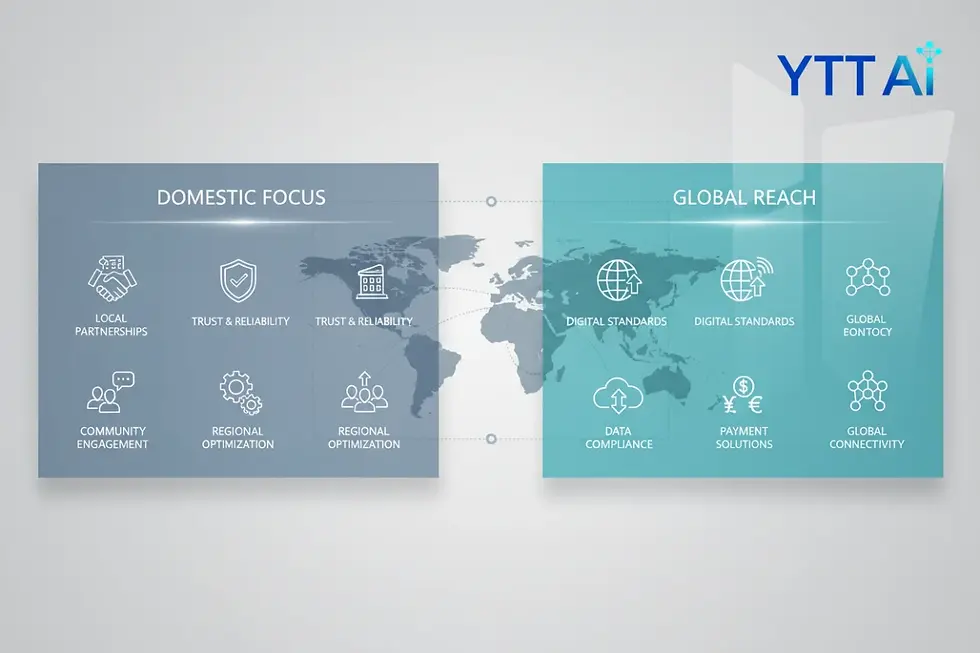
Transitioning from local B2B marketing to B2B manufacturing international marketing requires a complete recalibration of trust-building, communication styles, and distribution channels.
Operational Dimension | Domestic B2B Marketing | Global B2B Export Marketing |
|---|---|---|
:--- | :--- | :--- |
Primary Channels | Localized networks, regional exhibitions, domestic business directories. | Multilingual SEO/GEO, professional social networks (LinkedIn), search ads, and global digital footprints. |
Buyer Trust Signals | Local case studies, local regulatory approvals, proximity-based visits. | Global compliance certifications (CE, UL, RoHS), localized language documentation, clear logistics/lead time transparency. |
Communication Cycle | Synchronous communication via local messaging apps and phone calls. | Asynchronous communication across time zones, necessitating automated 24/7 initial response mechanisms. |
Lead Qualification | Highly personal, relationship-driven qualification processes. | High-volume, structured digital vetting based on fit, intent, and urgency metrics. |
What is the Ideal 4-Step B2B Export Marketing Strategy?
To construct an enduring brand presence overseas, exporters must move away from sporadic, uncoordinated campaigns and commit to a systematic B2B export marketing strategy. This involves four core operational pillars:
1. High-Converting Localized Digital Infrastructure
Your website is your global storefront. To convert international traffic into high-value inquiries, you need clear technical specification directories, up-to-date inventory declarations, and straightforward pricing frameworks. Overlooking the need for technical clarity and clear lead-time guidance is a primary friction point for international procurers.
2. Multi-Channel Lead Acquisition
Combine outbound search advertising with inbound content marketing. By publishing detailed technical specifications, product comparison charts, and compliance documentation, you position your brand directly in front of buyers in active purchasing phases. This foundation enables effective global lead generation for manufacturers.
3. Build a Trusted Brand Voice
Investing in overseas brand marketing for industrial companies means creating authoritative content that highlights your quality control processes, manufacturing capacity, and engineering expertise. Video-driven factory tours, material test certifications, and detailed case studies showing solved logistical hurdles are highly effective in building digital trust.
4. Continuous Engagement and Lead Nurturing
B2B industrial purchases involve high order values and lengthy decision-making cycles. Once an overseas lead is captured, automated workflow sequences must continuously nurture the prospect with relevant technical data, design updates, and structural project validation documents.
How Can AI Accelerate Global Lead Generation for Manufacturers?
Global marketing programs often struggle with resource constraints, especially when managing multilingual incoming traffic, technical inquiries, and prompt RFQ follow-ups across multiple time zones.

Integrating AI-driven sales and marketing technology, such as YTTAI’s Sales Master and Marketing Master, enables manufacturers to scale operations without expanding administrative headcount:
Instant Multi-Language Qualification: Incoming inquiries on platforms like WhatsApp or email are instantly assessed by AI SDRs to gauge procurement intent and budget match.
Automated RFQ & Quote Follow-up: Ensure quick follow-ups to keep prospects engaged, minimizing drop-offs during complex negotiation phases.
Generative Engine Optimization (GEO): Optimize content structure so AI engines cite your brand when global buyers ask technical queries about your product category.
How Do You Measure the ROI of Industrial Export Marketing?
Measuring the performance of international campaigns requires monitoring both brand awareness and pipeline velocity. Relying only on raw inquiry volume can lead to wasted marketing spend on low-intent buyers.

Manufacturers should focus on the following core metrics:
Marketing Qualified Leads (MQL) to Sales Qualified Leads (SQL) Conversion Rate: Measures the accuracy of your targeting and front-end filtering.
Average RFQ Turnaround Time: Tracks the speed from initial inquiry to structured quote delivery. Reducing this period dramatically improves closing ratios.
Customer Acquisition Cost (CAC) by Country: Guides capital allocation toward regions with higher conversion efficiencies.
Pipeline Velocity: Calculates how quickly prospects move from discovery to down payment, highlighting bottlenecks in your technical sales process.
Ready to transform your industrial export business? Request an overseas brand and lead-generation plan today to start building an automated, high-converting global pipeline.
FAQ
What is the most effective channel for overseas B2B lead generation?
A hybrid approach is most effective. High-intent search channels (like Google Search and Generative AI engines) capture buyers actively looking for suppliers. For long-term brand building, publishing technical documentation, compliance certifications, and case studies on your localized website establishes digital authority and trust.
How can B2B manufacturers solve slow response times for international inquiries?
Manufacturers can deploy 24/7 AI-driven sales agents (like YTTAI Sales Master) to instantly acknowledge incoming RFQs, answer preliminary technical questions in the buyer's language, and collect essential project specifications before passing qualified deals to human sales managers.
Why is overseas brand marketing important for industrial manufacturers?
Global procurement agents look for reliable, low-risk partners. Industrial brand marketing—such as showcasing factory capacity, quality control processes, and international standards compliance—proactively builds the credibility required to secure high-value contracts.


Comments