%20%E6%8B%B7%E8%B4%9D.png)
Metal Fabrication Case Study Content Strategy: How to Win Technical Buyers

A successful metal fabrication case study content strategy replaces superficial customer praise with verifiable engineering evidence. Technical buyers evaluate fabricators on geometric dimensioning and tolerancing (GD&T), alloy traceability, non-destructive testing (NDT), and production lead times. Presenting structured manufacturing data rather than generic marketing narratives qualifies your shop's capabilities and accelerates technical supplier selection across complex industrial procurement cycles.
Industrial purchasing decisions have shifted fundamentally toward digital validation. According to research from Gartner (2024), B2B buyers spend only 17% of their total purchase journey meeting directly with potential suppliers, spending the vast majority of their time conducting independent technical evaluation. When design engineers, quality managers, and procurement leads evaluate a metal fabricator, the absence of granular specification data in published project summaries often results in immediate vendor disqualification before commercial conversations begin.
Why Technical Buyers Reject Conventional Industrial Case Studies
Traditional B2B marketing case studies emphasize high-level business rapport, client satisfaction quotes, and vague claims of excellence. While this storytelling model functions for commercial SaaS products, it fails to satisfy the rigorous risk mitigation criteria required by industrial manufacturing specifiers.
Mechanical design engineers and supply chain directors are tasked with eliminating production failure, assembly bottlenecking, and unexpected warranty liabilities. When evaluating a custom sheet metal fabricator, heavy structural steel processor, or precision CNC partner, they seek answers to operational and metallurgic questions:
Can this fabrication facility maintain critical tolerances under repeated thermal stress and heat-affected zone (HAZ) deformation?
What specific weld procedure specifications (WPS) and procedure qualification records (PQR) govern the assembly?
How does the supplier verify dimensional accuracy across production batches exceeding several thousand units?
What specific mill test certifications and material traceability protocols accompany the finished assembly?
If your project profiles omit these technical metrics, engineers cannot specify your firm during their internal design for manufacturability (DFM) reviews.
Building a High-Impact Metal Fabrication Case Study Content Strategy
To capture high-value contracts from Tier-1 OEMs and industrial system integrators, your metal fabrication case study content strategy must be built around a six-pillar engineering proof architecture. Each published project profile must function as a standalone technical application brief.
1. Material Grade and Certification Integrity
Specify the exact raw materials utilized, including specific alloy designations, hardness ratings, temper conditions, and international standards compliance. Document whether materials conform to ASTM, EN, DIN, or JIS standards, and explain how mill test reports (MTRs) were tracked throughout processing.
2. Cutting, Forming, and Tooling Workflows
Detail the exact machinery configurations and production workflows used to fabricate the component. Document fiber laser cutting assist gases (such as high-pressure nitrogen for oxide-free edges), press brake crowning systems, bend radius calculations, and progressive tooling setups.
3. GD&T and Critical Dimension Validation
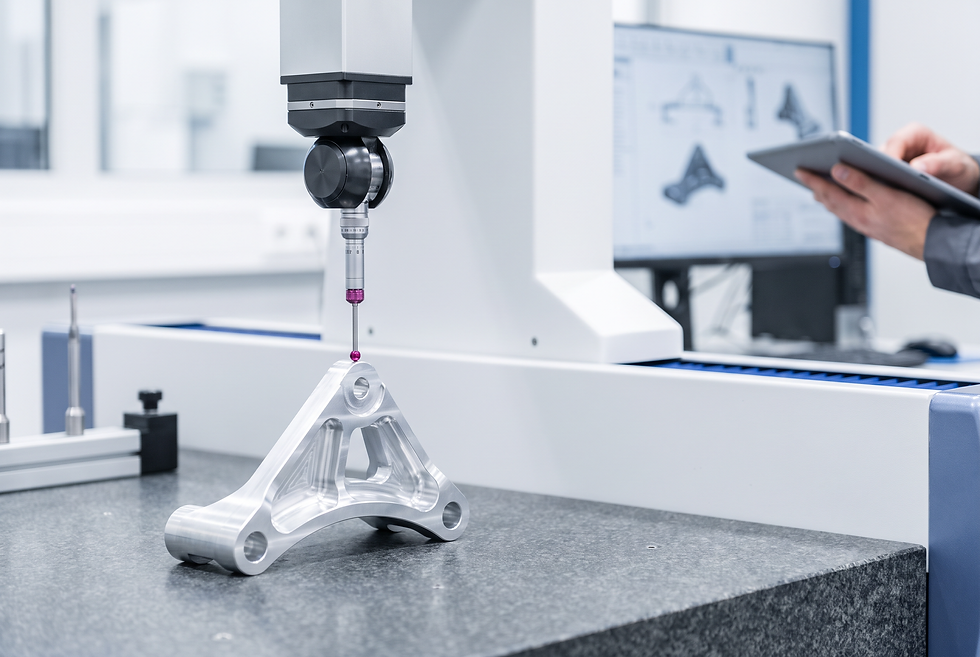
Publish true geometric dimensioning and tolerancing parameters achieved across the production run. State linear tolerances, flatness, true position, perpendicularity, and surface roughness (Ra) metrics achieved across critical mating surfaces.
4. Welding Standards and Non-Destructive Testing (NDT)
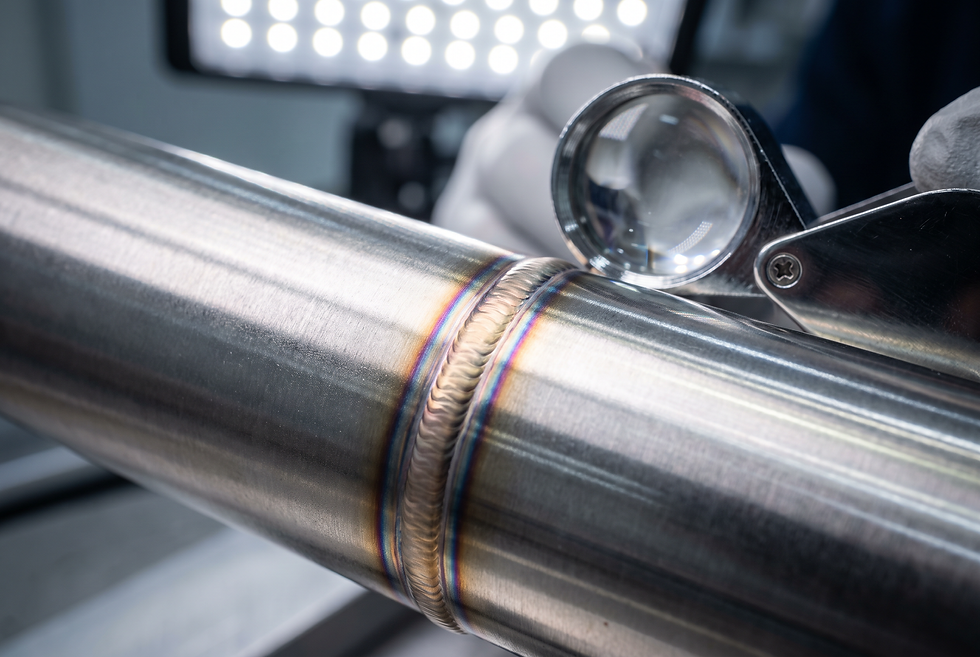
Document welding methods (robotic GMAW, manual GTAW, laser welding) along with relevant welder qualification standards (such as AWS D1.1, AWS D1.2, or ISO 3834). Explicitly list the inspection protocols deployed, including visual inspection (VT), dye penetrant testing (PT), magnetic particle testing (MT), ultrasonic testing (UT), or radiographic testing (RT).
5. Production Throughput and Lead-Time Benchmarking
Provide precise timeline milestones from CAD approval and initial prototype validation to full-scale batch delivery. Highlight how rapid DFM iterations compressed overall delivery cycles without sacrificing dimensional yield.
6. Real-World Field Performance and Assembly Outcomes
Explain how the delivered components performed in their final operating environment. Document measurable improvements such as reduced downstream assembly hours, eliminated on-site weld rectification, or sustained performance under harsh corrosive or high-vibration conditions.
Comparison: Traditional Marketing Narrative vs. Engineering Proof Architecture
Transitioning from generic project descriptions to structured technical proof requires a fundamental shift in how manufacturing data is framed. The following matrix illustrates the standard transformation across core case study components:
Case Study Component | Traditional Marketing Approach | Engineering Proof Architecture |
Material Specification | "Manufactured using premium heavy-duty stainless steel." | "Fabricated from 316L Stainless Steel (1.4404) with complete EN 10204 3.1 chemical and mechanical traceability." |
Cutting & Edge Quality | "Processed on advanced high-speed laser cutting machinery." | "Processed on 12kW CNC Fiber Laser utilizing high-pressure nitrogen assist to eliminate oxide formation prior to welding." |
Forming & Tolerancing | "Formed with tight tolerances to ensure accurate part fit." | "Formed on 7-axis CNC Press Brake with active angle correction; maintained ±0.15 mm linear tolerance across 2,400 mm bend lengths." |
Welding & Inspection | "Welded by skilled fabricators and inspected thoroughly." | "Robotic GMAW welded to AWS D1.1 structural standards; 100% visual inspection and 20% liquid penetrant testing (PT) on critical structural joints." |
Dimensional Verification | "Checked by our internal quality assurance team." | "Verified using 3D automated Coordinate Measuring Machine (CMM); continuous statistical process control (Cpk ≥ 1.33) across a 5,000-unit batch." |
Assembly Performance | "Customer praised our reliable delivery and part quality." | "Reduced OEM downstream sub-assembly fit-up labor by 34%; maintained zero defect returns across 18 consecutive months of production." |
Operationalizing the Case Study Production Workflow
Engineering and manufacturing facilities often struggle with content production because technical experts lack time to write, while generalist copywriters lack manufacturing domain expertise. A structured operational workflow bridges this gap efficiently.
Step 1: Selecting the Right Projects
Do not attempt to profile every routine job. Prioritize projects that demonstrate capability in high-margin sectors such as semiconductor handling, food processing equipment, rail transport, or automated packaging. Select applications that showcase difficult forming geometries, tight welding tolerances, or complex multi-process coordination.
Step 2: Capturing Technical Artifacts
Establish an internal repository for technical artifacts during production. Capture inspection sheets, CMM dimensional logs, weld inspection sign-offs, and high-resolution macro photography of edge finishes, weld seams, and finished assemblies. Anonymize proprietary part numbers or sensitive customer brand identities when operating under non-disclosure agreements (NDAs).
Step 3: Drafting the Engineering Application Note
Structure the narrative as an engineering problem-solving brief: challenge, technical approach, process parameters, quality verification, and commercial result. For metal fabricators building multi-channel content pipelines, integrating an industry content growth system streamlines technical data gathering across quality labs, engineering desks, and commercial sales teams.
AI Automation and Technical Governance Boundaries
Industrial marketing teams are increasingly adopting generative systems and automated workflows to accelerate content drafting, extract operational data from ERP systems, and organize technical documentation. McKinsey (2023) notes that generative AI can automate routine B2B commercial workflows, yet technical manufacturing content requires strict human oversight.
Automated systems must never be permitted to extrapolate unverified tolerance figures, invent testing standards, or simulate quality control metrics. All technical specifications, metallurgic grades, welding codes, and inspection percentages require explicit sign-off from your Chief Engineer or Quality Assurance Manager prior to publication.
Fabrication leaders seeking to connect structured engineering content with commercial opportunity qualification can explore our Sales Master solutions to align sales engineering workflows with qualified inbound buyer intent.
Summary
Winning high-value contracts from technical buyers requires treating case studies as engineering assets rather than promotional collateral. By standardizing process disclosures, dimensional tolerances, inspection rigor, and field performance metrics, metal fabricators establish unmatched technical credibility, streamline DFM reviews, and secure lasting manufacturing partnerships.
FAQ
How do you write an industrial fabrication case study under an NDA?
When bound by a non-disclosure agreement, anonymize the client by identifying their industry tier, machinery classification, and operational challenge rather than their company name. Focus the technical narrative on non-proprietary engineering parameters such as alloy metallurgy, forming tolerances, welding procedures, and quantifiable throughput gains.
What technical metrics matter most to engineering procurement buyers?
Engineering buyers evaluate fabricators based on verified GD&T dimensional tolerances, certified material grades, non-destructive testing (NDT) inspection rates, weld procedure qualifications, and production cycle lead times from CAD approval to delivery.
How long should an industrial metal fabrication case study be?
An effective technical case study should range between 700 and 1,200 words. It must follow a structured engineering brief format featuring precise subheadings, bulleted material and process specifications, inspection data tables, and high-resolution macro imagery.
Who should review technical case studies before publication?
Every technical case study must undergo mandatory human governance. A qualified quality assurance manager or senior fabrication engineer must verify all stated material standards, weld codes, tolerance figures, and testing procedures prior to public release.
Scale Your Technical Content Architecture
Transform your shop floor engineering achievements into scalable commercial opportunities. Explore how YTTAI develops rigorous, precision-driven content systems for high-growth industrial manufacturers.


Comments