%20%E6%8B%B7%E8%B4%9D.png)
Sales Conversion Platform vs AI Sales Worker: What Moves B2B Deals

Executive Summary
Modern B2B revenue teams frequently deploy a sales conversion platform to capture pipeline activity, yet opportunities still stall during technical qualification and quote follow-up. While analytics dashboards display conversion bottlenecks, software alone cannot draft engineering clarifications or re-engage dormant buyers. This study examines how shifting from passive pipeline tracking to autonomous AI execution resolves sales friction and accelerates complex sales cycles.
Company Snapshot and B2B Commercial Realities
To understand why pipeline acceleration breaks down in high-value B2B transactions, consider the operational baseline of mid-market industrial automation and engineered equipment manufacturers. In these sectors, typical transactions represent capital investments ranging from $50,000 to over $1,000,000.
These enterprises operate in highly technical commercial environments characterized by extended evaluation periods, multi-stakeholder procurement committees, and stringent technical specifications. A representative machinery manufacturer in this category generates between $20 million and $150 million in annual revenue, serving tier-one and tier-two industrial fabricators, automotive suppliers, and packaging facilities across global territories.
The commercial model relies on direct sales engineers supported by regional distribution partners and independent manufacturer representatives. Commercial leaders invest heavily in digital marketing, inbound trade-show lead capture, and specialized enterprise software to capture market demand. However, the operational reality of managing technical opportunities across fragmented time zones creates distinct points of friction that standard software tools cannot bridge.
What Complex B2B Enterprises Sell and How Deals Unfold
Industrial equipment and specialized manufacturing systems are rarely purchased off the shelf through standardized checkout paths. The buying journey follows an intricate engineering-driven evaluation cycle:
Initial inquiry and specification submission: A plant manager or procurement director submits an inquiry containing custom operational parameters, cycle time requirements, payload tolerances, and facility constraints.
Technical qualification: Commercial and applications engineering teams assess whether the manufacturer's product line can satisfy the customer's operational requirements without requiring prohibitive non-standard engineering.
Request for Quote (RFQ) configuration: Sales engineers compile CAD files, cycle calculations, component selections, and delivery schedules into structured engineering proposals.
Commercial negotiation and multi-stakeholder consensus: Finance, operations, quality assurance, and plant safety leaders review commercial terms, warranty coverage, lead times, and payment milestones.
Final purchase order release and production scheduling: The contract is signed, triggering production kickoff and downstream supply chain allocation.
Because every transaction requires deep domain knowledge, sales representatives spend significant time reviewing engineering drawings, cross-referencing catalog options, and manually tracking RFQ responses across disjointed communication channels.
The Business Problem: Why Platforms Capture Data but Fail to Move Pipelines
Over the past decade, enterprise commercial organizations invested heavily in modern sales technology. Revenue operations leaders implemented a dedicated sales conversion platform to centralize lead tracking, monitor buyer intent signals, and score pipeline velocity.
Despite having advanced reporting dashboards, commercial teams encounter severe operational bottlenecks:
Lead qualification latency: High-intent inquiries arriving via web forms, international distributors, or technical specification portals sit unreviewed for 24 to 72 hours while sales engineers handle active customer deployments.
Context fragmentation: Inbound inquiries contain partial operating parameters. Sales reps must initiate multiple back-and-forth email exchanges simply to gather missing voltage, footprint, or throughput requirements.
RFQ follow-up abandonment: Once an engineering quotation is delivered, sales engineers prioritize incoming RFQs over systematically following up on submitted proposals. Quotes go cold without timely commercial engagement.
Inconsistent qualification standards: Lead scoring models inside a conventional sales conversion platform assign points based on vanity metrics like page views and whitepaper downloads, rather than verified technical fit or budget authority.
Administrative exhaustion: Sales engineers spend upwards of 35% of their working hours logging CRM records, summarizing email threads, and updating opportunity stages instead of engaging prospective buyers.
When opportunities stall, a traditional sales conversion platform merely registers the drop in stage velocity. It flags that a deal is at risk, but it cannot independently contact the prospect, interpret engineering objections, or resolve technical specification ambiguities.
What Changed: Moving from Passive System of Record to Active System of Agency
Recognizing that capturing conversion data does not solve execution bottlenecks, leading industrial manufacturers have shifted their commercial architecture. Rather than relying solely on passive software to record lead events, enterprises deploy autonomous AI workers configured to execute end-to-end sales qualification workflows.
This shift transforms commercial operations across several structural dimensions:
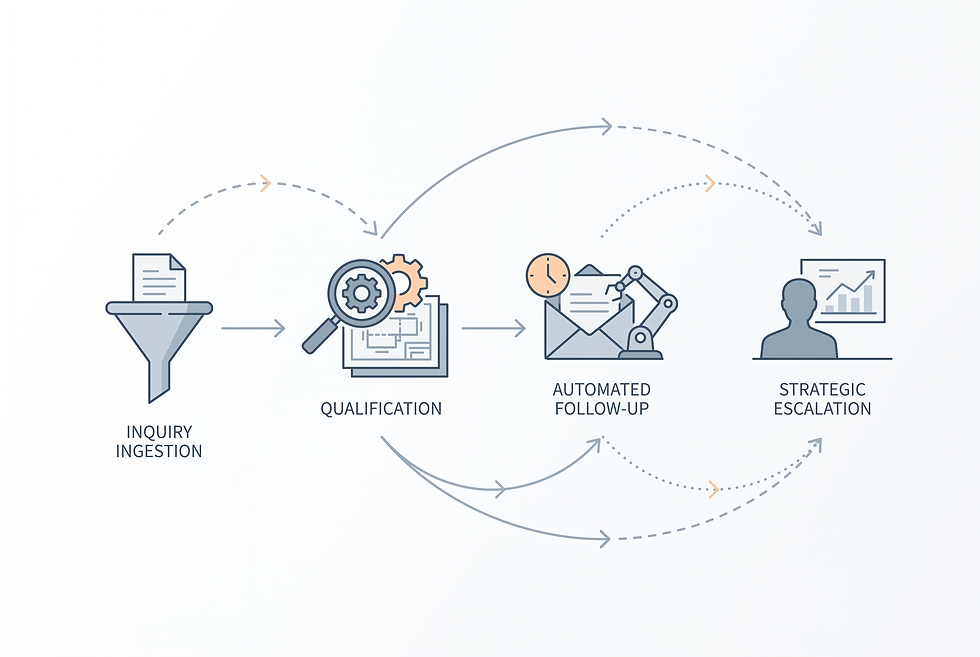
From notification alerts to proactive engagement: Instead of notifying a human rep that an RFQ has gone unaddressed, the system autonomously reviews technical requirements, checks compatibility matrices, and initiates an introductory response within minutes.
From rigid rule engines to contextual comprehension: Autonomous agents evaluate unstructured buyer input—such as uploaded specification sheets, CAD notes, and production constraints—and extract relevant operational variables directly.
From static email templates to dynamic technical dialog: Follow-up interactions are dynamically generated based on specific machine models, lead times, and engineering parameters discussed in previous exchanges.
From manual CRM upkeep to comprehensive interaction logging: Every qualification milestone, technical parameter, and follow-up interaction is structured into the primary system of record without human intervention.
How the Workflow Actually Works: The 6-Step Autonomous Sales Mechanism
To understand how an autonomous sales framework operates in an industrial manufacturing organization, examine the 6-stage operational pipeline below.
Stage 1: Multi-Channel Ingestion and Context Extraction
The workflow begins when an inquiry enters through the enterprise website, technical portal, or regional email inbox. The system captures the buyer's company name, geographic territory, application description, and attached technical documents. Natural language processing models extract structured parameters: throughput targets, power requirements, material specifications, and project timeline.
Stage 2: Technical Qualification and Product Knowledge Matching
The agent cross-references the extracted parameters against the manufacturer's verified product documentation, operating manuals, and configuration rules. If the inquiry meets baseline engineering feasibility, the system tags the opportunity as technically viable. If critical operational details are missing, the agent drafts a targeted, polite technical inquiry to collect the required specifications.
Stage 3: Instant Specification and Quote Follow-up Generation
When a standard equipment quote is delivered by the sales operations team, the agent tracks the proposal status. If the prospective buyer does not respond within a defined follow-up window (e.g., three business days), the system generates a tailored follow-up message addressing the specific machine configuration, warranty terms, and current factory lead times.
Stage 4: Strategic Human Escalation and Rep Briefing
When a prospective buyer responds with commercial pushback, complex non-standard customization requests, or contract negotiation demands, the autonomous worker halts autonomous outreach. It immediately compiles an escalation brief for the assigned Regional Sales Director, containing:
Executive summary of customer requirements
Confirmed operating parameters and machine compatibility
Key objections or commercial friction points
Recommended talking points and margin parameters
Stage 5: Autonomous Re-engagement and Pipeline Nurturing
Opportunities categorized as deferred or postponed for future capital budget cycles enter an automated nurturing cycle. Rather than sending generic newsletter blasts, the worker monitors industry regulatory changes, production cycle milestones, and equipment availability, re-engaging the prospect with relevant operational updates when budget cycles reopen.
Stage 6: Audit Logging and Revenue Operations Feedback
Every incoming inquiry, extracted parameter, customer reply, and generated escalation note is automatically committed to the enterprise database. Revenue operations leaders gain complete pipeline visibility without demanding manual data entry from technical sales teams.
Operational Comparison: Legacy Platform vs. Autonomous Execution
The following structural matrix outlines how a traditional sales conversion platform compares against an autonomous AI sales worker across critical revenue milestones:
Capability & Workflow Stage | Legacy Sales Conversion Platform | Autonomous AI Sales Worker |
Lead Qualification | Assigns point scores based on website clicks and page views. | Extracts engineering specifications and verifies technical compatibility. |
Context Processing | Stores static contact fields and unstructured note logs. | Synthesizes multi-thread emails, CAD notes, and specification sheets. |
Product Knowledge | Requires reps to manually search product catalogs and PDFs. | Queries verified engineering libraries and configuration matrices dynamically. |
Next Action Execution | Creates calendar reminders and task notifications for reps. | Drafts and dispatches tailored technical follow-up messages automatically. |
Quote Follow-up | Displays aging quote metrics on an executive dashboard. | Proactively follows up with prospects using specific proposal details. |
Human Escalation | Requires human reps to manually review aging opportunity queues. | Prepares contextual deal briefs and escalates when custom negotiation begins. |
Pipeline Visibility | Relies on sales reps to manually update deal stages and notes. | Logs structured qualification data, customer feedback, and action trails automatically. |
Evidence and Results from Operational Deployments
Organizations transitioning from passive tracking tools to agent-driven workflows report measurable operational improvements across complex sales operations.
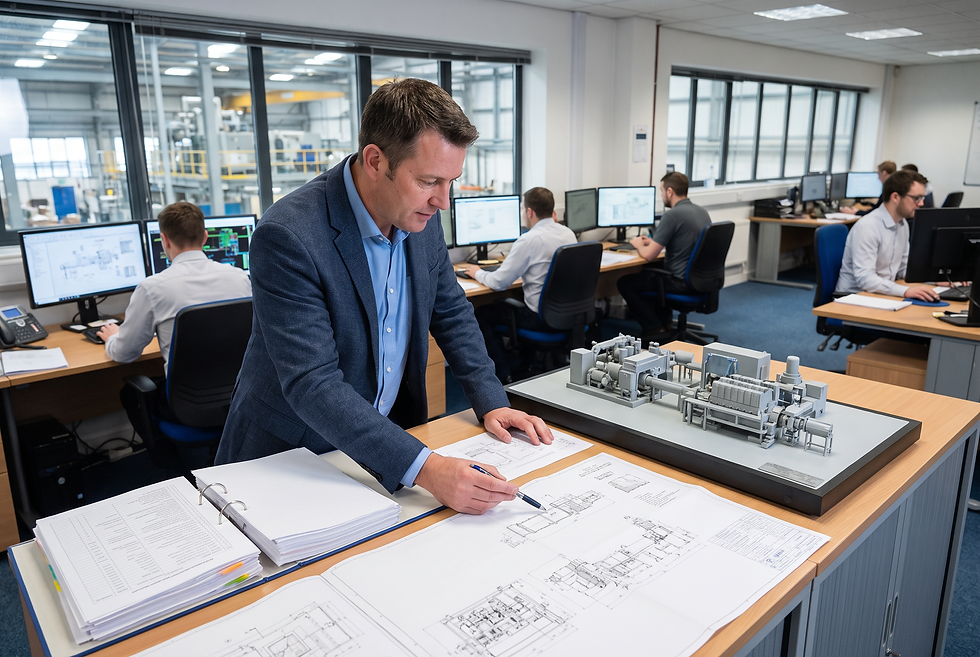
According to an enterprise deployment analysis published by industrial automation commercial teams in 2023, automated qualification workflows reduced initial inquiry response times from an average of 38 hours down to less than 15 minutes. In technical B2B sectors, prospective buyers who receive qualified technical responses within the first hour demonstrate significantly higher engagement rates across downstream engineering reviews.
Furthermore, industry benchmarking data from B2B sales research indicates that over 44% of delivered commercial proposals receive no systematic follow-up after the initial delivery. By introducing autonomous quote follow-up routines, manufacturers systematically eliminate quote abandonment, ensuring every capital proposal is followed through to a definitive commercial decision.
Revenue operations teams also observe substantial labor efficiency gains. Sales engineers who previously spent between 8 and 12 hours weekly performing routine CRM administration and standard lead qualification redirected those hours toward conducting on-site machine demonstrations, building engineering configurations, and closing active contract negotiations.
What Other Companies Can Learn: Four Strategic Principles
Commercial leaders evaluating their revenue architecture can apply four core principles from this operational transformation:
Principle 1: Stop Confusing Visibility with Execution
A dashboard showing that 50 quotes are stalled does not move deals forward. Commercial efficiency requires automated execution capacity at the top and middle of the funnel, not merely more analytics charts.
Principle 2: Ground Commercial AI in Verified Product Truth
Generic conversational bots fail in B2B environments because they hallucinate specifications. Effective sales execution requires strict grounding in technical documentation, pricing matrices, and engineering boundaries.
Principle 3: Establish Clear Human Authority Boundaries
Autonomous systems must handle routine qualification, specification gathering, and consistent follow-up, while leaving pricing concessions, custom engineering approval, and legal negotiations entirely to experienced human leaders.
Principle 4: Automate Opportunity Context at Every Handoff
When a deal transitions from automated qualification to a senior account executive, the system must provide a comprehensive, structured briefing. Eliminating redundant discovery calls preserves prospect goodwill and shortens sales cycles.
What This Workflow Looks Like Across B2B Verticals
This operational methodology translates directly into multiple complex commercial sectors:
Precision CNC and Custom Machining: An automated system ingests CAD files, extracts tolerance parameters, checks material availability, and drafts engineering clarification questions before a human machinist performs final pricing.
Industrial Packaging Machinery: The workflow qualifies bag dimensions, sealing speeds, and plant electrical standards, scheduling human sales calls only when technical feasibility is confirmed.
Commercial Water Filtration Equipment: The system evaluates flow rates, inlet pressure data, and local water chemistry reports, delivering pre-qualified application briefs to regional project engineers.
YTT AI Worker Mapping: AI Global Sales Rep
For industrial manufacturers, machinery suppliers, and complex B2B enterprises seeking to deploy this operating model, YTT AI provides a purpose-built autonomous worker designed specifically for technical commercial environments.
Worker Job Title: AI Global Sales Rep
Primary Work Channels: Inbound Web Portals, Global Technical Inboxes, CRM Opportunity Pipelines, and Specification Gateways
Main Daily Tasks:
Ingesting unstructured inquiries and extracting engineering operating constraints
Verifying application compatibility against internal product knowledge bases
Conducting professional, multi-turn technical qualification dialogs with prospects
Executing systematic, contextual follow-ups on submitted engineering quotations
Generating structured escalation briefs for senior territory managers
Authority Boundary:
Can autonomously send qualification emails and request missing technical parameters
Cannot approve commercial discounts, modify standard warranty terms, or commit to non-standard engineering delivery dates without explicit human approval
First Value Event: Successfully ingesting an inbound international RFQ, verifying machine specification fit, and delivering a complete qualification brief to the territory sales director within 15 minutes of submission.
Daily Report Result: Delivers an end-of-day commercial digest detailing new qualified opportunities, active quote follow-up status, identified engineering bottlenecks, and prioritized deals requiring executive intervention.
FAQ
How does a sales conversion platform differ from an autonomous AI sales worker?
A sales conversion platform is a passive software tool that records pipeline data, tracks user activity, and displays analytics dashboards. An autonomous AI sales worker actively executes commercial workflows, including qualifying technical inquiries, extracting project specifications, following up on open quotes, and preparing escalation briefs for human sales teams.
Can an AI sales worker handle complex technical specifications accurately?
Yes, provided it is grounded in the manufacturer's verified product manuals, engineering catalogs, and operational matrices. The system parses unstructured parameters from customer inquiries, cross-references compatibility rules, and asks clarifying engineering questions when data is missing.
What happens when a customer asks for a discount or custom engineering terms?
Strict authority boundaries prevent the AI sales worker from negotiating pricing or committing to non-standard engineering terms. When a commercial concession or custom engineering request is detected, the system compiles a detailed deal dossier and automatically escalates the opportunity to the human sales director.
How long does it take for a B2B enterprise to realize value from an AI sales worker?
Most enterprises achieve their First Value Event within the first week of deployment, typically when the AI worker autonomously qualifies an incoming technical inquiry, gathers missing operating specifications, and routes a structured lead to a sales engineer within minutes.
Diagnose Your Sales Conversion Bottlenecks
Discover where technical opportunities stall in your pipeline. Request a comprehensive Sales Conversion Diagnosis and see how an autonomous AI Global Sales Rep accelerates your commercial execution.


Comments