%20%E6%8B%B7%E8%B4%9D.png)
What a Complete Manufacturing RFQ Must Include: Technical Intake Guide

Executive Summary
Industrial suppliers and custom contract manufacturers often lose up to 40% of their engineering capacity evaluating incomplete request-for-quotation (RFQ) packages. When critical CAD geometries, GD&T tolerances, or material designations are missing, estimation queues stall. Leading manufacturing platforms resolve this bottleneck by enforcing structured data intake and deploying automated triage workflows that validate specifications before estimators run cost models.
Company Snapshot: How Digital Manufacturing Leaders Handle Intake
In modern industrial commerce, on-demand manufacturing platforms and custom production networks—such as Xometry, Fictiv, and Protolabs—serve as benchmark models for structured procurement intake. These enterprises operate across precision CNC machining, sheet metal fabrication, injection molding, and additive manufacturing.
Their primary customers include aerospace procurement managers, automotive Tier-1 engineering leads, industrial equipment builders, and hardware innovators. The core business model relies on high-velocity quotation, automated design-for-manufacturability (DFM) analysis, and dynamic job routing across vetted partner networks.
Studying structured intake models is vital for conventional industrial manufacturers. When technical data arrives fragmented across unstructured emails and ambiguous drawings, sales cycles stretch from days into weeks, engineering overhead spikes, and quotation win rates plummet.
What Industrial Manufacturers Actually Sell and the Buying Process
Custom manufacturing businesses do not sell off-the-shelf catalog products. Instead, they sell high-precision production capacity, certified metallurgical processing, and tight engineering tolerances governed by international standards such as ISO, ASTM, DIN, and AS9100.
Procurement in this domain follows a multi-tier technical evaluation:
A hardware buyer or design engineer drafts component requirements based on assembly needs.
The buyer submits an RFQ package containing 3D CAD files, 2D technical drawings, quality requirements, and target volumes.
The supplier's sales engineering team interprets technical prints, evaluates Geometric Dimensioning and Tolerancing (GD&T) callouts, selects production routing, and calculates raw material utilization.
Commercial terms, logistics, packaging, and production lead times are compiled into a formal quote package.
When any technical or commercial parameter is omitted during intake, the pricing process halts, triggering multiple rounds of clarifying emails between engineering teams.
The Business Problem: Friction in Incomplete RFQ Packages
Unstructured quotation requests create severe operational friction across manufacturing organizations. Public industry discussions across manufacturing networks and supplier forums consistently highlight key root causes of estimation bottlenecks:
Missing Geometric Definitions: Buyers submit neutral 3D files (such as STEP or IGES) without accompanying 2D drawings (PDF/DWG) that specify critical tolerances, surface roughness ($Ra$), or tap-drill thread standards.
Vague Material Designations: Specifications state generic categories like "Aluminum" or "Stainless Steel" rather than specific alloy grades and tempers (for instance, 6061-T6 vs. 7075-T6, or 304 vs. 316L).
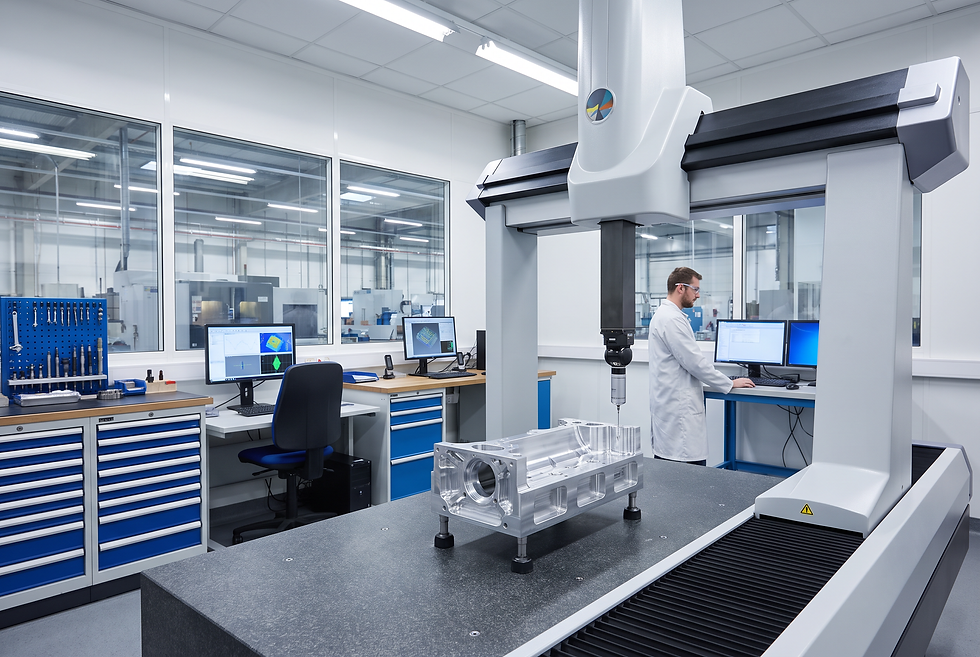
Undefined Quality and Inspection Standards: Inspection expectations—such as First Article Inspection (FAI), Coordinate Measuring Machine (CMM) reports, or material test certifications—are omitted until final delivery negotiations.
Unclear Batch and Annual Volume Breakdowns: Quotes cannot reflect volume economies of scale or tooling amortization when prototype batch sizes and annual estimated usage (EAU) are undefined.
Commercial Misalignment: Delivery timelines, incoterms (FOB, DDP, CIF), and compliance certifications (RoHS, REACH, ITAR) remain unspecified until the final quote stage.
What Changed: Moving to Standardized and Automated RFQ Intake
To eliminate quoting friction, forward-thinking contract manufacturers and digital fabrication networks moved away from unmanaged email inboxes. They established structured intake parameters, automated geometric validation, and rigorous triage workflows.
Instead of assigning high-cost application engineers to manually review raw inbound emails, modern manufacturers structure their data intake around twelve essential parameters. They introduce automated verification systems capable of checking file completeness, extracting dimensional bounding boxes, and validating commercial viability before an engineer opens the CAD file.
The 12 Essential Information Pillars for a Complete Manufacturing RFQ
A complete manufacturing RFQ requires twelve definitive information categories. High-efficiency operations clearly distinguish between parameters that automated systems can validate and criteria that require human engineering review.
1. Company & Contact Details
Required Data: Legal corporate entity, primary technical point of contact, purchasing authority, billing address, and end-market industry.
Validation Boundary: Automated systems verify domain legitimacy, credit scoring, and CRM matching; commercial sales leads handle final account alignment.
2. Part Application & End-Use Context
Required Data: Operating environment (temperature range, pressure, corrosive exposure), static vs. dynamic loading, and lifecycle expectancy.
Validation Boundary: AI-assisted systems extract application context and highlight critical compliance risks; senior application engineers evaluate mechanical feasibility.
3. Design Files & Technical Documentation
Required Data: Native or neutral 3D CAD models (STEP, STP, IGES, Parasolid) paired with fully dimensioned 2D vector drawings (PDF, DXF, DWG) indicating revision levels.
Validation Boundary: Automated tools check file integrity, revision parity, and bounding box geometry; engineers inspect datum schemes and GD&T symbols.

4. Material Specifications & Temper
Required Data: Exact alloy designation, temper or hardness requirement (e.g., HRC 28-32), standard specification code (ASTM, AMS, DIN, ISO), and acceptable raw material equivalents.
Validation Boundary: Automated checking flags missing temper or non-standard naming; materials engineers approve equivalent grade substitutions.
5. Precision Tolerances & GD&T Requirements
Required Data: General tolerance standard (e.g., ISO 2768-m or ASME Y14.5), critical-to-function fit tolerances, concentricity, flatness, and thread pitch specifications.
Validation Boundary: Automated parsing captures highlighted tight-tolerance dimensions ($< \pm 0.005\text{ mm}$); CNC programmers review machining feasibility.
6. Order Quantities & Batching Strategy
Required Data: Immediate prototype batch size, initial production run quantity, estimated annual usage (EAU), and scheduled release frequencies.
Validation Boundary: Automated calculators model raw material volume tiers; sales managers approve volume-based discount structures.
7. Surface Finish & Post-Processing Treatments
Required Data: As-machined surface roughness ($Ra$ values), secondary finishing (anodizing Type II/III, passivating, powder coating, bead blasting, heat treatment), and masking areas.
Validation Boundary: Automated rules confirm treatment codes and masked callouts; manufacturing specialists verify plating vat compatibility and thread clearance allowances.
8. Quality Control, Metrology & Inspection Deliverables
Required Data: Inspection levels (standard visual, CMM point inspection, 100% critical dimension check), First Article Inspection Report (FAIR per AS9102), and material test reports (MTR/Mill certs).
Validation Boundary: AI flags required quality protocols; Quality Assurance (QA) directors allocate metrology laboratory hours.
9. Industry Certifications & Regulatory Compliance
Required Data: Regulatory standards including ISO 9001, AS9100, IATF 16949, ISO 13485, ITAR, RoHS, REACH, and Conflict Minerals compliance.
Validation Boundary: Automated screening validates supplier facility certification matches; export control officers handle ITAR registration verification.
10. Target Delivery Timeline & Schedule
Required Data: Required on-dock date, milestone review dates for tooling/samples, ocean vs. air freight requirements, and expedite allowances.
Validation Boundary: Automated schedules compute standard factory lead times based on process steps; production planners confirm machine bed capacity.
11. Target Budget & Pricing Expectations
Required Data: Target cost-per-part, maximum tooling/NRE budget allocation, and target currency.
Validation Boundary: System compares target price against raw material and machine run-time baselines; sales directors decide margin thresholds.
12. Decision Criteria & Procurement Role
Required Data: Primary decision factor (cost, lead time, precision, supplier proximity), procurement timeline, and decision-making stakeholder hierarchy.
Validation Boundary: Commercial routing models assign priority based on close probability; account executives drive executive closing conversations.
Structured Intake Framework: Automated vs. Human Review
The following matrix outlines the functional breakdown between automated validation systems and human engineering oversight across the complete manufacturing RFQ evaluation cycle.
RFQ Component | Mandatory Technical Details | Automated Check Action | Human Engineering / Sales Review |
File Package | 3D CAD (.STEP/.IGES) + 2D Print (.PDF) | Verify file readability and revision matching | Review datum structures and complex GD&T callouts |
Material & Temper | Specific alloy code (e.g., 6061-T6, 316L, PEEK) | Check standard alloy naming against material databases | Approve alternative equivalent material grades |
Tolerances & GD&T | ISO 2768-m, critical fits ($< \pm 0.02\text{ mm}$) | Parse drawing callouts and identify micro-tolerances | Assess tool reach, deflection, and fixture feasibility |
Finishing & Plating | Anodize Type II/III, Ra value, masking | Check coating callouts against standard surface codes | Calculate pre-plate dimensional compensation |
Inspection & QA | CMM report, FAIR AS9102, Mill test certs | Flag required QA documentation templates | Allocate metrology lab time and inspection fixtures |
Batch & EAU | Prototype sample + pilot run + annual usage | Calculate raw stock batching and bar-feed optimization | Define multi-cavity tooling or automated fixture paths |
Regulatory Terms | ITAR, RoHS, REACH, ISO 13485 | Filter regulatory restrictions and compliance tags | Confirm facility registration and data-room security |
Logistics & Timeline | Exact Dock Date, Incoterms (EXW, DDP, FOB) | Compare requested dates against standard routing lead times | Authorize overtime shifts or expedited material freight |
How the RFQ Qualification Workflow Actually Works
High-performing manufacturing sales teams execute quote generation through a standardized six-step qualification architecture:
Step 1: Ingestion and Parameter Parsing
The intake engine ingests the buyer's package across digital channels (email, supplier portal, or direct API). The system extracts metadata, scans 3D CAD files for volume, surface area, and bounding dimensions, and cross-references them against uploaded 2D PDF technical drawings.
Step 2: Automated Gap Detection
The system validates whether all twelve critical data pillars are present. If the buyer supplied a 3D CAD model without a 2D drawing specifying hole threading or surface finishing, the system flags the missing attribute immediately.
Step 3: Instant Interactive Clarification
Instead of letting an incomplete file sit idle in an engineer's queue for five business days, an automated qualification prompt contacts the buyer within minutes of receipt, outlining the exact missing variables (e.g., specifying alloy temper and thread standards).
Step 4: Machine Fit and Margin Scoring
Once the RFQ data package is complete, the workflow scores the project against factory capabilities: axis limits (3-axis vs. 5-axis CNC), lathe swing dimensions, injection tonnage, or laser bed size. Requests outside operational capability are filtered or routed to approved external partners.
Step 5: Human Application Engineering Review
With clean, verified data ready, the application engineer opens a complete dossier. The engineer spends zero time asking basic administrative questions and focuses entirely on optimizing cycle times, tool selection, fixture design, and scrap reduction.
Step 6: Commercial Packaging and Structured Follow-Up
A complete quotation package—including line-item pricing, lead time options, material certifications, and validity terms—is issued to the buyer. Automated tracking monitors quotation review activity and triggers technical follow-up schedules.
Evidence and Operational Results from Structured RFQ Workflows
Published operational benchmarks across industrial procurement platforms demonstrate the tangible business impact of transitioning to structured RFQ workflows:
Quoting Turnaround Acceleration: According to the Fictiv State of Manufacturing Report (2023), digital workflows that automate initial manufacturability checks reduce standard quoting cycle times from an industry average of 5–7 business days down to under 24 hours.
Engineering Capacity Reclamation: Modern digital contract manufacturing case studies highlight that standardizing RFQ file intake and data collection reduces pre-quote engineering administrative overhead by 30% to 50%, freeing technical teams to focus on design-for-manufacturability (DFM) support.
Quote Conversion Improvements: Data published in Industrial Sales & Marketing Studies by ThomasNet indicates that suppliers who deliver accurate, complete technical quotations within 24 to 48 hours achieve win rates 2 to 3 times higher than suppliers requiring more than a week to clarify requirements.
What Other Manufacturers Can Learn
Industrial leaders operating machine shops, equipment assembly plants, and contract facilities can adopt several operational principles from this model:
Principle 1: Treat RFQ Completeness as an Engineering Prerequisite
Never allow an incomplete quotation package to enter the engineering pipeline. Enforce strict intake criteria at the sales boundary to protect engineering resources from administrative churn.
Principle 2: Decouple Intake Validation from Machine Programming
Validating file readability, tolerance callouts, and material specs does not require CAM programming expertise. Standardize intake rules so automated or front-line systems triage requests before senior estimators run toolpaths.
Principle 3: Reduce Buyer Clarification Latency to Zero
When information is missing, the response time to the buyer must be instantaneous. Asking for missing prints five days after submission damages credibility; asking within twenty minutes positions your facility as a responsive, technologically disciplined partner.
What This Could Look Like for Industrial Equipment & Contract Machining
For precision CNC machine shops, custom industrial equipment fabricators, and robotics sub-assembly suppliers, applying this operating logic transforms daily sales operations.
Instead of regional sales managers manually downloading unorganized ZIP files from overseas export buyers and guessing at surface treatment requirements, the commercial team deploys an intelligent front line.
Every inbound export inquiry is immediately audited for material tempers, CAD drawing parity, and incoterm specifications. Foreign-language technical prints are translated, international material equivalents (e.g., matching European EN standards to American ASTM specifications) are identified, and a complete engineering summary is presented directly to the estimating team.
Deploying the Operating Model: YTT AI Worker Mapping
To help industrial manufacturers automate technical intake without expanding administrative headcount, modern facilities implement dedicated autonomous digital workers.
For industrial machinery, precision machining, and export fabrication businesses, the primary operational role is the AI Export Sales Rep (or AI Technical Sales Rep for domestic precision suppliers).
Role Specification: AI Export Sales Rep
Main Daily Tasks: Ingest inbound multi-channel RFQs; audit technical attachments for 3D/2D CAD parity; identify missing tolerances, surface finishes, and batch quantities; draft immediate qualification requests for missing data; convert complete requests into structured engineering dossiers.
Primary Work Channels: Corporate Sales Email Inboxes, Web Intake Portals, WhatsApp Business, and ERP/CRM pipelines.
Authority Boundary: Operates autonomously to request missing technical files, perform standard material equivalent lookups, and schedule preliminary timeline feasibility; escalates custom pricing, non-standard GD&T reviews, and formal discount authorizations to human sales directors.
First Value Event: Successfully intercepting an incomplete inbound RFQ from a target enterprise buyer and securing the required 2D prints and material temper within 30 minutes of receipt—without human engineer intervention.
Daily Report Result: A structured morning log summarizing new RFQs received, data completeness scores across all submissions, automated clarification loops resolved, and fully qualified RFQ packages routed directly to estimating engineering.
FAQ
What is the single most common mistake buyers make in a manufacturing RFQ?
The most common mistake is providing a 3D CAD file without a corresponding 2D dimensioned drawing. While 3D models define part shape, 2D drawings are required to communicate critical tolerances, thread pitches, surface roughness (Ra), and inspection requirements.
Why do manufacturers require both prototype and annual estimated usage (EAU) quantities?
Prototype quantities dictate short-run tooling, soft fixturing, and single-part machining setup costs, whereas annual volume (EAU) determines raw material volume discounting, multi-cavity hardened tooling amortization, and automated production routing.
How can suppliers prevent engineers from wasting time on incomplete RFQ packages?
Suppliers should implement a standardized 12-point RFQ intake checklist and automated validation workflows at the sales boundary to capture missing prints, materials, and tolerances before projects reach engineering queues.
What is the difference between commercial and technical qualification in an RFQ?
Technical qualification confirms geometric feasibility, material availability, precision tolerances, and testing capabilities. Commercial qualification confirms target pricing viability, credit terms, regulatory compliance (e.g., ITAR, RoHS), and delivery timeline fit.
Standardize Your RFQ Intake Workflow
Stop losing engineering capacity to incomplete requests and quoting delays. Download our comprehensive RFQ Qualification Checklist and discover how to automate your technical intake today.


Comments