%20%E6%8B%B7%E8%B4%9D.png)
AI Equipment Sales Rep for Packaging Machinery: How It Finds and Develops Buyers

Deploying an ai equipment sales rep for packaging machinery allows industrial manufacturers to automate buyer discovery, account research, and early technical qualification without human intervention. Instead of relying on manual prospecting, the digital sales representative monitors factory expansions, identifies procurement decision-makers, executes contextual multi-touch outreach, and delivers qualified equipment inquiries directly to commercial directors.
Packaging machinery manufacturers operate in high-stake commercial environments where transaction sizes range from tens of thousands to millions of dollars. Long sales cycles, complex engineering specifications, and distributed buying committees make conventional cold outreach inefficient. Automating account mapping and qualification changes the unit economics of industrial machinery sales, allowing senior sales engineers to focus strictly on deal architecture and closing.
Why Deploy an AI Equipment Sales Rep for Packaging Machinery
The commercial dynamic of packaging machinery sales requires continuous market visibility. Manufacturing facilities in food, beverage, pharmaceuticals, personal care, and industrial chemicals regularly alter their production lines due to new SKU introductions, regulatory shifts, secondary packaging overhauls, or throughput bottlenecks. However, identifying these opportunities at the exact moment plant leadership begins capital budgeting is challenging for traditional sales teams.
An autonomous digital sales representative acts as a dedicated business development engineer working around the clock. By constantly evaluating public permits, plant hiring trends, corporate financial disclosures, and supply chain updates, the system detects early investment signals before formal procurement notices or RFPs are published. This early engagement establishes your machinery as the benchmark standard during the customer’s internal specification phase.
The Daily Operational Workflow of an Industrial Digital Sales Representative
Unlike traditional marketing software or generic automated sequences, a specialized digital sales rep functions as an autonomous business development team member. It operates continuously across structured data sources, corporate registries, and industrial trade databases to match packaging line capacity needs with your exact machinery portfolio.
Every working day is divided into systematic phases designed to identify, engage, and qualify industrial accounts before human sales engineers step in:
08:00 – Account Discovery and Signal Monitoring: Scans corporate filings, facility permits, regional manufacturing news, and engineering job boards to detect production line expansions, secondary packaging bottlenecks, and throughput upgrades across target territories.
10:00 – Buying Committee Mapping: Pinpoints specific stakeholders within target plants, including Plant Managers, Operations Directors, Packaging Engineers, Maintenance Supervisors, and Procurement Officers, verifying their reporting hierarchies.
13:00 – Multi-Channel Contextual Outreach: Initiates personalized communications via corporate email and professional business channels, referencing specific line capacity requirements, packaging formats (such as flow-wrap, pouch filling, or end-of-line case packing), and automation goals.
16:00 – Technical Follow-up and Requirement Triage: Ingests inbound responses, classifies technical inquiries (including units per minute, footprint constraints, sealing methods, and conveyor integrations), and asks structured qualification questions.
18:00 – Daily Pipeline Reporting: Compiles account dossiers, engagement logs, and verified RFQ-stage opportunities into a structured daily briefing for commercial directors and regional sales heads.
Primary Work Channels and Operational Infrastructure
An AI sales representative operates across the standard business tools already established in your enterprise environment. It does not require customer counterparties to install new applications or change communication habits.
First, corporate email serves as the primary outbound and inbound channel. The digital representative sends verified, one-to-one business messages from dedicated enterprise domains, respecting technical delivery thresholds, SPF/DKIM/DMARC authentication, and regional business privacy standards.
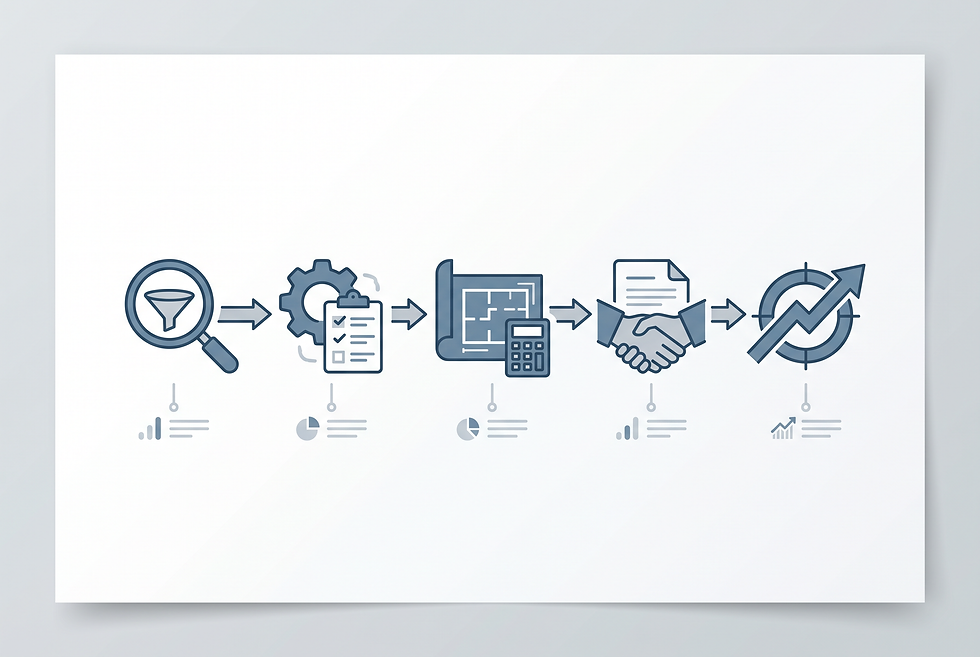
Second, professional networking platforms and industry directories provide structured profile intelligence. The system maps reporting lines, shifts in plant engineering leadership, and corporate ownership changes across multi-facility manufacturing enterprises.
Third, seamless CRM and ERP integration ensures that every prospect interaction, data point, and technical document exchange is logged automatically. According to Gartner (2023), B2B buyers spend only 17% of their total purchase journey meeting with potential suppliers, meaning digital coverage during early research stages is decisive for winning capital equipment bids.
Comparing Traditional vs AI Packaging Machinery Sales Workflows
The table below contrasts the operational reality of traditional equipment prospecting against an autonomous sales representative model.
Operational Dimension | Traditional Manual Sales Rep | AI Equipment Sales Rep Workflow |
Account Discovery | Manual trade directory search, booth visitor scanning, fragmented web browsing | Continuous automated scanning of factory permits, hiring signals, and expansion filings |
Research Capacity | 10–15 accounts researched in depth per week | 200–500 target manufacturing plants analyzed weekly |
Outreach Personalization | Generic bulk email templates or slow bespoke drafting | Line-specific messaging tailored to plant throughput, container types, and automation goals |
Technical Triage | Days to review, interpret, and respond to incoming inquiries | Instant classification of container formats, speeds (PPM/BPM), and footprint constraints |
Data Hygiene | Inconsistent CRM updates, missing notes, and delayed pipeline entries | 100% structured logging of buying signals, titles, and complete message histories |
Pipeline Focus | Split between administrative research and high-value customer meetings | 100% dedicated to generating verified, sales-ready opportunities for deal closers |
Core Qualification Framework: From Factory Signal to Machinery Opportunity
The fundamental business value of an AI sales representative is converting ambiguous plant signals into structured commercial opportunities. In capital equipment sales, an unqualified contact is useless; commercial teams need actionable technical context before engaging.
To ensure sales-ready qualification, the AI representative applies a rigorous qualification framework across four distinct pillars:
Application Feasibility: Identifies primary container types (e.g., glass bottles, flexible pouches, corrugated cartons), product viscosities or bulk densities, and required changeover frequencies.
Capacity and Throughput Requirements: Clarifies line speed expectations (such as units per minute, cycles per hour), operating shifts, and target overall equipment effectiveness (OEE).
Physical and Environmental Constraints: Identifies available plant floor space, ceiling clearance, electrical ratings, washdown standards (IP ratings), and upstream/downstream conveyor interfaces.
Procurement Horizon and Budget Status: Establishes project initiation dates, factory acceptance testing (FAT) expectations, planned commissioning windows, and capital expenditure allocation timelines.
Clear Human Approval Boundaries and Commercial Governance
Industrial equipment sales involve strict liabilities, performance guarantees, and bespoke engineering parameters. An autonomous sales worker must operate within clear governance boundaries to protect brand reputation and commercial margins.
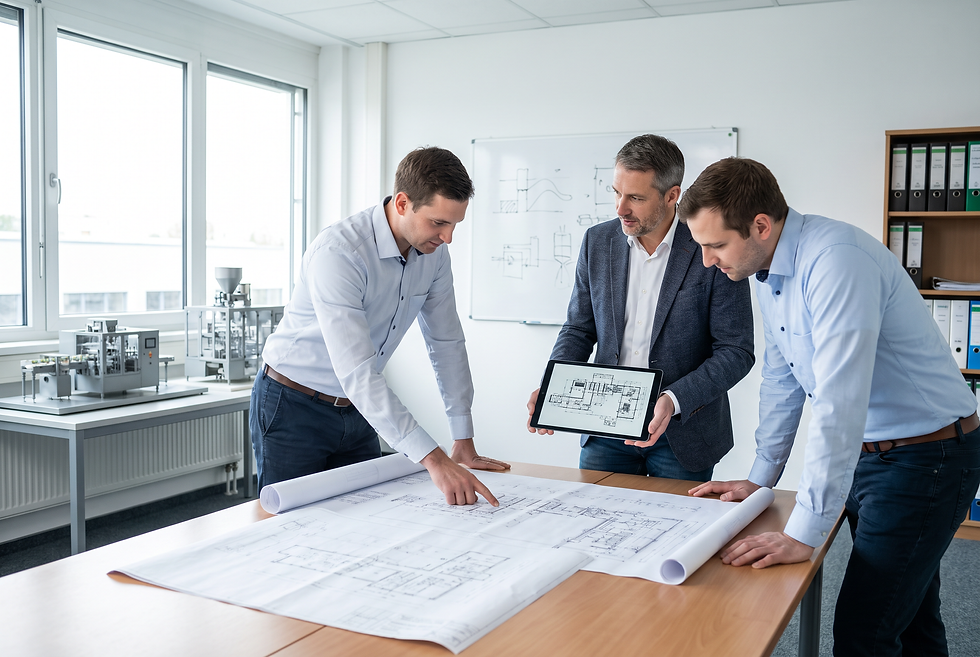
Specific responsibilities are strictly separated between autonomous execution and mandatory human authorization:
Autonomous Tasks: Account identification, initial contact verification, capability presentation, technical data gathering (container dimensions, cycle rates, target line efficiency), and meeting scheduling.
Mandatory Human Approval: Formal price quotations, discount authorizations, custom engineering commitments, legal contract terms, delivery timeline guarantees, and binding factory acceptance test (FAT) agreements.
According to McKinsey (2024), industrial companies combining automated sales intelligence with structured human deal leadership achieve up to 20% higher efficiency in their commercial operations. The digital worker handles administrative scale and market mapping, while senior sales engineers handle relationship governance, on-site audits, and complex commercial negotiations.
How Packaging Machinery Builders Scale with YTTAI Sales Master
For packaging machinery builders seeking scalable market coverage across food, beverage, pharmaceutical, and chemical manufacturing sectors, YTTAI Sales Master provides purpose-built digital workforce capabilities.
YTTAI equips manufacturing teams with pre-configured operational agents that understand capital machinery lifecycles. Instead of setting up complex generic prompts, commercial leaders assign target packaging verticals (such as vertical form fill seal, flow wrapping, cartoning, or end-of-line palletizing), define regional focus areas, and let the system identify active factory needs.
Integrated with your existing B2B marketing and sales pipeline, YTTAI delivers complete account dossiers containing verified engineering contacts, factory footprint context, and explicit project timelines directly into your sales team's workflow.
Conclusion
Scaling an industrial packaging machinery business requires constant visibility into manufacturing plants that are expanding, modernizing, or replacing legacy packaging lines. By utilizing an autonomous AI equipment sales rep, packaging machinery manufacturers eliminate pipeline gaps, protect senior engineering time from cold research, and ensure no commercial opportunity is overlooked in competitive global markets.
FAQ
What is the primary first value delivered by an AI equipment sales rep?
The primary first value is transforming raw factory expansion data into a verified packaging equipment sales opportunity, complete with identified engineering stakeholders, required packaging formats, throughput needs, and confirmed project timeline expectations.
Can an AI sales representative issue commercial quotations or pricing discounts?
No. Strict human approval boundaries prevent autonomous pricing. The AI gathers technical requirements and qualifies interest, but formal quotes, discounts, engineering guarantees, and contracts require human sales director approval.
How does the AI rep know which packaging machinery specifications to discuss?
The AI is onboarded with your specific machinery catalog, technical parameters (such as units per minute, container dimensions, and sealing technologies), and target industries, allowing it to converse accurately within your operational scope.
What channels does the digital sales rep use to reach prospective plant managers?
It operates through authenticated corporate email domains, professional B2B business networks, and CRM integrations, matching the professional communication standards expected in industrial manufacturing.
Meet Your AI Equipment Sales Rep
Discover how an autonomous digital sales representative continuously discovers factory upgrade projects, qualifies packaging line requirements, and populates your pipeline with sales-ready buyers. Schedule a guided growth demo today.


Comments