%20%E6%8B%B7%E8%B4%9D.png)
What to Look for in an AI Sales Platform for Manufacturers

When evaluating an AI sales platform for manufacturers, industrial leaders should prioritize end-to-end task execution, rapid deployment, and operational governance over massive feature catalogs or generic chatbot prompts. An effective enterprise platform enables a digital worker to onboard in minutes, execute complete commercial workflows, respect strict pricing authority limits, and deliver verifiable pipeline impact with daily automated reporting.
Industrial manufacturing operates on technical precision, complex supply chains, and multi-stakeholder purchase cycles. Traditional sales technology often stalls in heavy configuration phases. To modernize commercial operations, enterprise executives require a predictable evaluation framework focused on commercial outcomes rather than experimental tools.
The Shift from Toolkits to Outcome-Driven AI Workers
For years, industrial sales teams invested in multi-layered software stacks that added administrative burden rather than removing it. According to Salesforce's State of Sales report (2024), sales representatives spend only 28% of their working week actually selling, with the remainder consumed by manual CRM updates, prospect research, and administrative tasks.
Traditional enterprise software procurement focuses on extensive feature lists, custom API integrations, and open-ended bot builders. However, manufacturing enterprises do not need more software interfaces; they need dedicated operational capacity. The modern evaluation standard measures how quickly a system operates as a functional digital hire capable of executing qualified outreach, technical spec parsing, and pipeline qualification independently.
Instead of licensing generic toolkits that demand months of systems integration, forward-looking manufacturers adopt single-role digital workers designed for specific commercial mandates.
Core Criteria for Evaluating an AI Sales Platform for Manufacturers
Selecting an AI platform for industrial B2B environments requires assessing four operational pillars: speed to productivity, workflow completeness, governance boundaries, and commercial transparency.
1. Rapid Deployment and Autonomous Execution
A viable platform must eliminate multi-month onboarding cycles. If a solution requires dedicated prompt engineering or heavy IT consulting before sending its first qualified communication, it increases operational overhead. The baseline standard is a digital worker that ingests technical catalogs, product parameters, and target industry criteria to begin production work within minutes.
2. Closed-Loop Commercial Workflows
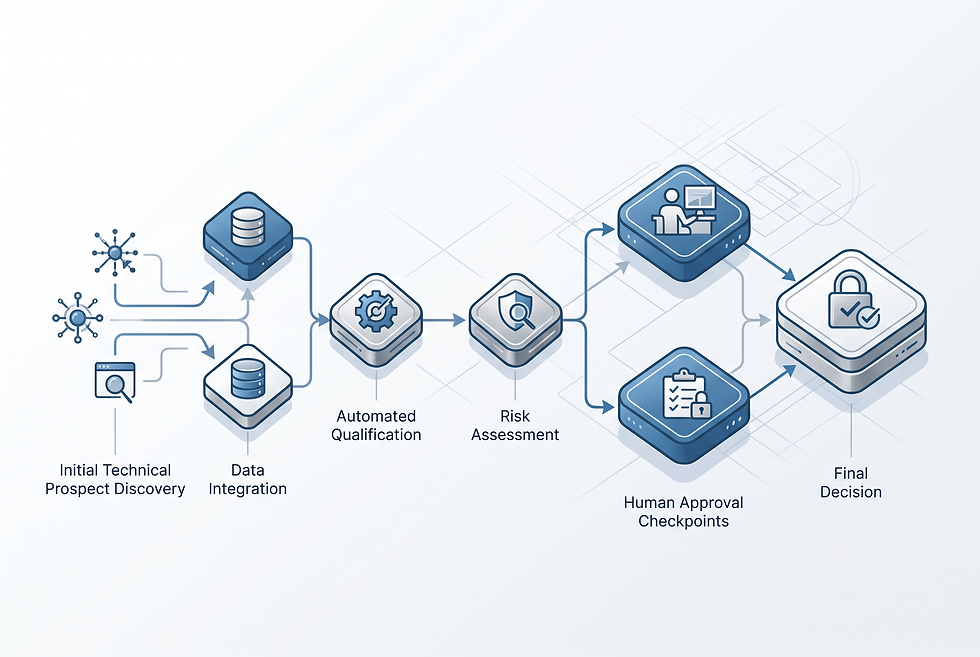
Many tools generate isolated copy or scrape raw contact data without connecting downstream activities. Industrial sales require closed-loop operations: identifying accounts matching precise technical parameters, verifying decision-maker buyer intent, initiating professional outreach, handling technical qualification, and synchronizing context back into core operational records.
3. Human Governance and Authority Boundaries
Manufacturing contracts involve strict liability, variable raw material surcharges, and customized engineering specifications. An autonomous sales system must operate with explicit governance controls. AI should handle prospecting, preliminary technical qualification, and follow-ups autonomously, while routing commercial pricing, custom engineering feasibility checks, and final contract terms to human leadership for formal approval.
4. Transparent Daily Reporting and Measurable Value
Enterprise leaders need visibility into autonomous operations without navigating complex dashboards. The platform should automatically deliver structured daily briefings summarizing accounts contacted, replies analyzed, technical inquiries flagged, and meetings secured.
Comparison: Feature Catalog Platforms vs. Dedicated AI Workers
The following table outlines the architectural and operational differences between conventional sales software and modern outcome-oriented AI worker platforms.
Evaluation Dimension | Traditional Sales Software & Toolkits | Outcome-Driven AI Worker Platforms |
Purchase Unit | Seat licenses, feature tiers, and API consumption | 1 Industry × 1 Specialized Worker × 1 Clear Outcome |
Time to First Action | 6 to 12 weeks of configuration and training | Under 5 minutes with automated catalog ingestion |
Operational Scope | Disjointed point solutions (scrapers, email sequences, CRM plugins) | End-to-end execution across prospecting, vetting, and engagement |
Governance Model | Unrestricted open prompts or static rigid templates | Role-based authority rules with mandatory human checkpoints |
Visibility | Complex analytical dashboards requiring manual exports | Daily automated operational briefings to commercial leadership |
Commercial Validation | Multi-year upfront software commitments | Verifiable First Value generated prior to long-term billing |
Establishing Human-in-the-Loop Governance Boundaries
Gartner research (2024) indicates that enterprise buyers prioritize AI platforms that offer verifiable risk containment and role-based access control. In complex manufacturing, unconstrained automation can harm client trust or misquote production capabilities.
To ensure enterprise safety, an industrial AI platform must enforce strict separation between autonomous activities and human-approved commitments:
Autonomous Operational Domain: Prospect identification, company firmographic verification, initial technical positioning, follow-up scheduling, and routine inquiry triage.
Mandatory Human Approval Domain: Final price quotation, non-standard delivery terms, custom CAD/drawing validation, warranty commitments, and binding contract signatures.

Establishing these operational fences ensures the commercial team expands outbound pipeline while safeguarding gross margins and engineering integrity.
How YTT AI Workforce Delivers Operational Value
To address these industrial requirements, modern architectures like the YTT AI Workforce replace fragmented tools with dedicated digital employees designed for specific B2B verticals.
Rather than navigating complex agent configuration menus or paying for idle software seats, manufacturing leaders hire pre-trained digital workers aligned with distinct commercial workflows. Each deployment follows a transparent operational progression: rapid onboarding, automated execution of research and outreach, regular daily summary reporting, and clear pipeline traction before transitioning to standard subscription terms.
For enterprise teams seeking to evaluate operational impact without infrastructure disruption, exploring a guided growth demo provides direct insight into how an autonomous worker manages industrial outbound qualification, maintains data accuracy, and respects management approval gates.
Implementation Framework: From Deployment to Full Production
Executing a disciplined pilot ensures that the chosen platform delivers measurable commercial output without disrupting existing commercial teams. Follow this phased roadmap:
Define the Operational Scope: Select one precise market segment, product line, or geographical region rather than attempting broad enterprise-wide deployment on day one.
Upload Core Technical Parameters: Ingest product catalogs, compliance certificates, and ideal customer profiles to establish the digital worker's baseline knowledge.
Set Governance Rules: Define explicit rules for routing inquiries, price requests, and technical specifications directly to designated sales engineers.
Monitor Daily Briefings: Review automated daily performance metrics to verify message accuracy, conversion rates, and account responsiveness.
Scale Based on Validated Pipeline: Once initial qualified inquiries and meetings are confirmed, expand the AI worker's remit across adjacent territories or secondary product lines.
FAQ
What is the primary difference between a sales AI tool and an AI sales worker?
A sales AI tool provides isolated features like email drafting or data scraping that human reps must manually operate. An AI sales worker functions as an autonomous digital team member that executes end-to-end workflows—from prospect research to initial qualification—and reports results daily.
How do manufacturers prevent AI platforms from quoting inaccurate technical specifications or prices?
Industrial platforms use strict governance boundaries and role-based authority rules. Autonomous actions are limited to prospect research, outreach, and discovery, while pricing, custom technical parameters, and contract terms require mandatory human sales engineer approval.
How quickly should an enterprise expect an AI sales platform to demonstrate tangible value?
Modern outcome-based AI platforms should onboard within minutes and begin producing qualified prospect engagement within the first two to three weeks, establishing verifiable pipeline impact before long-term subscription commitments.
Evaluate Autonomous Sales Capacity for Your Manufacturing Operations
Transition from fragmented sales software to dedicated digital workers. Schedule a consultation to review how structured AI sales automation expands pipeline while maintaining rigorous commercial control.



Comments