%20%E6%8B%B7%E8%B4%9D.png)
How Robotics Teams Identify Integrators and Distributors in New Markets

How Robotics Companies Identify Integrators and Distributors in New Markets
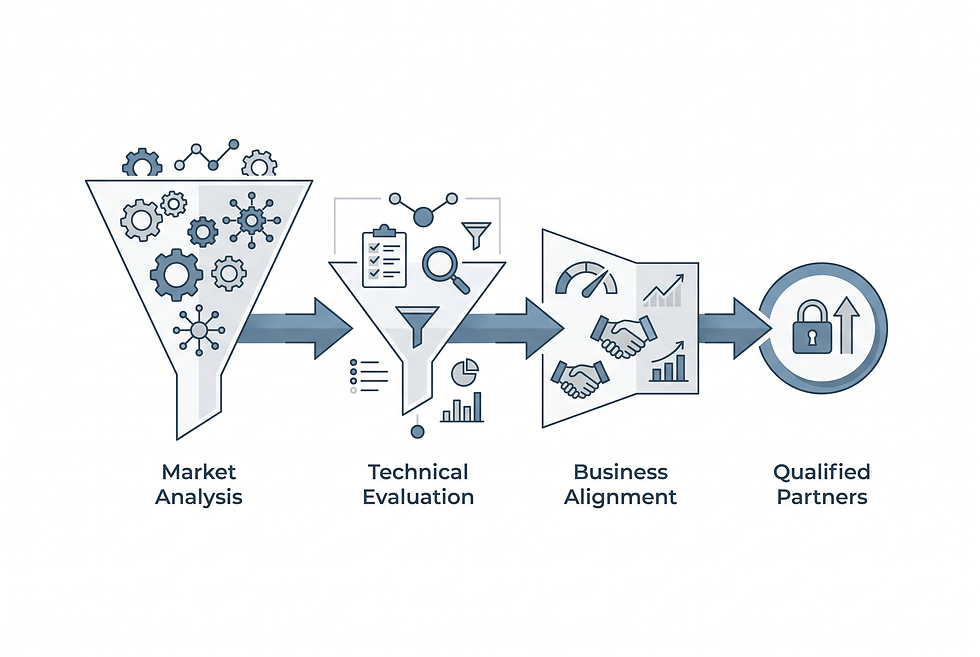
To identify integrators and distributors in new markets, robotics manufacturers must map regional ecosystems across three distinct tiers: system integrators (SIs), stocking distributors, and target end users. By analyzing installed automation bases, public bidding records, vendor certifications, and hiring signals, commercial teams can prioritize high-capability channel partners before deploying targeted, multi-touch outbound research.
According to the International Federation of Robotics (IFR) World Robotics 2023 Report, annual industrial robot installations reached an all-time high of 553,052 units globally. However, entering a new geographic market without an established local ecosystem creates severe execution risk. Hardware manufacturers rarely succeed through direct sales alone in foreign territories. Success depends on selecting partners who possess application-specific engineering expertise, existing client trust, and local field servicing capabilities.
Constructing the Three-Tier Market Map
A common failure mode in international expansion is treating distributors and system integrators as interchangeable intermediaries. In industrial automation, each account type plays a distinct role within the value chain.
Authorized Value-Added Distributors: These partners hold inventory, manage regional supply chain logistics, extend local credit lines, and provide tier-one component support. They operate on component margins and value broad product availability.
Certified System Integrators (SIs): SIs design, program, mechanically assemble, and commission turn-key automation cells. They monetize billable engineering hours and project delivery rather than hardware markup alone.
Flagship End Users: Direct manufacturing plants and logistics hubs provide the pull demand. Identifying these accounts allows manufacturers to introduce joint opportunities to prospective integrators, instantly validating commercial viability.
Evaluation Framework: Integrator vs. Distributor Capabilities
Before initiating outreach, commercial directors should establish objective scoring criteria to evaluate prospective regional organizations. The table below outlines the core attributes required for each channel type.
Partner Dimension | Stocking Distributor | System Integrator (SI) | Strategic Value Metric |
Core Revenue Model | Component sales, inventory turnaround, line card breadth | Engineering design hours, turn-key commissioning, tooling fabrication | Annual project volume and billable technical headcount |
Technical Readiness | Basic component sizing and product substitution advice | PLC/Robot kinematics programming, safety compliance (CE/OSHA/ISO) | Number of certified automation and field engineers |
Customer Relationship | Broad purchasing department access across hundreds of plants | Deep engineering and plant management trust in specific verticals | Depth of tier-one automotive, electronics, or logistics accounts |
Facility Infrastructure | Warehousing, staging bays, regional logistics hubs | Simulation labs, machining centers, test floor for factory acceptance testing (FAT) | Physical capacity to stage multi-cell installations |
Territory Exclusivity Risk | High risk of shelf-squatting if minimum order quantities (MOQs) are weak | Low risk; integrators specify the robot brand that fits end-client specs | Direct alignment with project pipelines rather than catalog padding |
Data Signals for High-Precision Channel Identification
Traditional international business development relies heavily on trade shows and static directory lists. Modern B2B expansion demands signal-based prospecting to pinpoint active regional organizations.
1. Public Project Tenders and Permits
Municipal and industrial environmental filings, safety inspection records, and public factory modernization grants highlight which local engineering firms are winning active capital expenditure contracts.
2. Vendor Certification and Line Card Gaps
Examine the public line cards of regional automation providers. An integrator that primarily integrates legacy Cartesian gantries or legacy 6-axis arms without a dedicated collaborative robot or autonomous mobile robot (AMR) offering represents a prime recruitment target.
3. Engineering Recruitment Activity
Job postings for robot simulation engineers, PLC programmers, or vision system specialists indicate that an integrator is expanding capacity to handle growing project backlogs.
4. Technology Association Rosters
Regional trade organizations—such as the Association for Advancing Automation (A3) in North America, VDMA in Germany, or JARA in Japan—maintain vetted rosters of verified engineering system partners.
Operational Workflow: From Discovery to Human-Approved Agreements
Executing outbound channel development at scale requires a structured workflow that combines autonomous data gathering with rigorous human oversight. McKinsey & Company's 2023 B2B Commercial Research noted that organizations adopting automated prospecting combined with hybrid sales interactions generate up to 50% higher pipeline velocity.
Step 1: Systematic Account Research
Commercial teams define ideal partner profiles (IPPs) based on target industries such as palletizing, CNC machine tending, semiconductor handling, or battery manufacturing. Outbound systems gather registered engineering entities in the target territory.
Step 2: Application Alignment and Technical Filtering
Accounts are filtered against payload capabilities, safety requirements, and existing brand alliances to avoid rigid competitive non-compete agreements.
Step 3: Value-Driven Initial Outreach
Outreach messages must speak to engineering leadership in their language, highlighting cycle-time improvements, payload-to-weight ratios, software API openness, and local pilot program support.

Step 4: Commercial Qualification
Initial Discovery calls evaluate existing client pipelines, FAT floor space, and readiness to dedicate engineering resources to onboarding.
Step 5: The Human Approval Gateway
While research, data synthesis, and initial follow-ups can be automated, critical commercial checkpoints must remain strictly managed by executive leadership. Robotics companies must ensure that:
Pricing schedules and margin structures are negotiated directly by commercial leadership.
Territory exclusivity and minimum volume commitments undergo rigorous legal and director-level review.
Custom engineering commitments and warranties receive formal sign-off from VP-level technical directors.
Scaling Channel Research with YTTAI
Executing this multi-stage prospecting process across multiple international territories often strains internal business development resources. This is where YTTAI provides dedicated support for industrial automation manufacturers.
Through the AI global sales workforce, robotics manufacturers can systematically conduct market research, monitor hiring signals, track regional integrator activity, and execute personalized outbound communication at scale. The platform identifies active system integrators and distributors matching precise payload and application requirements, qualifies initial interest, and surfaces qualified partner conversations directly to regional sales heads.
By letting autonomous digital agents handle preliminary research, data enrichment, and continuous email follow-ups, your human channel directors can focus entirely on high-value partner interviews, technical workshops, and contract negotiations.
Conclusion
Successfully expanding a robotics brand into new international markets requires moving away from unfocused directory scraping toward structured, signal-based partner identification. By categorizing regional accounts, setting strict technical criteria, and preserving human governance over legal and pricing commitments, automation manufacturers build durable global distribution networks.
FAQ
What is the difference between a robotics distributor and a system integrator?
A robotics distributor primarily purchases, stocks, and resells hardware components while managing regional logistics and credit lines. A system integrator designs custom tooling, programs software, and delivers complete, turn-key automation cells to end-user factories.
How can robotics manufacturers verify the engineering capabilities of an overseas integrator?
Manufacturers should evaluate the integrator's registered engineering headcount, physical factory acceptance testing (FAT) floor space, past project case studies in target verticals, and certifications with recognized industrial automation bodies.
Which channel expansion tasks should remain strictly managed by human sales leaders?
Channel pricing matrices, volume discount tiers, territory exclusivity clauses, binding legal contracts, and customized warranty or technical guarantees must always be negotiated and approved by human commercial leadership.
Accelerate Your Global Channel Development
Explore how YTTAI can help your robotics company identify, qualify, and engage regional integrators and distributors across target global markets. Schedule a guided growth demo to review your market expansion map.



Comments